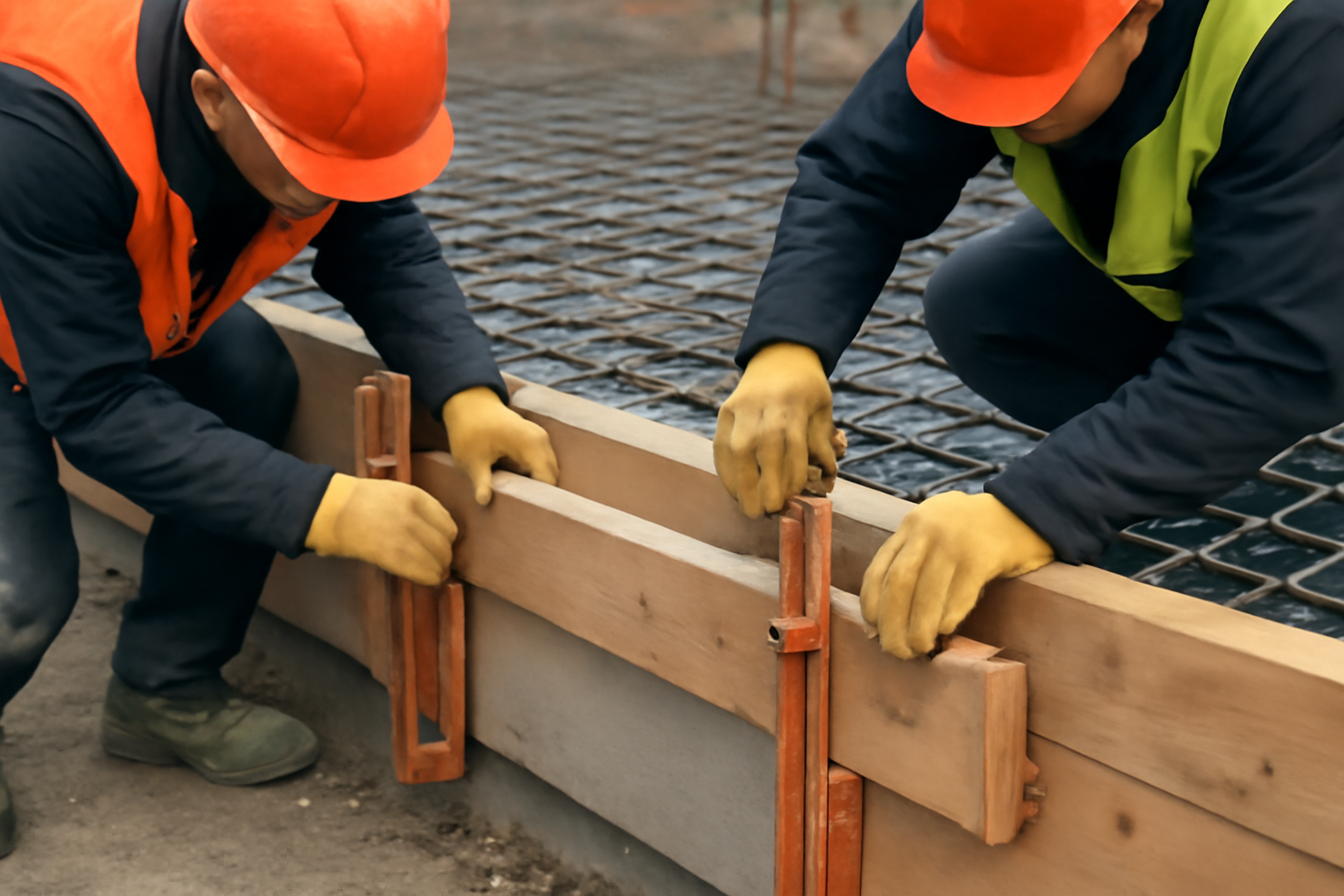
Understanding Formwork for Edge Finishes
Definition and Purpose – Explaining what formwork to edge entails and its role in construction
In the bustling world of construction, where precision meets practicality, understanding formwork to edge is essential. This process involves creating a sturdy, well-defined boundary that shapes the transition from concrete to finished surface—think of it as the border guard of your architectural masterpiece. When executed correctly, formwork to edge ensures that the final edges are smooth, sharp, and visually appealing, adding both durability and aesthetic finesse to any project.
At its core, formwork to edge is about more than just structural support; it’s about establishing a clean, professional finish that stands the test of time. This technique plays a pivotal role in controlling concrete flow and ensuring a crisp separation between different building elements. Whether it’s for a sleek sidewalk or an intricate staircase, mastering this skill guarantees a polished look that makes every detail count.
To achieve impeccable results, contractors often consider factors such as material choice, formwork design, and proper alignment. In fact, the success of formwork to edge depends on a combination of these elements, which can be summarized as:
- Material compatibility
- Precision in formwork installation
- Consistent reinforcement placement
Types of Formwork Used for Edges – Overview of various formwork systems suitable for edge finishing
In the world of construction, the finesse of a project often hinges on the choice of formwork to edge—an element that can elevate concrete finishes from mundane to magnificent. When it comes to creating crisp, precise borders, the variety of formwork systems at your disposal is surprisingly diverse, each tailored to meet specific aesthetic and structural demands.
For edges that demand a sleek, seamless appearance, traditional timber formwork remains a trusty companion—flexible, easy to manipulate, and readily available. However, for those seeking durability and efficiency, metal formwork systems provide a polished finish that withstands the rigours of repeated use. Meanwhile, innovative modular formwork panels have gained popularity in South Africa, offering quick assembly and impeccable alignment, making them ideal for complex edge contours.
Some of the most common formwork to edge systems include:
- Steel edge formwork—known for its robustness and long lifespan.
- Aluminium formwork—lightweight yet sturdy, perfect for rapid installation.
- Plastic formwork—cost-effective and easy to clean, suitable for intricate designs.
Choosing the appropriate formwork to edge system hinges on project scope, budget, and desired finish, but one thing remains clear: the right system can truly make or break the visual appeal of your concrete boundaries.
Materials Commonly Used – Details on materials like timber, steel, plastic, and composite options
In the realm of construction, the choice of materials for formwork to edge can transform a mundane structure into a masterpiece of precision and elegance. Each material brings its own unique character to the finished concrete border, shaping not just the look but also the lifespan of the edge. Among the most traditional and versatile is timber, which offers flexibility and an organic touch, making it ideal for bespoke or intricate edge profiles. Its ease of manipulation allows craftsmen to craft curves and details with finesse, turning raw timber into a canvas of design.
On the other hand, metal options such as steel and aluminium have become favourites in modern construction for their durability and efficiency. Steel formwork to edge boasts a robustness that withstands the test of time and repeated use, ensuring consistently sharp and clean borders. Aluminium, being lightweight yet sturdy, facilitates rapid installation—saving time without sacrificing quality. For cost-effective projects or designs demanding intricate detailing, plastic and composite materials have gained popularity. Plastic formwork to edge, in particular, is easy to clean and perfect for delicate finishes or complex contours that demand finesse.
Ultimately, selecting the right formwork to edge hinges on balancing project scope, budget, and aesthetic ambitions. Whether opting for the rugged resilience of steel, the lightweight convenience of aluminium, or the flexible charm of timber, each material contributes to the magic of transforming raw concrete into architectural poetry.
Design Considerations for Formwork to Edge
Structural Integrity and Safety – Ensuring stability and safety during installation and curing
In the world of construction, where precision is often mistaken for mere coincidence, the design considerations for formwork to edge are nothing short of paramount. A staggering 70% of structural failures can be traced back to inadequate edge support during the curing process—an eye-opening statistic that underscores the importance of meticulous planning. Ensuring stability and safety during installation isn’t just good practice; it’s a moral obligation to prevent costly setbacks and, more importantly, safeguard lives.
When constructing formwork to edge, engineers and builders must evaluate load-bearing capacities, material flexibility, and ease of removal. Equally critical is the choice of formwork system, whether timber, steel, or composite, as each impacts the overall safety and integrity of the edge finishing. Sometimes, a straightforward list is best to clarify priorities:
- Proper bracing to resist lateral forces
- Secure anchoring to prevent movement during curing
- Consistent alignment to avoid structural weaknesses
Ultimately, a well-thought-out approach to formwork to edge not only guarantees a pristine finish but also upholds the structural integrity that stands the test of time and South African resilience. Because when it comes to edge formwork, half-measures are simply not an option.
Precision and Finish Quality – Achieving clean, precise edges with proper formwork planning
Precision in formwork to edge isn’t just about aesthetics; it’s a vital element that defines the durability and safety of a structure. Achieving a crisp, clean finish requires meticulous planning, where every detail counts. The secret lies in understanding how the choice of formwork system influences the final edge quality—after all, a poorly executed edge can compromise the entire project’s integrity.
Key design considerations include the alignment of formwork to edge, ensuring uniformity and avoiding irregularities that could lead to structural weaknesses. Proper tensioning and support systems are crucial to maintain the formwork’s shape during concrete placement. Sometimes, adopting an innovative approach, such as modular formwork to edge, can streamline the process, reduce waste, and enhance precision.
- Ensure consistent formwork dimensions to prevent deviations.
- Incorporate adjustable bracing to accommodate variations and maintain alignment.
- Select materials that offer stability and ease of removal without damaging the finish.
Ultimately, the success of formwork to edge hinges on strategic planning and attention to detail. When executed flawlessly, it guarantees not just an impeccable visual finish but also reinforces the structural resilience needed to withstand the test of time—especially in the demanding environments across South Africa. Excellence in formwork to edge isn’t an option; it’s an obligation to uphold safety, quality, and durability in every project undertaken.
Compatibility with Different Structures – Adapting formwork to various construction types and edge contours
In the dynamic landscape of South African construction, adaptability is the cornerstone of successful project delivery. When considering formwork to edge, understanding how to tailor systems to various structural contours is essential. Each building type—be it residential, commercial, or infrastructural—demands a bespoke approach that respects its unique edge profile. For instance, curved or irregular edges require flexible formwork solutions that can conform seamlessly, ensuring the final finish remains crisp and precise.
Adapting formwork to edge involves a nuanced appreciation of the structural demands and aesthetic aspirations. For complex contours, modular formwork systems can be invaluable, allowing for quick adjustments that maintain alignment without sacrificing safety or quality. Incorporating adjustable bracing and custom-fitted panels ensures that the formwork to edge stays true to the design intent, reducing waste and minimizing rework. In essence, the art lies in balancing the rigidity needed for safety with the flexibility required for intricate shapes—an approach that elevates the quality and durability of the finished structure.
Furthermore, selecting the right materials plays a pivotal role in this adaptation process. Lightweight yet stable options such as composite panels or high-grade steel facilitate easier handling around varied edge profiles. This strategic material choice not only enhances precision but also safeguards the integrity of the formwork to edge throughout the curing process. When executed with a keen eye for detail, this harmonious integration of design considerations ensures that each project not only meets but exceeds expectations—transforming complex edges into enduring symbols of craftsmanship and engineering excellence.
Installation Techniques for Formwork to Edge
Preparation and Planning – Steps for preparing the site and formwork components
Preparing for a flawless execution of formwork to edge is akin to setting the stage for a masterpiece—every detail matters. The process begins with meticulous site assessment, ensuring the ground is stable and free of debris that could compromise the formwork’s integrity. Clear, level surfaces are essential to prevent misalignments that could mar the final finish. Once the site is ready, attention shifts to the formwork components themselves—timber, steel, or composite materials—each chosen based on the specific edge contour and structural demands.
To guarantee precision, it’s crucial to plan the installation sequence carefully. Using a combination of string lines and laser guides, align the formwork to ensure sharp, clean edges. Secure the formwork firmly to withstand the pressure exerted during concrete pouring and curing. The key lies in understanding the unique requirements of the edge and tailoring the preparation steps accordingly. Proper site and formwork component preparation lay the foundation for a perfect finish, making the difference between a good edge and a spectacular one!
Setup and Alignment – Best practices for accurately positioning formwork for edges
Precision in installation is the cornerstone of masterful formwork to edge. When positioning formwork for edges, meticulous alignment can mean the difference between a seamless finish and a compromised surface. A common pitfall is neglecting the subtle nuances of the site’s contours—sketching out the edge’s intended profile with laser guides or string lines ensures every curve and straight line is exact. This level of attention to detail transforms a simple task into an art form, elevating the final aesthetic.
Securing formwork to edge requires careful attention to stability, especially when dealing with complex or irregular contours. The formwork must withstand the pressure during concrete pouring without shifting or deforming. Using clamps, braces, or tie rods is essential for maintaining the integrity of the edge. In some cases, employing adjustable formwork allows for fine-tuning the position, ensuring the edge remains true throughout the process.
For optimal results, consider implementing an ordered approach to installation:
- Align the formwork to the edge profile using both string lines and laser guides for accuracy.
- Check the formwork’s level, ensuring it’s perfectly aligned with the planned edge contour.
- Secure the formwork firmly, avoiding any movement during the concrete pour.
This rigorous setup guarantees that the formwork to edge system produces sharp, clean lines that enhance the overall structure. When installation techniques are executed with precision, the finished edge not only meets structural requirements but also elevates the visual appeal—highlighting the craftsmanship that underpins every successful construction project.
Securing and Support Systems – Using braces, ties, and supports to maintain formwork stability
In the realm of construction mastery, the secret to achieving a flawless finish often lies in the unseen yet vital support system—securing and support systems for formwork to edge. When the stakes are high and the contours are complex, relying solely on the weight of the concrete is not enough. Instead, skilled artisans harness the power of braces, ties, and supports to create an unyielding fortress around the formwork. This web of reinforcement ensures that the formwork to edge remains steadfast during the turbulent pour, resisting any shift or deformation that could mar the final aesthetic.
In practice, the use of braces and tie rods is an art—each element carefully positioned to counteract the pressure exerted by wet concrete. For intricate or irregular edges, adjustable supports become invaluable, allowing for meticulous fine-tuning. An ordered approach, such as:
- Positioning the braces symmetrically for even support
- Securing tie rods at strategic points to distribute pressure evenly
- Verifying stability before pouring
creates a harmonious balance that ensures the formwork to edge remains true, sharp, and pristine. When these systems are deployed with precision and care, they transform the process into an almost mythical craft—producing edges that stand as testament to craftsmanship and structural integrity alike.
Materials and Equipment for Formwork Edge Applications
Formwork Panels and Boards – Choosing appropriate panels for edge definition
When it comes to formwork to edge applications, selecting the right materials for panels and boards can make all the difference. Durable, high-quality formwork panels ensure crisp, clean edges and prevent defects that could compromise structural integrity. In South Africa, common choices include timber for its flexibility, steel for strength, and plastic or composite materials for lightweight versatility. Each material offers unique benefits, but the key is compatibility with the specific edge contour and structural demands.
Choosing the right formwork panels also involves considering surface finish quality. Properly planned formwork to edge ensures smooth, precise lines that meet architectural standards. For complex edge geometries, adjustable or modular panels are invaluable. Support systems such as braces and ties keep formwork stable during pouring and curing, reducing risk and ensuring safety. When planning for formwork to edge, understanding these material and equipment options is essential for a flawless finish.
Fasteners and Ties – Selecting effective fastening systems to secure formwork
In the intricate dance of construction, where precision and stability are paramount, the selection of fasteners and ties for formwork to edge becomes the silent symphony guiding flawless execution. These seemingly humble components wield extraordinary influence—securing the formwork with unwavering resolve, ensuring that each edge remains true to its envisioned contours. As the backbone of structural fidelity, effective fastening systems serve as the unseen artisans, holding formwork securely against the forces of gravity and flow.
Choosing the right fastening method in South Africa’s diverse construction landscape involves understanding the nuances of material compatibility and environmental resilience. From galvanized steel ties that resist corrosion to adjustable clamps that accommodate complex geometries, each element must harmonize with the materials used in formwork to edge applications.
- Strength and durability
- Ease of adjustment and removal
- Compatibility with diverse formwork panels
These considerations culminate in a symphony of stability, preventing unwanted movement during concrete pouring and curing, which could mar the crispness of the finished edge.
In particular, the versatility of ties and fasteners in formwork to edge tasks echoes the need for a meticulous approach—where every component, every connection, whispers the promise of precision. Whether employing wedge anchors, adjustable ties, or bespoke fastening solutions, the goal remains steadfast: to uphold the integrity of the edge, ensuring that each line remains sharp, each curve smooth, and the final structure a testament to craftsmanship. The art of securing formwork to edge is, after all, a delicate ballet—requiring both strength and finesse in equal measure.
Additional Tools and Accessories – Necessary tools like clamps, levelers, and sealants
When it comes to perfecting the sharpness of construction edges, having the right materials and equipment for formwork to edge applications makes all the difference. Think of it as the difference between a rough sketch and a masterpiece—tools and accessories are the brushstrokes that define the finesse of your final product. In South Africa’s bustling construction scene, where resilience meets innovation, selecting the proper tools ensures your formwork to edge process is nothing short of flawless.
Essential accessories such as clamps, levelers, and sealants are the unsung heroes of this operation. Clamps provide the grip needed to hold formwork panels securely, preventing any unwelcome shifts during concrete pouring. Levelers guarantee that your formwork aligns precisely, avoiding those pesky uneven edges that can turn a sleek finish into a crooked catastrophe. Sealants, meanwhile, act as the guardians against leaks, ensuring a clean, crisp edge without seepage ruining the aesthetic or structural integrity.
In some cases, investing in specialized formwork tools like adjustable supports or bespoke fastening systems can elevate your edge finishing game. For example,
- adjustable clamps
- support braces
- high-quality sealants
all work harmoniously to uphold the formwork’s stability and finesse. The right combination of these materials and equipment ensures that each edge remains sharply defined, with a smooth, professional finish that stands the test of time and environmental challenges.
Advantages of Proper Formwork to Edge Implementation
Enhanced Structural Quality – How correct formwork improves overall building integrity
When it comes to constructing resilient structures, the significance of proper formwork to edge implementation cannot be overstated. A meticulously crafted edge not only defines the aesthetic contours of a building but also bolsters its structural integrity, ensuring longevity and safety. Correct formwork to edge creates a seamless transition between materials, reducing the risk of imperfections that could compromise stability over time.
Enhanced structural quality begins with precision and attention to detail during formwork to edge setup. Securely supported formwork ensures that concrete edges cure uniformly and retain their intended shape. This meticulous process minimizes the likelihood of cracks, chipping, or misalignment, promoting durability. In South Africa’s diverse construction landscape, adaptability of formwork to edge is vital for achieving consistent results across different structural designs and environmental conditions. When executed with care, proper formwork to edge elevates both the aesthetic appeal and resilience of the finished structure—an essential element in building that endures the test of time and nature’s elements.
Aesthetic Appeal – Achieving smooth, well-defined edges for visual appeal
In the realm of construction, the devil truly is in the details. When it comes to achieving architectural excellence, proper formwork to edge isn’t just a technical step—it’s the silent guardian of aesthetic harmony. The edges of a structure are often the first elements noticed, the subtle lines that define character and style. A flawlessly executed formwork to edge ensures these contours are smooth, crisp, and visually compelling, elevating the overall design to a new level of sophistication.
Beyond aesthetics, the advantages of meticulous formwork to edge resonate deeply in the realm of structural integrity. Well-crafted edges not only enhance visual appeal but also provide a durable foundation that withstands the test of time. When formwork to edge is properly secured, it prevents imperfections that could lead to cracks or chipping, thus safeguarding the longevity of the build. This precision is especially vital in South Africa’s diverse environmental conditions, where resilience against natural elements is paramount.
Ultimately, the mastery of formwork to edge marries beauty with strength, revealing the artistry behind every successful construction. It is the commitment to detail that transforms a mere structure into a lasting masterpiece, where form and function coalesce seamlessly.
Cost and Time Efficiency – Reducing rework and speeding up construction processes
In the world of construction, time truly is money—and nowhere is this more evident than with the implementation of proper formwork to edge. When executed flawlessly, it slashes rework costs and accelerates project timelines, translating into significant savings for builders. The secret lies in precision; a well-crafted edge formwork minimizes errors that could lead to costly repairs or delays. This not only boosts efficiency but also ensures that every square meter of construction aligns perfectly with the original design intent.
For contractors in South Africa, where unpredictable weather and resource constraints often threaten schedules, investing in high-quality formwork to edge can be a game-changer. Using advanced formwork systems, such as snap-ties or modular panels, simplifies setup and reduces the need for frequent adjustments. These innovations enable faster installation and easier removal, directly impacting project turnaround times.
- Reduced rework
- Faster construction phases
- Lower labor costs
The result? Superior structural integrity paired with unmatched efficiency, making formwork to edge an indispensable element in modern construction projects.
Maintenance and Removal of Formwork for Edges
Timing for Removal – Best practices on when to remove formwork without damaging edges
Timing is everything when it comes to the removal of formwork to edge. Removing too early can compromise the edge’s integrity, leading to cracks or deformations, while waiting too long can cause delays and unnecessary costs. The key is to strike a balance—allow the concrete to reach sufficient strength before detaching the formwork. Typically, this means waiting until the concrete has achieved at least 70% of its designed compressive strength, which varies depending on mix and environmental conditions.
Best practices involve closely monitoring curing times and conducting routine strength tests. Once the concrete is ready, careful removal of the formwork to edge is essential to avoid damaging the finished surface. Gentle, sequential removal helps prevent stress concentration that might crack or chip the edge. The process often includes the use of supports and supports, which must be removed in a specific order to preserve the shape and finish of the edge.
In South Africa’s construction landscape, adhering to these timing protocols ensures longevity and aesthetic appeal of edges, reducing rework and enhancing structural safety. Proper removal timing not only preserves the quality of the formwork to edge but also optimizes the overall construction timeline, saving both time and money.
Cleaning and Storage – Maintaining formwork for reuse and longevity
In the meticulous dance of construction, the preservation of formwork to edge is an art that demands both precision and reverence. Proper maintenance ensures that each mold, each contour, remains pristine, ready to serve in future projects. When cleaned diligently after each use, formwork panels and supports are reborn, their surfaces free of debris and residues that could mar the finished edge. This ritual of cleaning not only extends the lifespan of formwork to edge but also preserves its essential structural integrity.
Storage, often overlooked, plays a pivotal role in safeguarding these vital components. When stored in dry, protected environments, formwork remains resilient against the corrosive elements of South Africa’s climate. Supporting the panels on racks or pallets prevents warping and damage, ensuring they are always prepared for the next cycle of use. A well-maintained formwork to edge system is an investment in durability—a silent promise of quality that endures through countless pours and removals.
For those seeking to maximize the longevity of their formwork, consider implementing routine inspection protocols. Look for signs of wear, cracks, or deformities, and address them before they compromise the edge’s finish. Remember, a little care in maintenance now prevents costly rework later, transforming routine tasks into acts of craftsmanship that elevate the entire construction process.
Troubleshooting Common Issues – Addressing problems like surface imperfections or misalignment
In the realm of construction, the precision of formwork to edge can make or break the final aesthetic and structural integrity of a project. Yet, even the most meticulously installed formwork can encounter common issues during removal, such as surface imperfections or misalignment. These problems, if left unaddressed, can ripple into costly rework and compromised quality. The secret lies in understanding the delicate dance of maintenance and removal—transforming routine tasks into acts of craftsmanship.
When removing formwork to edge, it’s vital to proceed with patience and care. Rushing this process can cause chipping or damage to the freshly cast surface. Inspect the formwork for signs of wear or deformation, and handle panels gently, especially around delicate edges. Troubleshooting common issues like misalignment involves verifying the original setup, ensuring support systems were properly secured, and adjusting supports before reinstallation. If surface imperfections appear, they can often be remedied by sanding or filling, but prevention is always better than cure.
- Carefully loosen fasteners and supports to prevent tearing or gouging the surface.
- Use proper tools such as rubber mallets and non-abrasive scrapers to detach panels without damage.
- Regularly check the condition of formwork to catch misalignments early, ensuring a seamless edge finish every time.
Ultimately, mastery over the maintenance and removal of formwork to edge elevates the entire construction process—turning a routine procedure into a showcase of craftsmanship and precision. When problems do arise, addressing them swiftly and skillfully ensures the longevity of your formwork system and preserves the integrity of the finished edge.


0 Comments