
Understanding Formwork and Its Importance in Construction
Definition of Formwork – What is formwork and its role in construction
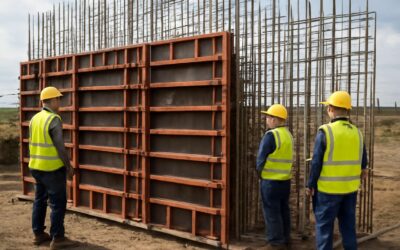
In the realm of construction, the foundation of every successful project lies in understanding the essence of formwork. This intricate system of temporary molds shapes the very skeleton of structures, ensuring stability and precision. When we speak of formwork, we’re referring to the carefully engineered framework that supports concrete until it gains sufficient strength to stand on its own. Its role is nothing short of vital—without it, the vision of architects and engineers would remain mere sketches.
Maintaining excellence in the quality control of formwork is crucial to avoid costly delays and structural flaws. Proper inspection and adherence to standards guarantee that formwork remains durable, aligned, and safe throughout the construction process. From selecting the right materials to monitoring the assembly, every detail influences the final outcome. In South Africa’s dynamic construction landscape, rigorous quality control of formwork isn’t just a necessity—it’s the backbone of resilient, enduring architecture.
Types of Formwork – Different types of formwork systems
Understanding formwork is akin to mastering the art of temporary architecture—an elaborate dance of precision and timing that keeps concrete from turning into a lopsided mess. It’s not just about slapping together planks and expecting miracles; the quality control of formwork ensures that every mold is as steadfast as a South African mountain and just as reliable. When properly managed, formwork systems can dramatically reduce construction time and prevent costly structural flaws—no one wants a building that looks like it was designed by a mischievous child!
There are various types of formwork, each suited for different project demands. From traditional timber frameworks to high-tech modular systems, the choices are as diverse as South Africa’s landscapes. Some popular options include:
- Traditional timber formwork—beloved for its affordability and ease of customization, but demands rigorous quality control of formwork to prevent warping and leaks.
- Engineered formwork—made of metal or plastic, offering durability and repeatability, which are vital for large-scale projects where consistency is king.
- System formwork—modular panels and frames that can be quickly assembled, disassembled, and reused, reducing waste and ensuring uniformity through strict quality control of formwork standards.
Choosing the right formwork system and maintaining meticulous quality control of formwork are critical to achieving flawless concrete finishes and structural integrity. In South Africa’s competitive construction environment, mastering these elements can mean the difference between a landmark project and a costly disaster.
Significance of Quality in Formwork – Impact of quality on structural integrity and safety
In the intricate dance of construction, the significance of understanding formwork cannot be overstated. It is the silent guardian that shapes our visions into tangible reality, holding the weight of entire structures. But behind this seemingly simple process lies a complex web of precision—where quality control of formwork becomes the linchpin for safety and durability. When formwork fails, it’s not just a matter of aesthetic disappointment; it jeopardizes the very foundation of safety and structural integrity. Every crack, misalignment, or leak can cascade into catastrophic consequences, especially in South Africa’s diverse climate and challenging terrains.
Ensuring rigorous quality control of formwork is a moral obligation in construction. It guarantees that each mold adheres to strict standards, preventing costly delays and ensuring the longevity of the project. The stakes are high; a failure in formwork can lead to structural flaws that threaten lives and investments alike. That’s why meticulous oversight, from material selection to assembly, is essential. When quality is prioritized, the result is a resilient, safe, and enduring structure—an achievement that transcends mere building and becomes a testament to craftsmanship and integrity.
Key Aspects of Quality Control in Formwork
Material Quality Assurance – Ensuring the use of high-grade materials
Ensuring the durability and safety of a construction project hinges on meticulous quality control of formwork materials. High-grade materials are the foundation of a robust formwork system, capable of withstanding the demanding stresses of concrete pouring while maintaining precise dimensions. When subpar materials are used, the risk of deformation, leakage, or even catastrophic failure increases significantly—an outcome no builder or engineer can afford. In South Africa’s diverse construction landscape, rigorous material quality assurance is non-negotiable for achieving flawless results.
To uphold the integrity of formwork, comprehensive inspection processes are vital. These include verifying the strength, moisture content, and surface finish of raw materials before they reach the site. Additionally, establishing a supplier approval system based on strict criteria ensures consistency in material quality. An effective quality control of formwork not only guarantees safety but also reduces costly rework and project delays, ultimately saving time and resources.
When selecting formwork materials, consider:
- Structural compatibility
- Resistance to environmental elements
- Ease of assembly and disassembly
By prioritising these aspects, construction professionals in South Africa can confidently deliver projects that stand the test of time—built on a foundation of uncompromising quality control of formwork.
Design and Planning Accuracy – Precise design to prevent defects
In the intricate dance of construction, where precision and strength intertwine like the threads of a finely woven tapestry, the quality control of formwork emerges as the silent guardian of structural excellence. Every beam, every curve, hinges upon the meticulous planning and flawless design that foresee potential defects before they manifest. It is here, in the realm of formwork design and planning accuracy, that the true artistry of construction unfolds—where errors are thwarted by rigorous calculations and detailed blueprints.
For the integrity of any project, a well-orchestrated process must be in place. This process involves verifying dimensions, load-bearing capacities, and environmental considerations. Through comprehensive review and simulation, construction professionals can identify vulnerabilities—those subtle cracks that might lead to costly delays or safety concerns. In South Africa’s diverse construction landscape, where variable conditions challenge even the most robust plans, the importance of precise design cannot be overstated.
The key to flawless formwork lies in attention to detail—employing ordered systems like:
- Thorough design verification
- Alignment with structural requirements
- Proactive risk assessment
By embracing these core aspects, construction teams elevate their craft—ensuring that the integrity of the formwork is unwavering, and every pour is a testament to unwavering quality control of formwork. This meticulous approach transforms raw materials into enduring masterpieces, built on foundations where accuracy reigns supreme and defects are banished before they even dare to appear.
Manufacturing and Fabrication Checks – Standards and procedures for fabrication
In the realm of construction, the unseen hand guiding every successful pour is rigorous quality control of formwork. It’s the silent sentinel ensuring that each component aligns perfectly with the blueprint, preventing costly errors before they even start. When fabricating formwork, adherence to strict standards and procedures isn’t just recommended—it’s essential. This process involves meticulous checks at every stage, from raw material inspection to final assembly, guaranteeing durability and safety.
To uphold the highest standards, many companies follow a structured approach, such as:
- Detailed fabrication protocols aligned with national and international standards
- Regular inspection points during manufacturing to identify defects early
- Strict adherence to dimensional accuracy and load capacity specifications
Fabrication checks serve as the backbone of quality control of formwork, ensuring each piece is free of imperfections and ready to withstand the stresses of construction. The precision woven into these checks transforms raw materials into durable, reliable formwork systems—an invisible safeguard that upholds structural integrity and safety on every project site. In South Africa’s dynamic construction environment, where variable conditions test even the most robust plans, unwavering quality assurance in fabrication is what transforms visions into enduring realities.
Critical Inspection Processes for Formwork Quality
Visual Inspection – Assessing surface quality and structural condition
In the grand theatre of construction, where each pillar and beam tells a story of human ingenuity, the quality control of formwork emerges as the silent guardian of perfection. An immaculate visual inspection can reveal the hidden scars and blemishes that threaten structural integrity—cracks, warping, or surface imperfections that, if left unchecked, may echo ominously through the edifice. It is during this critical inspection process that skilled eyes discern whether the surface quality aligns with meticulous standards, ensuring that every mould and detail remains true to the architect’s vision.
Assessing structural condition isn’t merely about surface; it’s a symphony of observation that considers how formwork responds under pressure. Surface irregularities such as honeycombing or roughness can compromise the finish, while hidden flaws in the formwork’s framework could spell disaster. To streamline this process, a series of evaluations are employed, including:
- Visual checks for surface smoothness and uniformity
- Inspection of joint integrity and alignment
- Assessment of formwork for signs of deformation or damage
By vigilantly scrutinizing these elements, professionals uphold the integrity of the formwork, safeguarding the entire construction process from the subtle yet insidious flaws that threaten durability. After all, in the realm of quality control of formwork, precision is the foundation upon which greatness is built—and every detail, no matter how small, echoes in the strength of the final structure.
Dimensional Accuracy – Verifying measurements and alignments
In the intricate dance of construction, the precision of formwork dimensions can make or break the entire project. Critical inspection processes for formwork quality dimensional accuracy are essential to ensure that every measurement aligns perfectly with the design blueprint. These checks act as the backbone of quality control of formwork, catching discrepancies before they evolve into costly structural flaws.
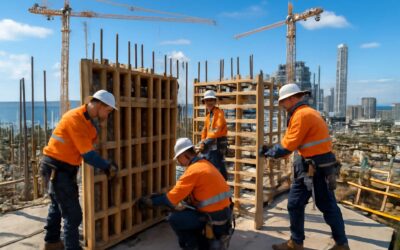
To guarantee impeccable alignment, professionals employ a combination of traditional tools and advanced technology. Laser levels, plumb lines, and digital measuring devices provide sharp, reliable readings that reveal even the slightest deviation. Regularly verifying measurements at multiple points along the formwork ensures that the structure remains true to the architect’s intent.
- First, measure the height, width, and length of each section, cross-referencing with the original design specifications.
- Next, check the alignment of formwork joints and interfaces, ensuring they fit snugly without gaps or overlaps.
- Finally, document all findings meticulously, creating a record that supports ongoing quality control of formwork throughout construction.
When these critical inspection steps are diligently followed, the integrity of the entire build is preserved, demonstrating that in the realm of formwork, accuracy isn’t just a standard—it’s a safeguard against future failures and a testament to craftsmanship. Achieving flawless dimensional accuracy through rigorous quality control of formwork transforms a structure from mere construction into a masterpiece of engineering precision.
Structural Stability Tests – Ensuring load-bearing capacity and stability
In the realm of construction, the integrity of a structure depends heavily on the meticulousness of its formwork. Beyond mere measurements, the critical inspection processes for formwork include rigorous structural stability tests that safeguard load-bearing capacity and overall safety. These tests are not just procedural formalities but the moral backbone ensuring that every element can withstand the rigors of time and stress.
At the heart of quality control of formwork lies a fundamental principle: stability is non-negotiable. During inspections, engineers evaluate whether the formwork can support the anticipated loads without excessive movement or deformation. This involves examining anchorage points, bracing systems, and connection integrity—each a vital thread in the fabric of structural resilience.
To deepen confidence, some projects incorporate advanced structural stability tests such as load testing and deflection measurement, which reveal hidden vulnerabilities. These evaluations are often complemented by a structured checklist, including:
- Verification of support systems’ strength
- Assessment of formwork interface tightness
- Evaluation of bracing and anchorage stability
Documenting these inspections meticulously creates a record that supports ongoing quality control of formwork, ensuring that every component plays its part in the grand design of safety and durability. Because in construction, stability is more than a requirement — it’s a moral imperative, an unwavering testament to craftsmanship and foresight.
Connection and Joint Quality – Checking the reliability of joints and connections
When it comes to the quality control of formwork, one area that often gets overlooked – until it’s too late – is the integrity of joints and connections. These seemingly innocuous details are actually the backbone of a successful pour. If a connection fails, it’s not just a minor hiccup; it could spell disaster for the entire structure! Ensuring the reliability of formwork joints requires a keen eye and a bit of detective work.
During critical inspection processes, engineers scrutinize every connection point, from bolt tightness to pin alignment. A common pitfall? Overlooking the importance of precise tightening and the quality of anchorage. To get it right, some projects employ a structured approach, including:
- Verifying the strength of support systems
- Assessing the interface tightness between formwork components
- Checking the stability of bracing and connection points
These steps aren’t just about ticking boxes—they’re about constructing a safety net that holds up under stress. With meticulous documentation of each inspection, the quality control of formwork becomes an unbreakable chain of accountability, ensuring every joint and connection contributes to the overall durability of the structure. After all, in the realm of construction, if your joints aren’t reliable, nothing else really matters!
Implementing Effective Quality Control Procedures
Developing QC Guidelines – Standards and protocols for formwork inspection
Implementing effective quality control procedures for formwork is essential to ensure safety, durability, and structural integrity in construction projects. Developing comprehensive QC guidelines involves establishing clear standards and protocols that all team members can follow consistently. These standards should cover every aspect of formwork inspection, from material checks to assembly practices, ensuring each step meets the required specifications.
In South Africa, adhering to strict quality control of formwork is not just a best practice—it’s a necessity driven by local regulations and environmental conditions. A well-structured QC system minimizes risks of defects that could compromise safety or cause costly delays.
To streamline the process, consider implementing a step-by-step inspection checklist, which may include:
- Material verification for compliance with quality standards
- Visual assessments for surface and structural integrity
- Dimensional accuracy checks to ensure proper fit and alignment
- Connection and joint evaluations for stability and safety
By establishing robust quality control of formwork, construction teams can deliver projects that are not only compliant but also resilient against the challenges of local construction environments.
Training and Certification of Staff – Ensuring competent personnel
In the realm of construction, even the smallest oversight can cascade into monumental failures. Implementing effective quality control procedures begins with ensuring that every team member is not only trained but also fully certified in the nuances of formwork safety and precision. Skilled personnel are the backbone of robust quality control of formwork, transforming theoretical standards into tangible, structural excellence.
Training programs tailored to local environmental conditions in South Africa are vital. They equip staff to recognize material discrepancies, assess structural stability, and perform accurate measurements with confidence. Certification processes serve as a seal of competence, reinforcing the importance of rigorous standards in every phase of formwork assembly and inspection.
- Comprehensive workshops that encompass practical skills and safety protocols
- Regular refresher courses to stay abreast of evolving standards
- Assessment and certification to validate expertise in quality control of formwork
By investing in the education and certification of personnel, construction teams not only elevate their quality control of formwork but also fortify the safety and durability of their projects. This cultivated expertise ensures compliance with local regulations, minimizes costly rework, and paves the way for resilient, long-lasting structures that stand the test of time in South Africa’s diverse construction landscape.
Documentation and Record-Keeping – Tracking inspections, tests, and corrective actions
Effective documentation and meticulous record-keeping are cornerstones of robust quality control of formwork. Tracking inspections, tests, and corrective actions creates a transparent trail that facilitates accountability and continuous improvement. When every step is recorded—from initial material checks to final approval—teams can quickly identify recurring issues and implement targeted solutions.
Implementing a structured system for documentation ensures that all activities align with the project’s quality standards. For instance, maintaining detailed logs of formwork inspections helps verify compliance with design plans and safety protocols. Additionally, recording corrective actions taken after inspections creates a feedback loop that enhances future quality control of formwork.
Using tools like checklists, digital logs, or specialized software can streamline this process. Here’s an example of how a typical record-keeping process might unfold:
- Initial material inspection and certification
- Periodic on-site inspections during assembly
- Testing of formwork stability and load-bearing capacity
- Documentation of any defects or deviations
- Follow-up actions and re-inspections
Ultimately, thorough documentation not only ensures compliance with local regulations but also minimizes costly rework, bolsters safety, and guarantees the integrity of the construction project. When every inspection and test is carefully logged, the quality control of formwork transforms from a routine task into a strategic advantage in South Africa’s competitive construction landscape.
Common Challenges and Solutions in Formwork Quality Control
Dealing with Material Defects – Identification and mitigation strategies
In the realm of construction, material defects can quietly undermine even the most meticulously planned projects. When dealing with the quality control of formwork, identifying these flaws early is crucial to avoid costly delays and safety hazards. Cracks, warping, or inconsistencies in the formwork materials not only compromise the structural integrity but also threaten the safety of workers on site. To combat this, rigorous visual inspections are essential, focusing on surface defects, warping, and any signs of moisture damage. Implementing a structured approach to material testing ensures that only high-grade components are used, reducing the risk of unexpected failures.
Mitigation strategies often involve establishing comprehensive quality assurance protocols that include supplier vetting and batch testing. Regularly scheduled checks and strict adherence to manufacturing standards enable teams to catch defects before installation. For example,
- using non-destructive testing methods
- performing moisture content analysis
can significantly improve the reliability of formwork materials. When defects are detected, prompt removal and replacement are vital to maintain the integrity of the entire formwork system. Emphasizing diligent quality control of formwork ensures that construction progresses smoothly, with safety and durability at the forefront of every project.
Addressing Design Flaws – Adjustments and re-evaluation methods
In the intricate dance of construction, even the slightest design flaw in formwork can cast long shadows over safety and durability. Addressing these issues requires a meticulous process of re-evaluation and adjustment, where every detail is scrutinized with unwavering precision. Sometimes, early-stage design flaws become apparent only after initial inspections, prompting the need for thoughtful modifications that preserve structural integrity. This ongoing refinement ensures that the quality control of formwork remains uncompromised, preventing costly rework and safety hazards.
Implementing a structured re-assessment process—such as peer reviews or advanced modeling—can illuminate underlying issues before they escalate. For example, when misalignments are detected, adjustments to formwork plans or reinforcement placements can be made swiftly. In certain cases, employing non-destructive testing techniques or digital simulations provides deeper insight into potential vulnerabilities. By fostering a culture of continuous improvement, teams can navigate the complexities of design flaws, elevating the overall quality control of formwork and ensuring flawless execution from foundation to finish.
Managing Workforce Errors – Training and supervision practices
In the bustling world of construction, managing workforce errors is an ongoing challenge that can make or break the quality control of formwork. Even the most meticulously planned projects can be derailed by human oversight—misplaced panels, incorrect measurements, or rushed assembly—each risking structural integrity. Yet, these pitfalls are often preventable with the right training and supervision practices in place.
Comprehensive training ensures that every team member understands the importance of precision and safety. Regular supervision acts as a safeguard, catching mistakes before they escalate. Incorporating clear protocols and fostering a culture of accountability can dramatically reduce errors. For instance, implementing routine checklists and peer reviews creates a vigilant environment where quality control of formwork is continuously reinforced.
- Investing in ongoing skills development
- Establishing detailed supervision routines
- Encouraging open communication among team members
By addressing workforce errors head-on, construction teams in South Africa can uphold the highest standards of quality control of formwork, ensuring every project stands as a testament to craftsmanship and safety. The harmony between skilled personnel and vigilant oversight is the cornerstone of flawless formwork execution, turning ambitious visions into resilient realities!
Innovations and Technologies Enhancing Quality Control
Use of Digital Tools – Inspection apps and digital records
In an era where precision is paramount, the integration of digital tools has revolutionized the quality control of formwork. Modern inspection apps and digital record-keeping platforms transform what was once a manual, often error-prone process into an efficient symphony of data and oversight. These innovations not only streamline inspections but also foster transparency and accountability across every phase of formwork management.
With the advent of sophisticated digital records, quality control of formwork becomes a dynamic, real-time process. Mobile apps equipped with photo capture, instant annotation, and timestamping allow inspectors to document issues immediately, reducing delays and miscommunication. Moreover, these tools facilitate seamless tracking of modifications, ensuring that every adjustment adheres to strict standards, thereby elevating safety and structural integrity.
- Automated alerts for deviations from design specifications
- Centralized databases for easy retrieval of inspection history
- Enhanced collaboration between teams through shared digital platforms
Such technologies are no longer optional but integral to maintaining impeccable quality control of formwork, especially in complex projects where precision can mean the difference between stability and failure. Embracing these digital innovations empowers construction professionals to uphold the highest standards with confidence and clarity, turning the craft of formwork into a ballet of accuracy and efficiency.
Smart Sensors and IoT – Real-time monitoring of formwork conditions
In the fast-evolving landscape of construction, innovations like smart sensors and the Internet of Things (IoT) are transforming the quality control of formwork. These technologies enable real-time monitoring of formwork conditions, providing instant data on structural stability, moisture levels, and strain points. With sensors embedded directly into formwork panels, construction teams can detect issues before they escalate, ensuring safety and precision.
For instance, smart sensors can continuously track load distribution and environmental factors, alerting engineers to deviations from design specifications. This proactive approach reduces delays and costly rework, making the entire process more efficient. As a result, quality control of formwork becomes a dynamic, highly responsive operation rather than a manual, reactive task.
Key technological advancements include:
- Wireless data transmission for seamless communication
- Automated alerts for potential structural issues
- Centralized dashboards for comprehensive data analysis
By integrating these IoT-driven solutions, construction professionals in South Africa can uphold the highest standards of safety, accuracy, and durability—fundamentals that underpin every successful project. Embracing such innovative tools is no longer optional; it’s essential for elevating the quality control of formwork to new heights!
Advanced Materials – New materials for improved durability and safety
Innovation in construction isn’t just about faster build times; it’s transforming how we ensure the quality control of formwork. Advanced materials are at the forefront, offering enhanced durability and safety for structural components. These new composites and high-performance concretes reduce the risk of deformation and wear, ensuring formwork remains reliable throughout multiple uses. Such materials not only extend the lifespan of formwork systems but also minimize the chances of defects that could compromise safety.
Furthermore, the integration of cutting-edge materials allows for more precise and resilient formwork structures. This precision translates directly into better surface finishes and fewer rework episodes, ultimately saving time and costs. As construction professionals in South Africa adopt these innovations, the overall integrity and safety of structures are elevated. Quality control of formwork is becoming more proactive, thanks to innovations that make it easier to detect issues before they become critical.
- Use of fiber-reinforced polymers for increased strength
- Application of lightweight, high-impact plastics for easier handling
- Deployment of corrosion-resistant materials for longer lifespan
By leveraging these advanced materials, the construction sector can uphold the highest standards of safety and durability—cornerstones of effective quality control of formwork. It’s clear that embracing such technological advances is no longer optional but essential for building resilient structures in South Africa’s dynamic environment.

0 Comments