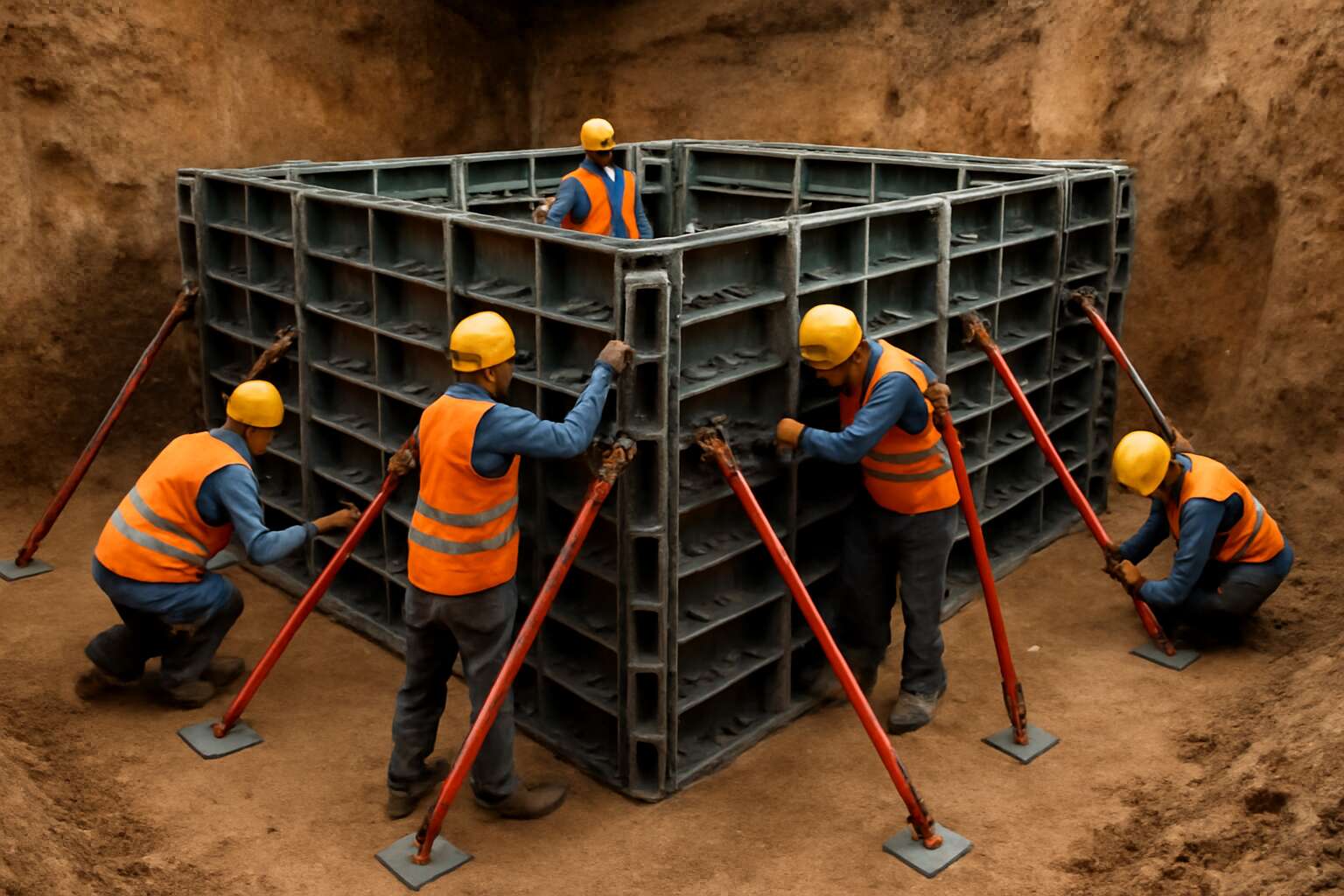
Understanding Underground Formwork
Definition and Overview
Underground formwork might not sound like the star of your construction project, but trust me, it’s the unsung hero beneath the surface. Essentially, underground formwork is a specialized system used to shape concrete structures below ground level—think basements, tunnels, and underground parking garages. It’s the backbone of modern subterranean construction, ensuring stability and precision where it’s needed most.
What sets underground formwork apart is its ability to withstand the immense pressure exerted by wet concrete and earth. Engineers rely on a variety of innovative materials and techniques—such as modular panels and adjustable supports—to craft these hidden marvels. This technology guarantees that every underground structure is both durable and safe, reducing the risk of costly mistakes or collapse.
- Speed of installation
- Cost-effectiveness over traditional methods
- Enhanced safety during construction
In South Africa’s rapidly urbanizing landscape, underground formwork is becoming increasingly vital. It’s not just about building foundations—it’s about creating the hidden infrastructure that keeps cities running smoothly beneath our feet. Without it, the impressive underground spaces we now take for granted wouldn’t be possible!
Types of Underground Formwork Systems
Understanding the different types of underground formwork systems is crucial for ensuring the success of subterranean construction projects. Each system is designed with specific functions and site conditions in mind, offering varied benefits in terms of speed, safety, and cost-efficiency. These systems are the backbone of reliable underground structures, allowing engineers to adapt to complex urban landscapes.
One popular type is the **modular underground formwork system**. Its versatility and reusability make it ideal for projects that demand quick assembly and disassembly. Modular panels can be easily adjusted to accommodate different shapes and sizes, reducing downtime and labor costs. This flexibility is especially valuable in South Africa’s dynamic urban development scene.
Another effective choice is the **perimeter wall formwork**. Designed to resist earth pressure and wet concrete, it provides a sturdy frame for constructing basement walls and tunnel linings. These systems often incorporate adjustable supports that allow for precise alignment, ensuring the structural integrity of underground spaces.
- Slip formwork, which moves continuously upward, speeds up the process of large-scale underground structures like tunnels.
- Stay-in-place formwork, offering a durable mold that remains embedded within the structure, reducing material waste.
Choosing the right underground formwork system is a decision that combines technical expertise with an understanding of project needs. With the right system, construction teams can deliver safer, faster, and more cost-effective underground structures—crucial for South Africa’s fast-paced urban expansion.
Applications in Construction Projects
In the bustling world of South African urban construction, underground formwork plays a pivotal role in shaping the subterranean marvels that underpin our cities’ growth. Its applications stretch far beyond mere concrete molds; they are the silent architects of our underground labyrinths, tunnels, and basements. Each project demands a bespoke approach, where the choice of underground formwork system transforms raw earth into resilient structures that stand the test of time.
Whether creating the foundations of a towering skyscraper or carving out tunnels beneath busy streets, understanding how underground formwork fits into the grand tapestry of construction is essential. For complex projects, engineers often employ specialized systems such as slip formwork or perimeter wall formwork—each tailored to meet specific site challenges and structural requirements. These systems enable seamless construction, reducing delays and ensuring safety at every stage.
Furthermore, the strategic application of underground formwork fosters not only efficiency but also sustainability. Reusable modular panels, for instance, cut down on waste and speed up assembly, aligning with South Africa’s evolving focus on eco-conscious development. In the end, the mastery of underground formwork applications is a dance of precision and ingenuity—crafting the unseen backbone of our urban landscapes with finesse and foresight.
Benefits of Using Underground Formwork
Cost Efficiency and Time Savings
Underground formwork is revolutionising construction efficiency, especially in complex projects. Its ability to streamline workflows reduces downtime and boosts productivity on-site. When properly designed, underground formwork can significantly cut costs by minimizing material waste and decreasing labor hours. This approach often results in a lower overall project expenditure, making it an attractive choice for developers focused on budget management.
Time savings are another compelling benefit. Rapid installation and removal of underground formwork mean structures can progress faster than traditional methods. This accelerated pace not only shortens project timelines but also accelerates return on investment. For instance, some projects have reported up to 30% reduction in construction duration, thanks to the efficiency of underground formwork systems.
By choosing underground formwork, contractors gain a competitive edge through enhanced cost efficiency and faster project completion. This system’s modular nature allows for quick adjustments and reuse, translating into long-term savings. In the end, underground formwork isn’t just a construction technique — it’s a strategic tool for smarter, more economical building practices.
Safety Enhancements on Site
In the relentless pulse of construction sites, safety is the silent guardian that preserves both lives and progress. Underground formwork, with its intricate dance of precision and stability, elevates safety to an art form. Unlike traditional methods fraught with risks of accidents and collapses, this system offers a level of control that transforms chaos into order. The well-engineered framework minimizes the chances of structural failure, ensuring that every pour and every form is executed with confidence.
Furthermore, underground formwork is designed with safety at its core, incorporating features such as:
- Robust modular components that lock firmly into place, reducing the risk of unexpected shifts
- Integrated safety barriers that prevent accidental falls into excavations
- Ease of installation and removal, decreasing on-site hazards and worker fatigue
By streamlining these processes, underground formwork not only safeguards workers but also fosters a culture of safety that permeates every phase of construction. It’s a strategic choice that champions human well-being, turning construction sites into bastions of protection and efficiency. Truly, underground formwork is a luminous testament to innovation—crafting safer horizons amid the tumult of building the future in South Africa and beyond.
Structural Quality and Precision
Underground formwork doesn’t just shape the future of construction—it elevates it with unmatched structural quality and precision. When every pour counts, the integrity of the foundation hinges on the formwork’s ability to deliver exact dimensions and flawless surfaces. This precision minimizes the need for costly corrections, reducing delays and enhancing overall project efficiency.
One of the most compelling benefits of underground formwork lies in its ability to produce durable, high-quality structures that stand the test of time. By maintaining tight tolerances, this system ensures that each element aligns perfectly, creating a cohesive and resilient foundation. The enhanced control over formwork reduces the risk of defects and structural weaknesses, which are often the silent culprits behind costly repairs down the line.
Furthermore, choosing underground formwork facilitates a seamless construction process. Its modular components allow for swift assembly and disassembly, maintaining consistent quality throughout. As a result, projects can progress faster without compromising on safety or structural integrity, making underground formwork an invaluable asset in complex or high-stakes construction environments.
Versatility in Construction
Underground formwork offers unparalleled versatility in construction, transforming how projects are approached across South Africa’s diverse landscape. Its adaptability allows for use in a wide range of structures—be it tunnels, basements, or underground parking facilities—each demanding precision and durability. This flexibility ensures that construction teams can seamlessly switch between different project types without sacrificing efficiency or quality.
What truly sets underground formwork apart is its modular nature. Components can be reconfigured to accommodate complex geometries or tight spaces—an invaluable trait in urban environments where space is at a premium. This adaptability not only accelerates project timelines but also reduces material waste, making it an environmentally and economically sound choice.
- Rapid assembly and disassembly
- Customizable configurations for unique designs
- Compatibility with various concrete finishes and structural demands
In essence, underground formwork’s versatility elevates construction standards, ensuring that each project, no matter how complex, can be executed with precision, speed, and resilience—qualities essential to South Africa’s evolving infrastructure needs.
Materials and Technologies in Underground Formwork
Common Materials Used
In the realm of underground formwork, material choice is nothing short of artistry—an intricate dance between durability, adaptability, and sustainability. The foundation of reliable underground formwork often rests upon high-grade steel and robust plywood, both designed to withstand the relentless pressures of subterranean environments. These materials are chosen not just for their strength, but for their ability to be reused, aligning with the growing emphasis on eco-friendly construction practices.
Innovative technologies have elevated underground formwork to new heights, incorporating modular systems that streamline installation while ensuring precision. For instance, the advent of slipform techniques allows for continuous, seamless concrete pours, reducing waste and accelerating project timelines. Some of the most advanced materials used include fiber-reinforced plastics and lightweight aluminium, which offer both resilience and ease of handling.
- Reinforced steel for structural integrity
- High-quality plywood for formwork surfaces
- Lightweight aluminium for quick assembly
- Fiber-reinforced plastics for corrosion resistance
Such materials form the backbone of modern underground formwork, ensuring that each project not only meets safety standards but also embodies the elegance of well-engineered construction. When selecting materials, the emphasis remains on creating a symphony of strength, flexibility, and sustainability—hallmarks of truly exceptional underground formwork systems in South Africa’s dynamic construction landscape.
Innovative Technologies and Modern Solutions
In the ever-evolving landscape of underground construction, technological innovation acts as a mystical forge, transforming raw materials into resilient masterpieces. The heart of modern underground formwork beats with advanced materials that push the boundaries of durability and adaptability. Steel, renowned for its reinforced strength, forms the backbone of these systems, ensuring structural integrity beneath the earth’s surface. Complementing this, high-quality plywood provides a smooth, reusable surface that withstands the rigors of repeated use.
Emerging technologies have introduced a new realm of possibilities, with modular systems allowing for swift assembly and precise execution. For example, slipform techniques enable continuous, seamless concrete pours—reducing waste and significantly speeding up project timelines. Lightweight aluminium components are a marvel in this domain, offering quick, effortless installation without sacrificing resilience. Fiber-reinforced plastics, with their extraordinary corrosion resistance, are revolutionizing underground formwork, especially in the moist, subterranean environment of South Africa’s construction projects.
- High-strength steel for reinforced durability
- Premium plywood for smooth, reusable surfaces
- Lightweight aluminium for rapid assembly
- Fiber-reinforced plastics for corrosion resistance
These materials and innovations weave together a tapestry of strength, flexibility, and sustainability—each element integral to the art of underground formwork. As the construction landscape in South Africa continues to evolve, embracing these modern solutions ensures projects are not only structurally sound but also environmentally conscious and cost-effective. Truly, the future of underground formwork is a symphony of engineering marvels—crafted to withstand the depths and demands of subterranean construction.
Durability and Maintenance Considerations
In the subterranean realm of construction, the longevity of underground formwork hinges on the intelligent selection of materials and the mastery of technological innovations. The relentless moisture and earth’s pressure demand that every component be resilient and adaptable. High-strength steel remains the stalwart choice, offering reinforced durability that stands the test of time beneath South Africa’s challenging conditions. Its robustness ensures that the formwork maintains structural integrity during extended pours, proving indispensable for complex projects.
Complementing steel, premium plywood provides a smooth, reusable surface that facilitates impeccable finishes, while lightweight aluminium components accelerate assembly without compromising strength. Fiber-reinforced plastics, with their extraordinary resistance to corrosion, are increasingly favored in underground formwork, especially in moist environments. For projects demanding utmost precision, modular systems and slipform techniques exemplify technological strides—allowing for streamlined, continuous concrete pours with minimal waste.
To further streamline the process, consider this list of vital materials and innovations in underground formwork:
- High-strength steel for reinforced durability
- Premium plywood for smooth, reusable surfaces
- Lightweight aluminium for rapid assembly
- Fiber-reinforced plastics for corrosion resistance
Thus, the evolution of underground formwork is a delicate ballet of engineering ingenuity and material ingenuity—crafted to withstand the relentless pressures of subterranean construction while maintaining sustainability and cost-effectiveness. Each technological leap not only enhances durability but also elevates the integrity of beneath-the-surface structures, making underground formwork an art form in its own right.
Design and Engineering Aspects
Design Principles for Underground Formwork
Design and engineering principles form the backbone of effective underground formwork, transforming raw excavation into resilient structures that stand the test of time. When crafting underground formwork systems, engineers prioritize load distribution, stability, and ease of assembly, ensuring every element integrates seamlessly into the subterranean environment. A well-conceived design not only enhances safety but also minimizes material waste, conserving resources while maximizing efficiency.
Incorporating innovative approaches, such as modular components and adaptable support structures, allows for rapid deployment across diverse construction sites. Careful attention to the unique geotechnical conditions influences the choice of formwork materials and configuration, reinforcing the importance of tailored solutions in underground applications. To streamline complex projects, many firms now utilize underground formwork design principles that emphasize versatility, durability, and precision—qualities essential for successfully navigating the challenging underground landscape.
- Assessment of soil stability and environmental factors
- Integration of load-bearing calculations with safety margins
- Selection of materials that withstand underground pressures
- Designing for ease of disassembly and reuse
Load-Bearing Capacity and Safety Standards
In the subterranean realm of construction, where the earth’s silent strength is both a challenge and a canvas, the load-bearing capacity of underground formwork becomes the silent guardian of structural integrity. It’s not merely about supporting the weight of poured concrete; it’s about understanding the nuanced dance between soil pressures, water ingress, and the inherent stability of the surrounding environment. Engineers meticulously incorporate safety margins into load calculations, transforming raw data into a fortress of safety that withstands the unpredictable nature of underground conditions.
Designing for safety in underground formwork involves selecting materials that resist underground pressures—high-strength steel, corrosion-resistant composites, and durable plywood—each chosen to meet the rigorous demands of subterranean environments. The integration of these materials ensures that formwork remains resilient, even when faced with shifting soils or unforeseen environmental factors. This careful balance between load-bearing capacity and safety standards creates a foundation that is both robust and reliable, vital for the success of any underground construction project.
- Accurate geotechnical assessments to determine soil stability
- Incorporation of safety margins into load calculations
- Selection of materials capable of withstanding underground pressures
- Designs that facilitate easy disassembly and reuse, fostering sustainability
Customization and Modular Systems
In the realm of subterranean construction, where every inch of space must be meticulously orchestrated, the design and engineering of underground formwork transcend mere functionality—they become an art form. Customization emerges as a vital element, allowing engineers to craft bespoke solutions that precisely fit the unique contours of each project’s underground environment. This tailored approach ensures optimal support and seamless integration with existing structures, minimizing waste and maximizing efficiency.
Modular systems further elevate the versatility of underground formwork, enabling rapid assembly and disassembly—crucial for projects demanding swift turnaround times. These systems often feature interchangeable components, which can be reconfigured to accommodate complex geometries or varying load conditions. By adopting modular solutions, construction teams can adapt to unforeseen challenges on site, turning potential setbacks into opportunities for innovation.
For instance, innovative underground formwork designs incorporate adjustable panels and reusable components, fostering sustainability and reducing costs. Such modularity not only accelerates construction timelines but also aligns with eco-friendly practices, essential in today’s environmentally conscious industry. In the end, it’s the harmonious blend of customization and modular engineering that transforms underground formwork into a marvel of modern construction—robust, adaptable, and precisely engineered to withstand the silent strength of the earth.
Installation and Removal Processes
Step-by-step Installation Procedures
Efficient installation and removal of underground formwork can significantly cut project timelines. The process begins with precise site preparation, ensuring the ground is stable and accurately marked for the formwork layout. Once the site is ready, the formwork panels are assembled on-site or delivered pre-assembled, depending on the system used. Safety is paramount — all components must be securely fastened and inspected before pouring concrete.
Typically, the installation follows a clear sequence: set up support systems, align formwork panels, and secure them with fasteners or clamps. When pouring concrete, the formwork must withstand pressure and maintain structural integrity. After curing, removal takes place in reverse order, often starting with the outer panels.
- Remove formwork supports carefully to prevent damage.
- Gradually disassemble panels, ensuring concrete has reached sufficient strength.
- Inspect formwork components for wear or damage, readying them for reuse.
This step-by-step procedure highlights the importance of precision and safety, especially in underground formwork applications where access can be limited and conditions challenging. Proper execution ensures durability, safety, and reuse of the formwork system for future projects.
Techniques for Safe Removal
In underground construction, the safety and precision of formwork removal are critical. A careful approach minimizes damage to the concrete structure and ensures the durability of the formwork system for future reuse. The removal process must be methodical, especially given the limited access often encountered in underground projects.
One effective technique is to disassemble the formwork in reverse order of installation. This prevents undue stress on the concrete and maintains project integrity. Support supports and fastening systems should be released gradually, allowing the concrete to develop sufficient strength. It’s essential to inspect each component for wear and tear before storage or reuse, ensuring safety standards are met.
- Use proper lifting equipment to avoid damaging panels
- Disassemble supports carefully to prevent cracks or deformation
- Ensure concrete has cured adequately before removal
Adhering to these techniques guarantees the safety of workers and prolongs the lifespan of the underground formwork system—saving costs and time in the long run. Proper removal is as vital as installation in underground construction projects, where precision and safety are paramount.
Best Practices to Minimize Waste
Effective installation and removal of underground formwork are crucial for minimizing waste and maximizing efficiency on site. Proper planning ensures that materials are used optimally and reduces the need for rework or disposal. During installation, precise alignment and secure fastening prevent future complications and extend the lifespan of the formwork system.
When it’s time for removal, a methodical approach is essential. Carefully disassembling the formwork in reverse order of installation helps prevent damage to the concrete and supports reuse of components. Using proper lifting equipment avoids panel damage, while gradual support disassembly prevents cracks or deformation. Ensuring concrete has cured fully before removal is vital for structural integrity.
- Plan the sequence meticulously
- Use suitable lifting tools
- Inspect components for wear
Adherence to these best practices in underground formwork installation and removal reduces waste, saves costs, and promotes project safety.
Challenges and Limitations
Common Construction Challenges
Underground formwork, while pivotal in modern construction, presents a unique set of challenges that can often catch even seasoned builders off guard. One of the primary hurdles is dealing with unpredictable soil conditions, which demand meticulous planning and adaptation. The risk of encountering underground utilities or unforeseen obstructions can cause delays, adding to project costs and timelines. Safety remains a top concern—poorly managed underground formwork installation can lead to structural failures or accidents if standards aren’t strictly followed. Additionally, limited space underground complicates the logistics of formwork assembly and removal, requiring innovative techniques and precise coordination.
Furthermore, the durability of underground formwork materials must withstand harsh environmental factors like moisture, corrosion, and soil pressure. This necessitates using robust materials and maintenance practices to ensure longevity. For construction firms aiming for efficiency, balancing cost with quality can be a delicate act—choosing the right system without compromising safety or structural integrity. In South Africa, where terrain varies dramatically, understanding these common challenges is essential for a successful underground formwork project that stands the test of time.
Environmental and Soil Considerations
In the shadowed depths of subterranean realms, the challenges of underground formwork manifest as daunting specters, lurking beneath the surface of every project. The terrain itself whispers secrets—unpredictable soil conditions that can shift and sway, defying even the most meticulous plans. These hidden complexities demand an expert’s touch, a keen eye for environmental nuances that threaten to compromise structural integrity.
One of the most insidious obstacles is the prevalence of underground utilities and unforeseen obstructions. A single misstep can cause delays that ripple through timelines and inflate budgets. Navigating these labyrinthine underground pathways requires innovative techniques and unwavering precision. Moreover, the environment’s relentless assault—moisture, corrosion, and soil pressure—tests the resilience of the formwork materials, demanding robust construction systems that can endure the harsh subterranean world.
- Soil stability and compaction
- Presence of water or moisture ingress
- Corrosion from soil chemicals
- Detection and avoidance of underground utilities
Safety remains a dark sentinel guarding every underground formwork operation. Poorly managed procedures can lead to catastrophic failures, risking lives and livelihoods. The limited space underground amplifies logistical nightmares, requiring innovative assembly and removal techniques that balance efficiency with safety. In South Africa’s variegated terrain, understanding these environmental and soil considerations is not just prudent—it is vital for the longevity of any underground formwork structure, ensuring it withstands the relentless passage of time and the elements’ merciless grip.
Cost Implications and Material Waste
Underground formwork presents unique challenges that can significantly impact project costs and timelines. Complex soil conditions and unforeseen obstructions often lead to delays, requiring additional resources and labor. These setbacks translate directly into higher expenses, sometimes doubling initial estimates. Material waste also becomes a pressing issue, especially when formwork components are damaged or improperly removed, leading to costly replacements.
Underground formwork systems demand precision during installation. Any misalignment or improper handling can result in structural flaws, necessitating rework that inflates costs further. To mitigate this, construction teams must plan meticulously and adopt innovative techniques that reduce waste and optimize resource use.
In the end, managing the inherent limitations of underground formwork—such as soil variability and hidden utilities—is vital for controlling expenses and minimizing material waste, ensuring the project stays within budget and on schedule in South Africa’s demanding terrain.
Future Trends and Innovations in Underground Formwork
Automation and Digital Technologies
As the dawn of automation unfurls across the construction horizon, underground formwork stands poised at the precipice of a technological renaissance. Future innovations promise to elevate this ancient craft, blending precision engineering with digital ingenuity. Imagine robotic systems seamlessly orchestrating complex molds, where sensors and AI-driven controls anticipate every shift in soil and load, transforming the subterranean landscape into a symphony of efficiency.
Emerging trends are increasingly rooted in digital technologies, heralding a new era of smart underground formwork. Advanced software now enables real-time monitoring of structural integrity, while automated machinery accelerates installation times with unparalleled accuracy. These innovations not only minimize human error but also extend the durability and safety of underground structures. In South Africa’s dynamic construction industry, harnessing such cutting-edge solutions means embracing a future where underground formwork is no longer merely functional but a testament to innovation and resilience.
Sustainable and Eco-friendly Materials
In the shadowed corridors of construction’s future, underground formwork emerges as a harbinger of innovation and sustainability. The relentless march toward eco-friendly materials promises to reshape the subterranean realm, blending tradition with reverence for the earth. New composites, infused with recycled elements and biodegradable binders, are whispering their way into the market, offering a greener alternative that minimizes environmental impact while maintaining structural integrity.
Imagine a world where underground formwork is crafted from sustainable materials—an evolution driven not just by necessity but by a profound respect for our planet. Emerging trends include the integration of bio-based plastics and natural fiber reinforcements, transforming the very essence of formwork into a testament to resilience and environmental stewardship. These materials often boast enhanced durability, reducing waste and the need for frequent replacements.
Furthermore, the industry is gravitating toward modular, eco-conscious designs that optimize resource utilization. This shift is not merely cosmetic; it is a fundamental reimagining of how underground structures are conceived, built, and reclaimed. As South Africa’s construction landscape grows more conscious of its ecological footprint, embracing sustainable underground formwork becomes an act of silent rebellion—turning the underground into a sanctuary of innovation and earth-friendly ingenuity.
Smart Formwork Systems
As the shadows of innovation deepen within the realm of underground formwork, the future whispers of systems that breathe intelligence into subterranean construction. Smart formwork systems are poised to revolutionize how we conceive and execute underground structures, bringing a symphony of automation and precision to the darkened corridors beneath our feet.
Imagine formwork that adapts in real-time, utilizing digital sensors to monitor load distribution, structural integrity, and environmental conditions. These advancements enable unprecedented accuracy, minimizing waste and reducing labor time—an evolution driven by the relentless pursuit of efficiency in underground formwork. The integration of IoT technology ensures that every element is synchronized, transforming the underground construction site into a living, breathing organism.
- Automated systems that adjust formwork during pouring for optimal alignment.
- Remote monitoring tools that detect stress points and potential failures before they manifest.
- Data-driven insights that streamline project timelines, conserving resources and lowering costs.
Such innovations herald a new era—one where underground formwork is no longer static but a dynamic, intelligent framework. This seamless blend of technology and tradition promises to redefine the subterranean landscape, turning dark corridors into corridors of innovation and resilience, all while adhering to the strict safety standards that underpin every structure built beneath the earth.
Choosing the Right Underground Formwork System
Factors to Consider
Choosing the right underground formwork system is a pivotal decision in any construction project. The success of underground structures hinges on selecting a system that aligns with soil conditions, load requirements, and project timelines. It’s essential to evaluate factors such as the formwork’s load-bearing capacity, ease of installation, and adaptability to complex geometries.
Furthermore, the environmental impact and soil stability play critical roles in determining the most suitable underground formwork. A system that offers modularity and customization can significantly streamline the construction process, reducing waste and minimizing delays. In South Africa’s diverse terrain, understanding these nuances ensures structural integrity and safety.
Ultimately, investing in the optimal underground formwork system means embracing innovation and precision—elements that transform construction challenges into opportunities for excellence.
Top Brands and Manufacturers
Choosing the right underground formwork system is akin to selecting the silent architect that shapes the very foundation of progress. In South Africa’s diverse terrain, top brands and manufacturers stand out as beacons of innovation, offering solutions that marry strength with adaptability. When navigating this landscape, it is vital to consider reputable names renowned for their durability and precision in underground formwork. These brands often lead with cutting-edge technology, ensuring each formwork unit aligns perfectly with the complex geometries and load requirements of modern construction.
Among the leading manufacturers, several companies have established a reputation for excellence. Their underground formwork systems are crafted with meticulous attention to detail, embodying a harmony of modularity and robustness. These brands often provide extensive support, ensuring seamless installation and removal—crucial elements in maintaining efficiency on site. By selecting top-tier brands, project managers can confidently embrace systems that promise not only safety and structural integrity but also a remarkable reduction in construction timelines.
- Innovative design features that enhance flexibility
- Superior load-bearing capacity to meet safety standards
- Modular components for easy customization
In the realm of underground formwork, the choice of manufacturers can transform potential challenges into opportunities for excellence. The synergy of proven quality and technological prowess ensures that every underground structure stands resilient, echoing the craftsmanship of its creators. When it comes to building dreams beneath the earth, the right brand isn’t just a choice—it’s an investment in enduring strength and future success.
Guidelines for Procurement and Budgeting
Choosing the right underground formwork system is a crucial step that can significantly influence the success of any construction project. Budgeting effectively requires a clear understanding of both the immediate costs and the long-term benefits. It’s essential to evaluate the initial investment against factors like durability, ease of installation, and potential savings in time.
Guidelines for procurement emphasize selecting reputable brands known for their high-quality underground formwork. These manufacturers often offer modular components, which not only facilitate customization but also streamline the assembly process. When considering these options, project managers should account for compatibility with existing structures and future scalability.
In South Africa’s dynamic construction landscape, establishing a well-defined budget early on helps prevent unforeseen expenses. Prioritize systems that balance cost-efficiency with performance, ensuring safety standards are met without compromising on quality. Carefully navigating procurement decisions guarantees that your underground formwork investment delivers enduring strength and operational excellence.


0 Comments