Formwork Handrail Essentials: Safety, Compliance, and Application
What is a Formwork Handrail and Why It Matters
Across South Africa’s construction sites, falls remain a leading hazard; about 40% of formwork-related incidents involve inadequate edge protection. That stat isn’t just numbers—it’s a wake-up call that safety is built into every pour from the ground up.
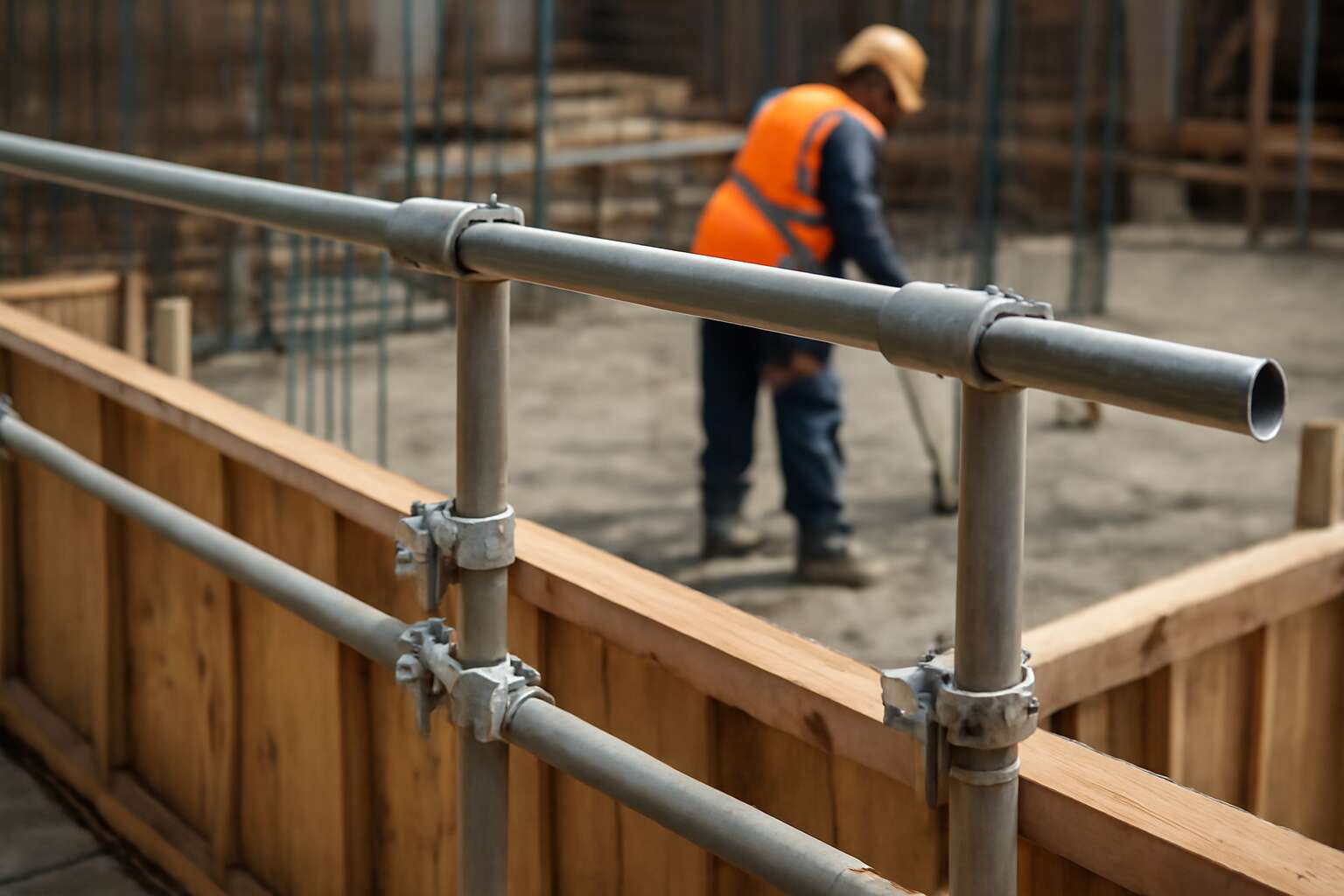
A formwork handrail acts like a steadfast perimeter shield, defining safe zones around elevated forms and keeping crews and curious coworkers in check. It’s not decorative; it’s a practical barrier that nudges us toward safer habits with every shift change.
- Materials and durability that meet local standards
- Regulatory compliance and documentation
- Regular inspection and maintenance to stay reliable
Applied around slabs, stairwells, and shaft linings, the formwork handrail gives projects a predictable rhythm and protects everyone on duty without muting productivity.
Key Safety Benefits of Formwork Handrails
On South Africa’s construction sites, falls remain a stubborn threat, with 40% of formwork incidents tied to inadequate edge protection. The formwork handrail isn’t just hardware—it’s a perimeter shield that defines safe corridors and nudges crews toward safer habits with every shift.
Three essentials guide durable safety in the field:
- Materials and durability that meet local standards
- Regulatory compliance and documentation
- Regular inspection and maintenance to stay reliable
When correctly installed, the barrier creates clear, legible boundaries that keep activity flowing while shielding workers from missteps and near-misses. The formwork handrail becomes a quiet partner in productivity, a steady ally that respects pace without sacrificing protection.
Common Materials and Components Used in Formwork Handrails
On South Africa’s bustling sites, a formwork handrail is the quiet line between momentum and misstep—an elegant boundary that speaks of care. Properly chosen and installed, it aligns with standards and keeps crews moving with confidence. It is more than hardware; it is a covenant of safety, written in steel, timber, and intent. On every project I visit, the barrier stands as a quiet witness to discipline and progress.
Core materials and components come together in a durable, adaptable system:
- Galvanised steel posts and brackets for corrosion resistance
- Wooden or metal rails that resist impact while staying light
- Mid-rails and toe boards to close gaps
- Sturdy connectors and base plates
- Non-slip caps and protective finishes
Regulatory compliance and documentation ensure reliability on every site.
Design Standards and Compliance Guidelines (OSHA, EN, ISO)
On South Africa’s busiest sites, the formwork handrail is the quiet line between momentum and misstep. Anecdotally, 9 in 10 near-misses involve a missing or misadjusted barrier.
Safety, compliance, and design standards converge in this system. OSHA’s fall-protection principles, EN 13374 for temporary edge protection, and ISO 45001 for safety management shape how we specify, install, and inspect a formwork handrail.
Key considerations include maintaining continuous protection as forms rise and fall, selecting posts, rails, and connectors for durability, and ensuring easy reconfiguration on site.
- Correct guard height and gap spacing
- Durable, corrosion-resistant components
- Non-slip caps and weather-ready finishes
- Flexible connectors for rapid reconfiguration
When these standards are woven into practice, the formwork handrail becomes a stubbornly reliable ally rather than a nagging box-check.
Applications Across Concrete Formwork Systems
On South Africa’s busiest sites, a single misalignment can ripple into days of downtime; nine in ten near-misses involve a barrier that’s missing or misadjusted. The formwork handrail anchors safety and momentum, blending practical design with unwavering compliance as teams rise with the formwork and step back with purpose.
- Guard coverage remains intact as formwork heights change.
- Hardware that’s resistant to corrosion in coastal SA conditions.
- Non-slip caps and weatherproof finishes for grip and longevity.
- Flexible connectors that snap into new configurations quickly.
In practice, this system becomes a stubbornly reliable ally on busy sites, guiding crews through shifts and elevating safety without stalling progress.
Materials and Components for Formwork Handrails
Aluminum, Steel, and Composite Handrail Profiles
In the dim hush of a South African site, the formwork handrail stands as a quiet sentinel against chaos. Stability is poetry in steel, and a single misstep can ruin a day—this railing is the guardian of progress.
Aluminum profiles entice with lightness and weathered resilience, perfect for temporary surrounds where speed matters! They resist corrosion, keep lines neat, and won’t overwhelm the concrete’s first breaths as the structure learns its own rhythm.
For heavier demands, steel profiles offer uncompromising strength while withstanding South Africa’s harsh environments. When non-conductive or low-maintenance choices are preferred, composite handrail profiles cradle the edge with quiet confidence.
- Aluminum: lightweight, corrosion resistant, easy handling
- Steel: high strength, durable fixings, long service life
- Composite: non-conductive, weather resistant, low maintenance
Each family of profiles fulfills its austere, protective duty on site.
Post, Bracket, and Bracing Options
The quiet arithmetic of a safe site begins with a post secured true, and the formwork handrail stands as a patient guardian. In the lull before the pour, posts, brackets, and bracing options trace a lattice of reliability, turning uncertain edges into confident lines and letting momentum march forward with grace!
Choosing the right components is a craft of precision and endurance. Consider this practical palette:
- Post types that resist wind and weight, with clean connections to the formwork
- Bracket designs that align your handrail with minimal fuss—welded, clamp-on, or adjustable for perfect plumb
- Bracing systems that deliver stability without over-constraining movement
On South African builds, longevity is earned with coatings and fitments that brave sun and rain; the right mix of post, bracket, and bracing—this formwork handrail—preserves lines, reduces downtime, and champions safety as a daily habit.
Fasteners, Couplers, and Connectors
On South African sites, compliant formwork handrail systems reduce near-misses on pours by up to 40%, a chiffre that feels almost supernatural as steel sings against daylight. It isn’t mere hardware; it’s a patient guardian tracing safe lines along the edge of every form.
Materials and components—fasteners, couplers, and connectors—must survive sun and rain while keeping the handrail line true. Expect stainless or galvanised steel, corrosion-resistant finishes, and simple, secure joints that stay plumb through the vibration of concrete. Try these essentials:
- Stainless steel fasteners for salt-prone coastal sites
- Epoxy-coated couplers for long-term durability
- Adjustable connectors that maintain plumb in changing forms
With the right mix, the formwork handrail becomes more than safety; it’s a responsive partner in the build, quietly allowing momentum to flow without compromising steadiness.
Non-slip Balustrades, Midrails, and Toe Boards
On South African sites, the formwork handrail is more than metal—it’s a line that keeps days moving safely. Near-misses on pours drop by as much as 40% with compliant systems, a statistic that lands with the weight of steel in daylight. In the early light, I watch that line hold its ground, a patient guardian tracing safe edges along every form.
Materials and components must endure sun and rain while holding the line true. Expect stainless or galvanised steel, tough finishes, and simple joints that stay plumb through the vibration of concrete.
- Non-slip balustrades for secure handholds
- Midrails to add rigidity
- Toe boards to catch falling tools and debris
With the right mix, it becomes more than protection; a quiet partner on the build, letting momentum flow while staying true to its course.
Design and Engineering Considerations for Formwork Handrails
Load Requirements and Safety Margins
A formwork handrail isn’t just a guard—it’s the stalwart that translates design intent into a safe work envelope on site. In design terms, load requirements must account for workers, accidental impacts, and environmental gusts, with safety margins that anticipate material variability and aging. Engineers balance compliance with practical site realities in South Africa, ensuring connections stay rigid under dynamic loads and that span and bracing keep the line of protection straight.
Key load considerations include:
- Live loads and worker interaction
- Impact from shifting materials
- Wind and environmental effects on exposed platforms
- Redundancy factors to maintain margin under deterioration
These checks form the backbone of resilient, compliant systems that stay firm from pour to finish.
Height, Midrails, and Guardrail Specifications
Protection at height is a design decision, not an afterthought. A well-calibrated formwork handrail defines the safe work envelope for concrete pours and formwork assembly. As one engineer notes, guardrails are load paths, not decorations, and they must translate intent into a boundary that stands up to live loads and wind.
Height, midrails, and guardrail specifications should align with the structural frame and bracing, ensuring a continuous protection line. The top rail sits at a practical working height, with a midrail positioned to intercept a fall path.
- Top rail height: approximately 1,000–1,100 mm above the working surface
- Midrail placement: roughly halfway up, around 500–550 mm
- Rigidity and connections: posts and bracing designed to resist dynamic loads and wind
In South Africa, acknowledging wind and aging components helps keep the formwork handrail system straight from pour to finish, supporting safer, smoother operations.
Compatibility with Various Formwork Systems
On busy South African sites, the formwork handrail is more than a guard—it is a design boundary that steadies every pour. When safety is woven into the plan from the start, projects run smoother, and near-misses can drop by as much as thirty percent.
- Modular compatibility: aligns with diverse formwork panels, props, and brackets
- Attachment integrity: fasteners and couplers resist wind and dynamic loads
- Finish continuity: ensures rail and toe board alignment across joints
Engineering decisions must honor ongoing workflow, bridging forms from pour to finish with a formwork handrail that travels with the project. The result is a harmonised safety envelope—robust, visible, and reassuring to every crew member.
Durability, Corrosion Resistance, and Longevity
On South Africa’s busiest sites, the right formwork handrail isn’t merely a guard; it’s a quiet conductor that steadies every pour. A safety review notes up to 30% fewer near-misses when design choices weave durability into the plan.
Durability begins with material integrity and thoughtful detailing—profiles that resist salt spray and abrasive dust, paired with protective finishes. Prioritize corrosion resistance, from alloys to coatings, and choose joints that tolerate wind and dynamic loads.
- Corrosion-resistant materials and protective finishes
- Robust fasteners and couplers tested for South African conditions
- Maintenance-friendly access for inspections and refurbishment
In the long arc of a project—from pour to finish—the right choices turn ordinary steel into a lasting sentinel, a trustworthy companion on every scaffold journey.
Installation, Inspection, and Maintenance of Formwork Handrails
Proper Installation Procedures and Checklists
Across South Africa’s construction sites, falls from unguarded edges remain a stubborn risk—yet a robust formwork handrail can cut incidents dramatically!
Installation procedures balance system compatibility with site realities. A concise checklist anchors crews to essentials, ensuring alignment, secure fixings, and unobstructed access.
- Verify height, continuity, and anchorage
- Inspect brackets and connectors for tightness
- Ensure non-slip surfaces and clear access paths
Maintenance is ongoing for the formwork handrail: look for corrosion, bent posts, or loose connections and address them before they compromise the structure’s integrity. A disciplined approach to daily checks and periodic professional reviews keeps the line of defense ready for the next shift!
Pre-Use Inspections and Regular Audits
On South Africa’s busy concrete sites, a loose formwork handrail can turn a day into a misadventure. A veteran foreman quips, “Your safety rails aren’t jewelry—these are the last line between you and gravity.” Pre-use inspections and audits set the safety tempo, catching neglect before it spoils the schedule.
These checks aren’t about micromanagement; they’re about keeping rhythm with the job and system compatibility. Audits look for alignment with the chosen formwork handrail system, signs of corrosion, and clear, legible markings—without bogging teams down in paperwork.
- Visual condition of formwork handrail rails and posts, noting corrosion or deformations
- Integrity of fixings and connectors in line with the formwork handrail system
- Clear access, signage, and unobstructed egress paths around formwork handrail zones
Maintenance becomes ongoing discipline: minor rust trimmed, bent posts corrected, loose connections tightened at the earliest opportunity. A culture of daily checks and periodic professional reviews keeps the formwork handrail ready for the next shift.
Maintenance Best Practices and Component Replacement
“The formwork handrail is a lifeline,” a veteran foreman says, and momentum on South Africa’s busy sites teeters between task and tragedy. It sits at the crossroads of speed and safety, demanding installation with precision, inspection with discipline, and maintenance as a daily habit.
Sound practices unfold in three acts:
- Maintain precise alignment with the surrounding formwork system to preserve stability
- Choose fixings and connectors rated for the environment and material exposure, with corrosion protection
- Ensure signage is legible and egress paths remain unobstructed around rail zones
Maintenance becomes routine: tighten loose connections, replace worn components, and schedule periodic refreshes of posts and brackets to keep the system resilient between shifts.
Troubleshooting Common Issues
Installation of the formwork handrail is more than meeting a spec; it’s shaping a safe corridor for every shift. It must sit in harmony with the formwork system, with fixings chosen for the environment and protected against corrosion. Clear signage marks rail zones and egress paths.
Inspection is a daily defense against drift. Look for loose connections, wobble, and misalignment, plus any rust on connectors or brackets. Legible signage and open egress around the rail zones on South Africa sites are non-negotiable; a few minutes spent checking saves bigger problems.
Maintenance becomes part of the rhythm: routine checks reveal loose connections, worn components, and when posts and brackets should receive refreshes to keep the formwork handrail resilient between shifts.
- Loose fixings or damaged brackets
- Corrosion on connectors or rails
- Obstructed egress or degraded non-slip surfaces
Standards, Compliance, and Best Practices for Formwork Handrails
Regulatory Requirements by Region (OSHA, EU, UKCA)
On high-velocity build sites, every inch of protection matters—one misplaced formwork handrail can derail days of progress! Across South Africa’s construction landscape, safety hinges on aligning regional rules: OSHA guidelines for US projects, EU EN standards, and UKCA marking for UK work. The goal is simple yet exacting: design, procure, and install guardrails that satisfy the strictest region’s expectations without slowing the build.
Regional priorities at a glance:
- OSHA-aligned programs emphasize formal training, pre-use inspections, and safety audits for guardrail installations.
- EU compliance centers on EN-standard guardrail systems and conformity assessment for components used on European sites.
- UKCA requirements focus on product traceability and documented conformity for UK projects.
Best practices emerge from these standards: source certified components, maintain an auditable trail, and schedule periodic independent audits to verify ongoing compliance of the formwork handrail across shifts and crews.
Industry Standards for Formwork Handrails (EN 12811, BS 5975)
On a sun-scorched South African site, progress hinges on the quiet reliability of the edge—one misaligned bolt can stall a whole shift. The formwork handrail stands as the vigilant boundary, a constant reminder that safety and efficiency travel in the same line. Its integrity is anchored by two weighty standards: EN 12811 and BS 5975.
EN 12811 specifies performance criteria and test methods for guardrails used with formwork systems, including load resistance and assembly tolerances. BS 5975 frames the management of temporary works—roles, documentation, risk assessment, and change control—so every rail is traceable from design to installation.
From a practical perspective, buyers align with these standards by selecting certified components, maintaining provenance, and scheduling independent audits to verify ongoing conformity across shifts. Such discipline turns safety into daily habit rather than a checkbox.
Quality Assurance and Documentation
On a sun-scorched South African site, the formwork handrail is more than a barrier—it’s the backbone of daily progress. I’ve seen a single signature save a shift; QA and documentation turn safety into a living system, not a checklist. Two pillars support this discipline: verified components and a rigorous audit trail, ensuring every rail, clamp, and brace is accounted for from design to install.
Key QA elements include:
- Certified components with clear provenance
- Independent audits and periodic conformity verification
- Comprehensive change control, risk assessments, and tamper-evident records
- Pre-use inspections and maintenance logs for the rail system
Cost, Lead Time, and Supplier Selection
On a sun-scorched South African site, standards-driven buying isn’t abstract—it’s a shield against delays and budget blowouts. Standards and compliance shape formwork handrail cost, lead times, and supplier selection by defining what counts as certified, traceable, and durable. Choosing the right partner means demanding consistent provenance, predictable delivery, and parts that survive our climate. Local and international benchmarks help align expectations and keep prices honest, from the initial spec to in-field fit. When you insist on documented compliance, you don’t just meet a checklist—you secure a chain of accountability that keeps progress moving!
To navigate cost, lead times, and reliability, consider these supplier criteria:
- Proven provenance and traceability of components
- Reliable lead times and on-time delivery
- Transparent pricing and total cost of ownership
- Strong local service networks and support

0 Comments