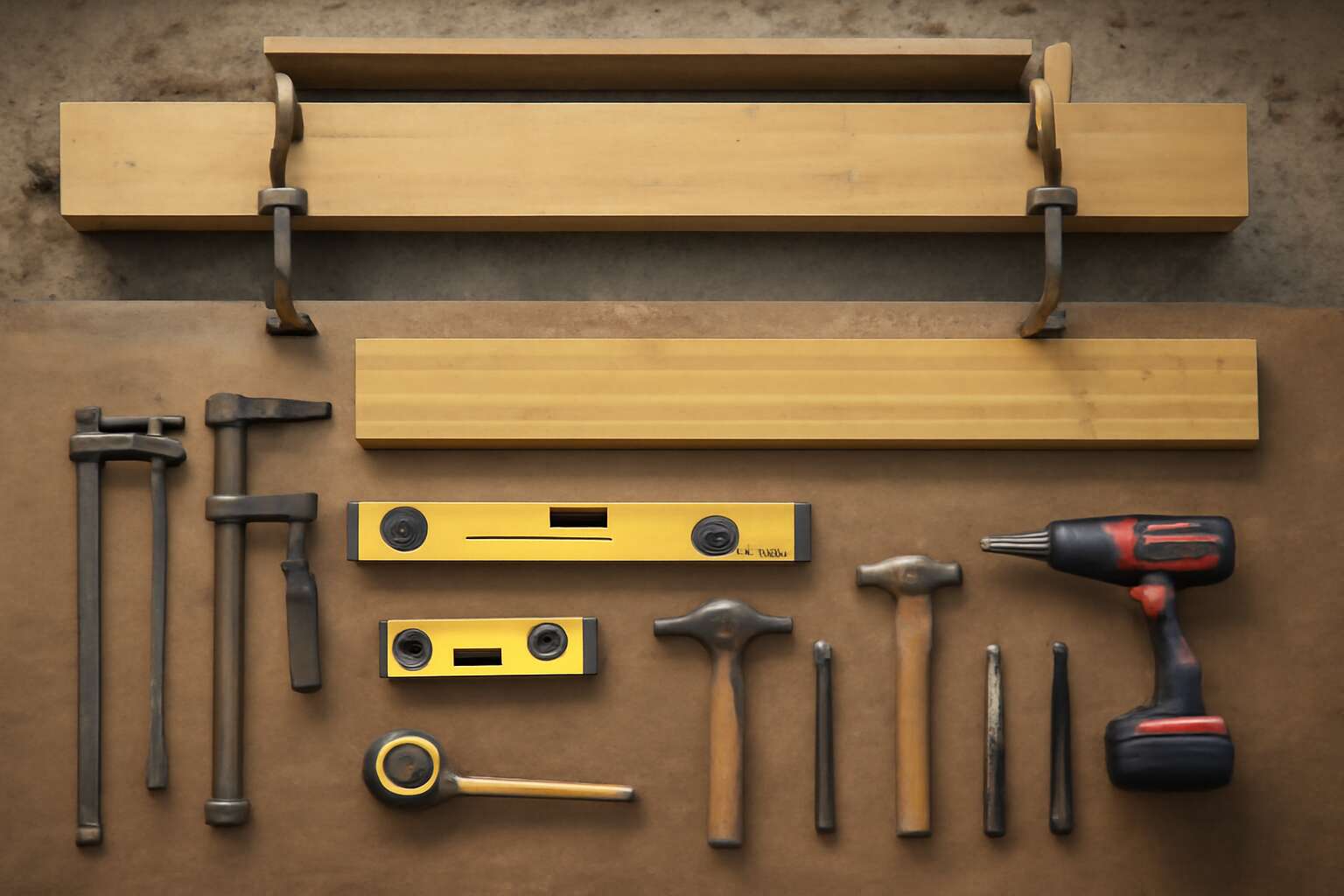
Core formwork tool essentials
Hand tools for formwork setup
There’s a stubborn truth on SA building sites: the right formwork tools list can trim setup time by up to a quarter. A veteran foreman once said, “Tools that fit the hand fuel the heart of the job,” and that sentiment rings from the Karoo to the coast!
Core formwork tool essentials shape the day’s rhythm. In a dusty shed or sunlit scaffold, chisels, levels, and lines form the backbone of any durable pour.
Hand tools for formwork setup are deceptively simple yet indispensable:
- Claw hammer with a comfortable grip
- Measuring tape and chalk line
- Framing square and spirit level
- Pliers, sharp utility knife, and a prying bar
- Wedges and shims for sound alignment
In South Africa’s varied sites, these tools carry memories of rain and long drives. The formwork tools list remains a quiet backbone, keeping structures honest from township builds to hillside farms.
Measuring and marking tools for formwork
Precision starts at the marks. On SA sites, a clean layout speeds the pour and saves rework. The formwork tools list isn’t just about hammers and wedges; it begins with measuring and marking, where accuracy fuels every build.
Measuring and marking tools for formwork stay true under sun and dust. A laser distance meter cuts guesswork, a marking gauge locks crisp lines, and carpenters’ pencils keep marks visible as forms shift.
- Laser distance meter for quick, true readings
- Marking gauge for crisp, repeatable lines
- Carpenters’ pencil and scriber for clear, lasting marks
In the Karoo or on the coast, these marks travel with the crew. That discipline keeps projects honest from township turns to hillside farms.
Cutting and shaping tools for timber formwork
Cutting timber for formwork is where intention meets the grain. A foreman’s quiet rule rings true: precision is the first line of the contract. On SA sites, cutting tools turn rough boards into edges that pour true. I’ve learned that a single well-placed cut saves a hundred headaches.
Core formwork tool essentials include the following, chosen for reliability and endurance:
- Circular saw with a carbide blade for straight, true cuts
- Track saw for guided panels and minimal drift
- Power planer to flatten and square mating edges
- Router for clean joints and graceful profiles
In the Karoo wind or coastal spray, these tools translate intent into tangible form. Integrated into the formwork tools list, they help the build stay honest from township turns to hillside farms. I see it in the hands of crews who watch a shadow of an edge become straight walls.
Compaction and bracing tools
“If it ain’t braced, it ain’t built,” a foreman once growled, and the Karoo wind nodded in approval. In the practical theatre of formwork tools, compaction and bracing are the quiet, stubborn heroes—unflashy, always on point. This formwork tools list keeps it honest on South African sites from township turns to coastal fronts.
Compact edges demand the right gear: a hand rammer or compact vibratory rammer to settle fill, a sturdy tamping bar to punch dense pockets, and robust bracing like shore props and screw jacks to lock lines. Ratchet straps and clamps coax corners square and joints tight, even when gusts threaten to blur a straight edge.
Key players in compaction and bracing include:
- hand rammer or vibratory rammer
- tamping bar
- adjustable steel props (shores) and screw jacks
- ratchet straps and bracing clamps
On SA sites, that quiet kit keeps walls square so the pour looks intentional, not accidental.
Formwork hardware and fasteners
Tie systems and clamps
On South Africa’s job sites, a sturdy set of hardware quietly does more work than the loudest crane. The formwork tools list reveals the real engines behind a clean pour: fasteners and ties that hold panels true, minimizing rework and the inevitable late-night tans on the formwork brigade. It’s the understated elegance that separates a rushed job from a project you’ll brag about at the water cooler.
Formwork hardware and fasteners deserve a proper cameo: tie systems and clamps that keep formwork aligned, plus wedges and locking nuts that refuse to budge in a gust. Essentials include:
- Form ties
- Tie rods
- Clamps
- Wedges
- Nuts, bolts, and washers
Galvanised or stainless finishes ensure longevity in our climate, letting the structure breathe easy while the crew moves on. In the broader formwork tools list, durability trumps flash.
Chain and adjustable props
On South Africa’s job sites, a chain that never slips and adjustable props that hold a line of sight to the pour do more work than the loudest crane. The formwork tools list often reveals the real engines behind a clean pour: hardware that stays true long after the sun has moved across the sky. In field audits, properly tuned formwork hardware trims rework by as much as 30%—a quiet win that keeps projects on schedule!
I’ve watched a single chain compensate for a shifting panel and an adjustable prop shoulder the weight of a stubborn wall, while galvanised or stainless finishes shrug off the climate and keep the crew moving. These components aren’t flash; they’re the weathered conduits through which precision pours travel from plan to column.
Durability trumps flash in the formwork tools list, and the quiet, steadfast hardware earns its keep in every South African build.
Formwork hinges and latches
On South Africa’s job sites, durable formwork hardware does the quiet heavy lifting, the kind you notice only when it saves you from a costly rework. In field audits, properly tuned formwork hardware trims rework by as much as 30%. A single shifting panel and a trustworthy chain of hinges can keep a pour on track longer than the loudest crane.
Formwork hardware and fasteners, especially hinges and latches, endure sun, rain, and the pace of a crew across the Karoo. These components aren’t flashy, but they define the pour’s rhythm. In the formwork tools list, they stay true, letting slabs fall clean.
- Formwork hinges
- Fasteners
- Quick-release latches
Galvanised or stainless finishes shrug off climate, keeping the crew moving. In this quiet catalogue of hardware, durability far outruns flash. These are the steady hands behind every column.
Wedges and spacers
A wedge is the unsung hero of any pour, the quiet prod that keeps your line true while the crew drums on. On South Africa’s sites, the precise talk of wedges and spacers saves rework as surely as a well-timed crane saves a late shift. Field audits show that properly tuned formwork hardware trims rework by as much as 30%—a small tool, a big difference.
These shims come in plastics, steel, and stainless variants, chosen for climate and lasting under sun and rain. They guide alignment and transfer loads without marring panels. In practice, you’ll rely on several types:
- Plastic wedges for quick, non-marring spacing
- Steel wedges for robust, load-bearing adjustments
- Adjustable spacers to fine-tune frames and bracing
Within the formwork tools list, wedges and spacers earn their quiet place, turning rough framing into a clean, plumb slab.
Formwork boards and panels types
Plywood and panels for temporary formwork
On South Africa’s bustling building sites, formwork boards and panels are the quiet engineers of a clean pour. They bear the load, release with grace, and keep the surface smooth enough to skip patching later. The formwork tools list often highlights these surfaces because their condition dictates speed and finish, not just raw strength.
Plywood and panels for temporary formwork come in several types tuned for reusability and surface quality. Common options include:
- Marine-grade plywood with film-face for multiple pours
- Film-faced plywood panels for a flawless release and durability
- Standard hardwood plywood panels for budget-conscious projects
Choosing the right board system depends on pour height, concrete mix, and environmental exposure; well-chosen panels reduce joint tightness issues and speed up stripping.
Metal and fiber cement panel options
On South Africa’s bustling sites, the formwork boards and panels that survive the pour are the quiet MVPs—tough, uncomplaining, and reliably punctual. They bear the load, allow a smooth release, and leave surfaces so fine you could shave a seam invisible. They deserve a nod in our formwork tools list, where durability, surface quality, and reusability rule the day.
Here are two stalwart options making waves across SA projects.
- Metal panel systems—steel or aluminum faces that withstand heavy reuse and deliver a near-perfect release.
- Fiber cement panels—rigid, weatherproof, and dimensionally stable for challenging SA conditions.
Choose metal panel systems for high reuse and quick stripping, or fiber cement panels for weather resistance and dimensional stability in our climate. For pours at height or with aggressive exposure, these surfaces keep lines true without blowing the budget.
Plastic formwork systems
Plastic formwork systems are the quiet backbone of SA sites, bending gravity without a shout. “The simplest tool is often the most faithful,” and these panels answer that truth with clean release and a surface finish that keeps lines sharp. I’ve watched a pour glide into place, the formwork tools list expanding with a friendlier, lighter option that still stands up to the day’s demands. They deserve a place among the core tools we rely on.
Plastic formwork panels come in versatile shapes and sizes, forgiving misalignment and refusing to warp under South Africa’s heat and moisture. Features to note include:
- Lightweight handling and quick assembly
- Smooth release and fine surface quality
- Reusability and chemical resistance
Measuring, leveling and alignment tools
Laser levels and optical levels
On South Africa’s busy building sites, getting the level right the first time can save days of rework and dollars—think towers levelled to within a hair’s breadth. A precise formwork tools list hinges on laser levels and optical levels, the quiet workhorses that keep walls plumb and slabs flush without yelling.
- Laser levels (self-levelling, line projection)
- Optical levels (staff readings in daylight)
- Tripods and staff adapters
Laser levels deliver fast, continuous reference lines across wide forms, while optical levels excel where glare and wind try to blur a reading. In a formwork tools list, they complement each other, supporting accurate alignment and consistent height checks on every lift of timber or panels, cutting rework and boosting site efficiency.
Spirit levels and plumb lines
On South Africa’s busy sites, a hairline misalignment can cascade into days of rework. The quickest fix is steady measurement and true leveling. Spirit levels and plumb lines sit at the heart of alignment work, quietly delivering accuracy as part of the formwork tools list.
Spirit levels give instant guidance across floors and panel faces, their bubbles revealing horizontal truth even when forms stretch long and tall. Plumb lines supply a vertical reference that holds through lifts and shifts, resisting wind and sun glare while readings stay readable at a distance.
- Spirit levels
- Plumb lines
Chalk lines and marking gauges
On South Africa’s bustling sites, a hairline misalignment can cascade into days of rework. I find the quickest fix is steady measurement and true leveling. Chalk lines and marking gauges sit at the heart of measuring and alignment work, quietly delivering accuracy as part of the formwork tools list.
Chalk lines stretch along long panel faces, transferring straight marks with a hiss of chalk and a patient breath. I rely on marking gauges to lock in precise offsets, turning rough timber into a disciplined lattice of lines. They translate intent into footprint, guiding panel alignment with unsentimental clarity.
- Chalk lines with weather-resistant chalk for outdoor accuracy
- Marking gauges with adjustable shoulders for consistent scribe marks
- Edge markers and fine-point markers to transfer lines cleanly
Keep the lines true as dawn breaks—wind and glare may howl, but these tools keep readings readable at distance. In the formwork tools list, chalk lines and marking gauges stand as quiet sentinels of precision!
Tape measures and rulers
On South Africa’s bustling sites, a 1 mm drift over a four-meter panel translates into misaligned edges and days of rework. Measuring, leveling and alignment rely on tape measures and rulers—the quiet workhorses in the formwork tools list.
Tape measures spread flexible reach across panels, while rulers give you rock-solid straightness where a tape might bend. Look for metric graduations, a riveted steel blade, and a lock that actually locks. Whether bending around forms or snapping to a line, these tools translate measurement into truth.
- Locking tape measures with steel blades
- Clear metric graduations for South African specs
- Rugged, magnet-friendly rulers for on-site snag-free use
Keep readings readable at distance—precision travels with the formwork tools list.
Safety, maintenance and best practices
Personal protective equipment and safety gear
On South Africa’s bustling construction sites, PPE isn’t optional—it’s a daily pact with safety. Within any formwork tools list, the quiet shift happens in the mind first: respect for gravity, for materials, and for the protective gear that keeps you in the game from dawn to deck pour.
Personal protective equipment and safety gear deserve routine care. Inspect gear before every shift and replace frayed gloves, cracked visors, or chipped boots. Clean and store correctly to prevent rust and contamination. Consider a simple checklist:
- Hard hats that fit properly
- Safety glasses or face shields
- Hearing protection for noisy tasks
- Cut-resistant gloves for timber handling
- Sturdy, steel-toe boots with ankle support
- High-visibility vests to stay seen
Practice wise ergonomics and situational awareness: lift with the legs, take short breaks, and keep walkways clear. A culture of safety—built with training and consistent reinforcement—safeguards every formwork operation.
Tool maintenance and cleaning routines
On South Africa’s bustling construction sites, the quiet maintenance behind the scenes is the true backbone of every pour. The formwork tools list isn’t about glamour; it’s about keeping gravity in check and workers out of the danger zone. When tools are clean, dry, and properly stored, they work with fewer hiccups and safer decks. It’s a little supernatural in its effect—precision born from routine.
Maintenance and best practices are a daily pact. A simple routine—inspect for rust, burrs, and wear; wipe surfaces; and ensure metal parts aren’t damp—keeps deterioration at bay and plans intact. Proper storage matters too: keep tools in labeled, dry kits and rotate stock to spot anomalies before they become problems. The formwork tools list remains a living map that guides crews from dawn to deck pour.
Respect this quiet work, and the job answers with steadier lines and safer pours.
Storage, transport and organization
Safety, maintenance and best practices form the backbone of every lift. On South Africa’s bustling sites, the formwork tools list guides the choreography—tools cleaned, dried, and returned to labeled corners, never left damp or half-forgotten. When gear stays loyal, gravity behaves, decks stay safer, and we power the day with a quiet, confident rhythm.
- Dry, labeled storage kits for quick visibility
- Stock rotation to spot corrosion before it speaks
- Dedicated transport containers to prevent knocks and mix-ups
- Simple inventory logs to sustain accountability
Storage, transport and organization are the quiet custodians of reliability on site. These habits mirror the formwork tools list, turning routine into ritual from dawn to deck pour.
On these shores of steel and timber, the list becomes a compass—quiet, exact, and almost awe-inspiring in its simplicity. Stewardship of tools invites the crew to move with purpose, sightlines clear, and pours that draw the horizon closer.
Calibration and inspection schedules
On South Africa’s busiest sites, time is money and safety is non-negotiable. I’ve seen the formwork tools list keep crews aligned, turning chaos into rhythm. It’s more than gear—it’s a daily language that guides the team from sweep to pour, reducing risk and boosting confidence.
Calibration and inspection schedules are the quiet backbone of reliability. They guard the accuracy of levels, clamps, and hinges, so the deck goes up true and stays true.
- Daily visual checks for wear or damage
- Weekly functional tests on main clamps and hinges
- Monthly calibration of levels and measuring tools
- Annual audits by qualified personnel
With this discipline, safe handling becomes second nature. That formwork tools list remains our compass, turning routine into rigor and keeping the day moving with quiet efficiency.


0 Comments