
Overview of formwork crafts and carpentry roles
Defining the role and responsibilities of a formwork craftsman
In the heart of South Africa’s skylines, the formwork carpenter holds the blueprint between hands and heart, shaping strength from timber and steel. “The formwork is the canvas where concrete dreams take shape,” a veteran once told me.
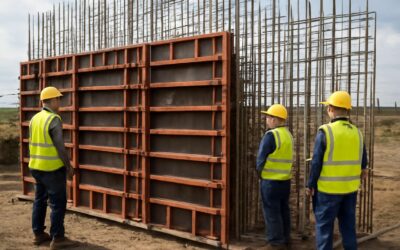
As a role, the formwork craftsman translates plans into precise, reusable forms—reading drawings, selecting safe materials, and aligning panels with engineering tolerances. The craftsman balances craft with safety, coordinating with engineers and crane teams to ensure every brace and prop holds true.
- Reading and interpreting construction drawings
- Choosing formwork materials and components
- Erecting, bracing, and striking formwork
- Maintaining strict safety and quality standards
In South Africa, this craft blends practical artistry with modern standards, becoming a backbone of the build.
Key prerequisites and foundational skills for formwork work
On South Africa’s skylines, the formwork carpenter lays the frame of what will stand for decades. The craftsperson holds the blueprint between hands and heart, turning plans into reusable moulds with quiet authority. A veteran whispered, “The formwork is the frame of a dream before the pour.” I have stood beneath the scaffold and felt the weight of every plan settle into the timber. Reading drawings, selecting safe materials, and aligning panels within tight tolerances—these are the shadows and light that shape a structure. Every brace becomes a heartbeat in the rising silhouette!
Foundational prerequisites whisper before the first cut. The role needs a practical mind for measurement, spatial sense, and steady hands—plus a stubborn respect for safety and teamwork.
- Mathematical literacy and geometry
- Working knowledge of timber and steel forms
- Clear communication on busy sites
Common project types and environments for formwork
In the South African build tempo, the formwork carpenter is the quiet conductor who ensures concrete ambitions stand tall long after the pour. As a veteran once whispered, “Formwork is the frame of a dream before the pour.” This craft translates blueprints into reusable moulds with quiet authority, turning timber and steel into a scaffold of possibilities. It’s where measurement, patience, and a dash of stubborn pride meet to shape the skyline.
- slabs and columns for high-rise cores
- basement and subterranean works
- architectural and curved formwork for façades
- precast elements and modular systems
Common environments demand adaptability: busy urban sites, windy river valleys, or inland townships where rain ambushes a pour. The frame-reader reads the site like a map, aligns panels to tight tolerances, and plans for reuse. The role blends craft with problem-solving, keeping schedules intact and safety paramount.
Career prospects and market demand in construction
On South Africa’s expanding horizons, each concrete pour feels like a thunderous oath to a dream of durability. The formwork carpenter is the quiet conductor who keeps that vow intact, turning timber and steel into a framework of possibility. With a steady eye and a patient hand, this craftsman translates blueprints into resilient forms that stand long after the pour has settled.
From bustling city cores to river-lashed sites, opportunities shimmer across sectors. The market rewards precision, ingenuity, and safety in equal measure. Consider these growing environments and roles within reach:
- Urban residential towers and mixed-use precincts
- Precast elements and modular construction
- Architectural and curved formwork for façades
Career prospects are robust as infrastructure drives investment across provinces; skilled hands are sought by major contractors, developers, and precast manufacturers alike. Gains come with disciplined training, safety mastery, and the ability to read a site as if it were a map.
Core skills and techniques for formwork
Shuttering and de-shuttering techniques for accurate forms
In South Africa’s bustling construction scene, the first impression of a pour is written in plywood and steel. A recent industry snapshot shows precise formwork can cut rework by up to 30%. As a formwork carpenter, I’ve learned that accuracy shapes the concrete’s final look, echoing through the finish!
Core skills and techniques center on reading drawings, understanding tolerances, and choosing shuttering materials wisely for local conditions. A steady eye for plumb and level, careful bracing, and a disciplined approach to cleanliness keep forms honest under the pour. Safety and communication thread through every decision, because even small deviations ripple through the structure.
Several high-impact approaches guide successful shuttering and de-shuttering:
- Dimensional control and surface finish considerations
- Material behavior under varying moisture and temperature
- De-shuttering concepts that promote clean release and reuse
Concrete pouring and alignment fundamentals
South Africa’s construction tempo is relentless, and the pour is only as good as the formwork that holds it. A robust shuttering job can shave rework by up to 30%, a statistic that still stings when you’ve chased a slight deviation all morning. As a formwork carpenter, I knit drawings into honest lines—checking plumb, level, and alignment before a single grain of cement meets the mix.
Core skills hinge on translating plans into precise frames and accounting for the small deviations that come with field measurements. The formwork carpenter weighs material behavior against climate whims; they choose shuttering fabrics that balance stiffness and release, and they obsess over cleanliness and fast, safe assembly so the pour behaves. Precision under pour, measured release during de-shuttering, and disciplined communication keep the structure honest from slab to skyline.
Reinforcement coordination and formwork geometry
The pour is only as good as the formwork that holds it—and South Africa’s tempo demands precision. A shuttering job can shave rework by up to 30%, a statistic that stings when a deviation lingers all morning. The formwork carpenter translates drawings into lines, checking plumb, level, and alignment before cement meets the mix.
Core skills hinge on translating plans into precise frames and anticipating deviations. Reinforcement coordination and formwork geometry demand vigilance: align rebar with frames, plan pour sequences, and guard against drift by fixed references. The formwork carpenter weighs material behavior against climate and selects shuttering fabrics for stiffness and release, while insisting on cleanliness and fast, safe assembly!
- Translate drawings into stable frames with plumb and level checks
- Coordinate reinforcement layouts with formwork plans
- Pre-empt deviations by measuring from fixed references
These practices keep the structure honest from slab to skyline.
Safety, quality control, and inspection practices
On South Africa’s crowded building belts, precision is currency. A well-cast reality begins with the formwork carpenter, whose craft steadies the pour and spares weeks of rework—precision that can cut downtime by up to 30%. The eye for plumb, level, and alignment turns drawings into solid frames before cement meets the mix.
Core skills revolve around safety, quality control, and disciplined inspection. The carpenter reads the plan, then tests every frame for plumb and level, matches reinforcement layouts, and keeps a weather eye on shuttering materials.
- Safety-first culture and PPE readiness
- Rigorous tolerances, cleanliness, and shuttering restraint
- Documentation through inspection logs and deviations
- Close coordination with reinforcement and pour teams to preserve form integrity
Ultimately, for the formwork carpenter, every panel is a stanza of structure, every bolt a note in the city’s skyline, where safety, quality, and mindful inspection hold the poem together.
Reading blueprints and communicating with the crew
“Accuracy is king on the pour,” a veteran formwork carpenter once quips, and the job proves it every shift. Reading blueprints and translating drawings into real frames requires a sharp eye for details without getting buried in numbers. The trick is to spot clashes early, map the shuttering sequence, and keep the plan honest on site.
- Verify scale, callouts, and tolerances from the blueprint
- Cross-check reinforcement layouts for alignment with frames
- Plan the shuttering sequence to avoid rework and delays
On the floor, communication with the crew is the glue that binds good formwork. Clear signals, precise handoffs, and quick updates prevent misfits before the pour begins, ensuring each panel goes in true to the design.
Tools, equipment, and materials for formwork
Essential hand tools and power tools for formwork
“Gravity is the true supervisor,” a veteran formwork carpenter likes to say, and South Africa’s evolving skyline is living proof. Each shuttered panel carries a quiet vow to precision, a lyric of patience in concrete’s language.
Essential hand tools and power tools for formwork keep the craft honest and efficient. For practitioners in the trade, these instruments are not toys but instruments of trust. A practical kit includes:
- Measuring tape (5m) and chalk line
- Framing square, level, and plumb line
- Hammer, chisels, and backsaw
- Cordless drill/driver and impact
- Circular saw
- Reciprocating saw
- Cordless nailer
- Clamps, wedges, and ties
- Form oil release agent
Complementing tools, materials like marine plywood, seasoned timber, steel props, and robust fasteners complete the tableau that translates gravity into geometry—the signature craft of the formwork carpenter.
Formwork materials including timber, plywood, and metal
“Gravity is the true supervisor,” a formwork carpenter likes to say, and in South Africa’s growing skylines that truth shows up in concrete’s quiet arithmetic. The work demands more than muscle; it demands a patient eye and a respect for the panels that hold a future.
Formwork materials include timber, plywood, and metal. A craftsman in formwork learns to read the grain, the panel’s bend, and the line where form meets fate. A practical core kit surfaces below:
- Timber
- Plywood
- Metal
- Marine plywood
- Steel props
- Fasteners
- Release agent
With the right materials, temporary walls speak to gravity, turning a blueprint into a breathing space for concrete.
Fasteners, clamps, and supporting hardware essentials
Concrete doesn’t care about good intentions; it cares about form. For a formwork carpenter, every nail, clamp, and wedge is a promise that a line stays true even under pressure. On South Africa’s busy sites, fasteners decide the day!
Tools, equipment, and materials are the craft’s backbone. Here are the fasteners and supporting hardware essentials that keep forms faithful to plan:
- Galvanized nails and screws
- Adjustable clamps (C-clamps and quick-release)
- Wedges and shims for true seams
- Tie wires and turnbuckles for stays
- Base plates, threaded rods, and steel props
A practical approach balances speed with precision; the formwork carpenter respects the hardware as much as the panel. When the gear fits the project, gravity obeys the blueprint and pours align with discipline.
Equipment maintenance, lifecycle, and replacement planning
On South Africa’s busiest sites, a single dull blade can delay a pour. Tools, equipment, and materials are the backbone for a formwork carpenter; maintain them, and the line stays true under pressure. Regular checks extend the life of timber, plywood, steel props, base plates, threaded rods, and fasteners—and trim surprises before they become setbacks.
- Pre-shift checks for clamps, wedges, and tie wires
- Clean, oil, and store metal fittings to resist rust
- Inspect timber and plywood for splits; retire damaged sheets
- Track lifecycles and plan replacements before failure
Replacement planning keeps projects humming; the formwork carpenter budgets spares, schedules refurbishments, and rotates stock so nothing sabotages a pour. When gear fits the project, gravity obeys the blueprint and concrete pours align with discipline.
Projects, applications, and best practices in formwork
Residential formwork case studies and typical scopes
Formwork is the quiet frame of a dream realized in brick and beam. In South Africa’s evolving suburbs, a skilled formwork carpenter translates sketches into clean lines, stable edges, and safe, ready-to-pour surfaces. Residential projects demand precision, adaptable methods, and pride in every join.
Across case studies, scopes range from modest townhouses to compact family homes perched on slopes. The emphasis is on planning, material choice, and meticulous setup that supports a flawless pour.
- Layout validation and level checks before frame erection
- Bracing and geometry control to withstand concrete pours
- Efficient stripping and reuse planning to minimize waste
Ultimately, a formwork carpenter guides the pour with care, aware that every line survives or surrenders to gravity. In the hands of seasoned craftsmen, residential formwork becomes a canvas where the South African sun finds its perfect edge.
Commercial and infrastructure formwork projects
“Every line is earned by gravity.” These words echo through the workshops where a formwork carpenter translates drawings into the skeletons of towers and bridges. In South Africa’s evolving skylines, commercial and infrastructure projects lean on precise framing that supports future pours with quiet authority.
From high-rise cores that cut through heat and wind to expansive road and bridge decks, such projects demand relentless planning and adaptable systems. A formwork carpenter collaborates with engineers and steel fixers to secure clean joints, stable edges, and a safe, ready-to-pour surface, all while honoring tight schedules and budgets.
- Early coordination with engineers and site teams
- Modular, reusable systems to cut waste
- Thorough stripping plans and on-site logistics
In the hands of skilled craftsmen, structures become resilient and luminous, bearing weight with quiet dignity under South Africa’s sun.
Estimation, budgeting, and scheduling considerations
A single miscalculated panel can push weeks of pours into the next quarter. In South Africa’s busy construction cycles, a formwork carpenter balances precision with pace, turning drawings into time-bound realities on site.
Projects in commercial and infrastructure pockets demand estimation that captures every skin of timber, steel, and paneling, and budgeting that contends with fluctuating material costs and transport. Scheduling becomes a live map, where early coordination with engineers and suppliers highlights bottlenecks before they bite.
- Early quantity take-offs and risk contingencies to tighten estimates
- Modular, reusable systems to cut waste and rework
- Phased construction plans that align formwork stripping with pours and inspections
In the hands of a skilled formwork carpenter, figures become frames and frames become future, with every deadline earned by careful calculation and steady hands.
Regulatory standards, compliance, and safety benchmarks
In South Africa’s high-velocity build cycles, a formwork carpenter translates drawings into enduring frames, turning the site’s quiet into a structured heartbeat. From commercial towers to major infrastructure works, regulatory standards govern every timber skin and steel panel, while safety benchmarks tilt decisions toward protection and precision. For the formwork carpenter, accuracy isn’t a luxury; it’s a survival skill where one misaligned panel can rewrite a schedule in an instant.
Best practices and applications converge here:
- Adhere to South Africa’s building regulations and OHSA Construction Regulations to guide formwork planning.
- Lean on pre-pour and pre-strip checks to verify alignment, timber condition, and hardware integrity.
- Document inspections and material traceability to support audits, quality control, and reliable handovers.
Sustainability, waste reduction, and reuse of formwork materials
Across South Africa’s fast-track build cycles, up to 30% of formwork waste can be avoided when skilled hands map every panel before a pour. The formwork carpenter shapes more than timber and steel; they translate drawings into living frames that stand between crane whistles and dawn light.
Projects thrive when sustainability guides the workflow. Best practices in this realm focus on waste reduction and reuse:
- Plan for reuse: cut panels precisely, label components, and store dry.
- Reclaim offcuts: convert timber remnants into bracing or form supports.
- Track materials: maintain a simple traceability log to support audits.
As a formwork carpenter, you become a steward of material and time, carrying sustainability from site to structure.
Client communication and project handover best practices
In South Africa’s fast-track builds, proactive client engagement can cut change orders by up to 18%, turning plans into clockwork reality. The formwork carpenter translates drawings into living frames that stand between crane whistles and dawn light.
Projects flourish when communication guides the workflow. From residential to major infrastructure, applications rely on transparent status updates, timely revisions, and clean handover packages that let clients see when panels meet performance expectations.
- Clear scope, milestones, and responsibilities
- Visual progress updates and accessible revision logs
- Handover pack with drawings, warranties, and maintenance notes
Handover best practices favour a formal walkthrough, concise punch lists, and a smooth transition to operations, ensuring the craft of formwork carpentry endures beyond the pour.


0 Comments