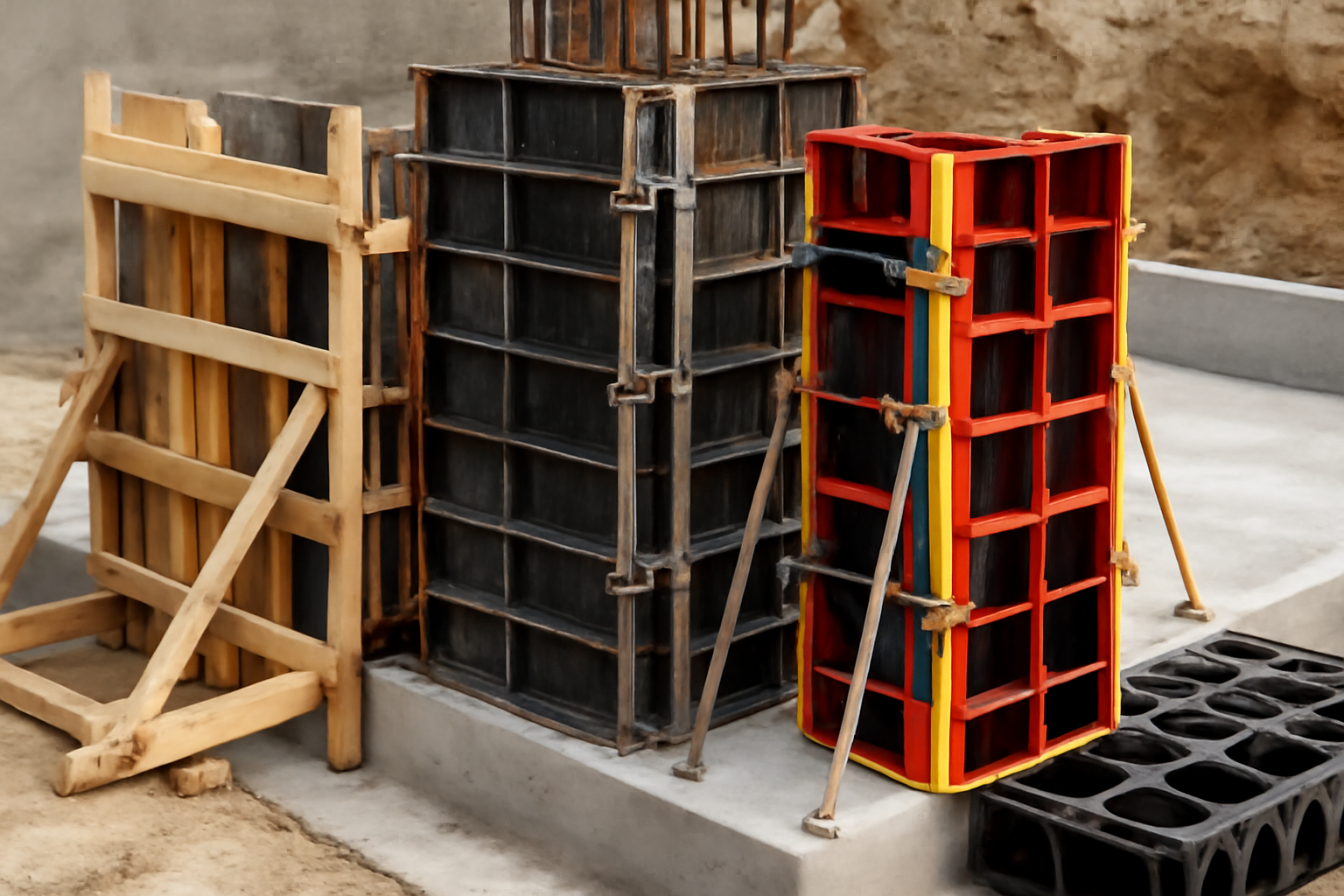
Types of Formwork Materials
Timber Formwork – Advantages and Applications of Timber Formwork
Timber formwork remains a timeless champion among formwork materials, cherished for its simplicity and versatility. Its natural adaptability makes it an ideal choice for intricate architectural designs, allowing craftsmen to shape concrete with an artisan’s touch. In South Africa, where construction sites often demand both durability and efficiency, timber formwork offers an unmatched balance of affordability and strength.
One of the key advantages of timber formwork is its ease of installation. Unlike more rigid materials, it can be quickly assembled and adjusted on-site, reducing project timelines significantly. Moreover, with proper treatment, timber can be reused multiple times, making it an environmentally friendly option among formwork materials. Its lightweight nature also translates into easier handling, which is particularly advantageous in remote or challenging locations.
Timber formwork is particularly suited for applications like residential buildings, bridges, and smaller commercial projects. Its natural properties allow it to conform to complex curves and custom shapes, bringing creative visions to life. As a result, many South African builders prefer timber for projects where flexibility and craftsmanship are paramount.
Plywood Formwork – Durability and Use Cases for Plywood Structures
Amidst the sprawling landscapes of South Africa, where every construction project becomes a testament to human ingenuity, the choice of formwork materials can make or break the vision. Plywood formwork, a stalwart among these materials, boasts a storied history of durability and adaptability. Its layered veneer construction provides a resilient surface that withstands the rigors of concrete pouring, ensuring a flawless finish every time.
What sets plywood apart is its remarkable versatility—able to conform seamlessly to curved surfaces and intricate architectural details. This flexibility makes it an indispensable component of formwork materials, especially in projects demanding precision and finesse. From residential complexes to complex infrastructural works, plywood formwork lends strength without sacrificing ease of handling. Its capacity for multiple reuses, when properly maintained, amplifies its value and sustainability in South Africa’s competitive construction landscape.
In terms of use cases, plywood structures shine brightly in applications such as:
- Wall panels in residential buildings
- Foundations for commercial developments
- Complex curved surfaces in artistic architectural designs
By harnessing the qualities of durable plywood, builders can elevate their craft, transforming raw concrete into works of art while maintaining the sturdy resilience that formwork materials demand. Such versatility, combined with its cost-effectiveness, cements plywood’s place as a cornerstone in the realm of formwork solutions across South Africa.
Metal Formwork – Steel and Aluminum Options for High-Strength Requirements
In the shadowed corridors of construction’s evolution, metal formwork emerges as a titan—its steel and aluminum incarnations whisper tales of strength and resilience. For projects demanding high-strength requirements, these materials stand unyielding against the relentless assault of concrete and time’s corrosion. Steel formwork, forged from raw industrial might, offers unparalleled durability, making it the preferred choice for towering structures and expansive foundations across South Africa’s sprawling urban landscapes.
Aluminum, on the other hand, presents a more ethereal alternative—lightweight yet formidable. Its resistance to rust and ease of handling render it ideal for intricate architectural details and repetitive uses, breathing new life into the concept of sustainable formwork materials. Both options, with their unique qualities, serve as the backbone of modern construction, transforming mere raw materials into silent guardians of architectural dreams.
- Superior strength for large-scale concrete pours
- Ease of assembly and disassembly, reducing labor time
- Reusability that amplifies cost-efficiency and sustainability
In the darkened vaults of South Africa’s construction corridors, metal formwork shines as a beacon—its presence a testament to human ingenuity and the relentless pursuit of structural perfection. These formwork materials, forged in the crucible of industrial mastery, stand ready to shape the future, one concrete slab at a time.
Plastic Formwork – Innovative Materials for Lightweight and Reusable Formwork
In the ever-evolving landscape of construction, innovation often hinges on the materials we choose. Plastic formwork has emerged as a revolutionary contender—its lightweight nature and reusability transforming how projects are approached in South Africa. Unlike traditional options, plastic formwork offers an elegant fusion of durability and ease of handling, making it ideal for intricate designs and repetitive concrete pours. The versatility of these formwork materials allows for quick assembly, reducing labor costs and project timelines significantly.
What truly sets plastic formwork apart is its capacity for reuse. Unlike timber or steel, plastic modules withstand the harsh realities of construction sites, resisting corrosion and wear. This resilience not only enhances sustainability but also amplifies cost-efficiency over the lifespan of a construction project. For builders seeking innovative, eco-friendly solutions, plastic formwork embodies the future—an elegant testament to the marriage of form and function in modern construction.
Other Materials – Fiber-Reinforced Plastic and Composite Formwork Options
In the shadowed realm of construction, where strength and innovation intertwine like the threads of a dark tapestry, fiber-reinforced plastic emerges as a spectral presence among formwork materials. This ethereal composite, woven from the resilience of plastic and the tenacity of fibers, offers a hauntingly durable alternative to traditional materials. Its resistance to corrosion and weathering whispers promises of longevity in the tumultuous South African climate, making it a favored choice for intricate and repetitive concrete structures.
Unlike its more corporeal counterparts, fiber-reinforced plastic formwork exudes a ghostly lightness, allowing for swift assembly and dismantling. This spectral ease of handling reduces labor costs while ensuring precise, hauntingly clean finishes. Its versatility extends beyond mere practicality—these composite options for formwork are a testament to the marriage of modern engineering with an almost mystical durability.
For those who seek to explore beyond the familiar, composite formwork options present a realm of possibility. They often combine:
- Advanced fiber-reinforced plastics
- High-performance composites
- Eco-friendly, sustainable materials
In this darkly innovative landscape, the choice of formwork materials becomes an act of artistic rebellion—an ode to resilience, reusability, and the relentless pursuit of excellence in the shadowy world of construction.
Factors Influencing the Choice of Formwork Materials
Cost and Budget Considerations – Balancing Initial Investment with Longevity
In the intricate dance of construction, choosing the right formwork materials often determines whether a project is a fleeting triumph or a lasting masterpiece. Cost and budget considerations serve as the compass guiding this decision, balancing the allure of initial investment against the promise of longevity. It’s a delicate equilibrium—one that can sway based on project scope, climate conditions, and the desired finish.
While affordability is vital, it should not eclipse durability and reusability, which ultimately influence the total lifecycle expense. Materials like steel and aluminum, known for their high-strength qualities, often command higher upfront costs but reward builders with extended service life and fewer replacements. Conversely, lightweight plastic formwork offers a cost-effective solution for short-term projects, yet may lack the resilience needed for larger structures.
Understanding these nuances often involves evaluating factors such as:
- Initial capital expenditure versus long-term operational costs
- Reusability and ease of handling on-site
- Environmental considerations and material sustainability
In South Africa, where project timelines and resource availability vary dramatically, the choice of formwork materials becomes even more critical. Striking a balance between the immediate budget and the enduring strength of materials fuels the art of construction—transforming raw materials into enduring symbols of human aspiration.
Ease of Installation – Impact on Construction Timeline
In the complex realm of construction, the ease of installation of formwork materials can dramatically influence the overall timeline of a project. Rapid, straightforward setup not only accelerates progress but also reduces labor costs—an essential consideration in South Africa’s fluctuating resource landscape. When formwork materials are user-friendly, teams can minimize delays caused by intricate handling or time-consuming procedures, ultimately keeping projects on schedule.
Moreover, the impact on construction timelines is not solely about speed. It’s intertwined with safety, precision, and the ability to adapt swiftly to unforeseen challenges. Materials like aluminum and plastic formwork are celebrated for their lightweight nature and ease of handling, which translates to quicker assembly and dismantling. Conversely, heavier options might require specialized equipment and more meticulous handling, potentially elongating the process.
Ultimately, the choice of formwork materials hinges on balancing the ease of installation with project scale and environmental conditions. For large-scale developments, selecting materials that streamline installation can make the difference between a seamless build and costly delays. In South Africa’s vibrant construction landscape, where timelines can be as unpredictable as weather patterns, this factor is often the linchpin of successful project delivery.
Surface Finish and Quality – Achieving the Desired Concrete Surface
In the realm of construction, the true artistry lies in the surface finish—an ephemeral beauty that transforms raw concrete into sculptural marvels. The choice of formwork materials plays a pivotal role in achieving this delicate balance of aesthetics and durability. South African projects demand not only structural integrity but also an impeccable surface quality that withstands the test of time and weather.
From the smooth elegance of aluminum formwork to the textured charm of timber, each material leaves an indelible mark on the final product. The surface finish must align with the project’s purpose—whether sleek modern facades or textured architectural features. Quality formwork materials ensure that the concrete’s surface is free from blemishes, honeycombing, or imperfections, which could compromise both beauty and longevity.
Factors such as surface roughness, material porosity, and ease of cleaning influence the overall quality of the finish. For instance, plastic formwork often provides a superior finish due to its non-porous, smooth surface, reducing the need for extensive post-processing. Conversely, timber and plywood may require additional treatments or sealing to achieve a flawless appearance. Ultimately, selecting the appropriate formwork materials is about balancing visual goals with environmental resilience, ensuring that every detail reflects craftsmanship at its finest!
Reusability and Lifecycle – Environmental Benefits and Cost-Effectiveness
In the intricate dance of construction, the choice of formwork materials is not merely a matter of practicality—it’s a reflection of our values, foresight, and respect for the environment. The reusability of formwork materials directly impacts the lifecycle cost, shaping the sustainability footprint of each project. Reusable options like aluminum and steel not only reduce waste but also offer a compelling economic advantage over time, transforming a short-term investment into long-term savings. In a country like South Africa, where resource conservation is more than just idealism—it’s necessity—this aspect takes on heightened significance.
Environmental benefits extend beyond mere reuse. The durability of high-quality formwork materials ensures fewer replacements, less material waste, and a smaller carbon footprint. For example, choosing durable steel or aluminum formwork allows for multiple uses, significantly lowering the environmental impact—an essential consideration in today’s eco-conscious construction landscape. Ultimately, understanding the lifecycle of formwork materials reveals a deeper truth: that well-chosen materials forge not only stronger structures but also a more sustainable future.
Strength and Load-Bearing Capacity – Ensuring Structural Integrity
Choosing the right formwork materials isn’t just about ease or cost—it’s about ensuring the very backbone of your structure can withstand the test of time and load. Structural integrity hinges on the strength and load-bearing capacity of your formwork materials, especially in South Africa’s dynamic construction landscape. If the materials can’t handle the pressure of wet concrete or the weight of the structure, compromise is inevitable. The key is selecting options that blend durability with resilience, preventing costly failures down the line.
In high-stakes projects, understanding the specific load requirements helps determine the most suitable formwork materials. Steel and aluminum, for instance, are renowned for their high strength-to-weight ratio, providing reliable support without adding unnecessary bulk. For more complex designs, these materials excel, offering the robustness needed for heavy-duty applications.
- Assess the maximum load the formwork must support.
- Match these requirements with the strength specifications of potential formwork materials.
- Prioritize durability and stability to prevent deformation or failure during casting.
Ultimately, selecting formwork materials with adequate strength and load-bearing capacity isn’t just a technical choice; it’s a safeguard for the entire construction process. When the materials can handle the pressure, the result is a safer, more reliable structure—building not just in concrete, but in trust and resilience as well.
Innovations in Formwork Materials
Eco-Friendly and Sustainable Materials – Reducing Environmental Impact
In an era where construction waste accounts for a significant portion of environmental pollution, innovations in formwork materials are stepping up to address sustainability. Eco-friendly and sustainable materials are transforming the industry, reducing the environmental impact of concrete structures while maintaining durability and safety. These advancements are not just about reducing carbon footprints but also about creating smarter, more responsible construction practices.
Recyclable plastics, bamboo composites, and engineered timber are gaining traction as alternative formwork materials that emphasize reusability and biodegradability. For example, plastic formwork designed for multiple reuse cycles reduces waste significantly, cutting down on landfill contributions. Similarly, bamboo-based formwork offers a renewable resource that grows rapidly and has a smaller ecological footprint compared to traditional timber options.
- Reduced resource consumption
- Lower emissions during manufacturing
- Enhanced recyclability and reuse potential
These innovations reflect a broader shift towards sustainable development in South Africa’s construction sector. By choosing eco-friendly formwork materials, builders can achieve high-quality concrete finishes while actively supporting environmental conservation efforts. The future of formwork materials lies in balancing performance with responsibility—an essential step forward in sustainable construction.
High-Performance Composites – Enhanced Durability and Flexibility
In the relentless pursuit of innovation, high-performance composites have emerged as a game-changer within the realm of formwork materials. These advanced solutions offer a compelling synergy of enhanced durability and remarkable flexibility, addressing the complex demands of modern construction projects. Unlike traditional options, these composites are engineered to withstand the rigors of repeated use while maintaining a lightweight profile, making them ideal for diverse applications across South Africa’s construction sector.
The evolution of formwork materials is driven by a desire to optimize efficiency and longevity. High-performance composites such as fiber-reinforced plastics and engineered composites are now capable of bearing substantial loads without compromising ease of handling. This duality of strength and adaptability ensures that structures can be built faster, safer, and more sustainably—an essential consideration in today’s environmentally conscious landscape.
- Superior resistance to wear and tear, extending the lifecycle of formwork structures
- Enhanced flexibility allows for intricate and bespoke concrete forms
- Reduced maintenance costs, translating into long-term economic benefits
As the industry leans into smarter, more responsible construction practices, the integration of innovative composite materials signifies a pivotal shift. These advanced formwork materials are not merely about performance—they embody a commitment to resilience, sustainability, and operational excellence, shaping the future of construction in South Africa and beyond!
Automation and Modern Manufacturing – Precision in Material Production
Innovation in formwork materials is revolutionizing construction, driven by the relentless quest for precision manufacturing. Automated processes now enable the production of highly consistent, high-quality formwork components, reducing human error and ensuring strict adherence to design specifications. This technological leap results in formwork materials that boast unparalleled uniformity, directly impacting the quality of the concrete finish and structural integrity.
Modern manufacturing techniques employ advanced machinery equipped with real-time monitoring systems, allowing for meticulous control over dimensions and surface finishes. The integration of automation not only accelerates production timelines but also reduces waste—an essential advantage in South Africa’s evolving construction landscape. To illustrate, manufacturers often use:
- Computer Numerical Control (CNC) machining for precise cutting and shaping
- Robotic assembly lines for seamless component fabrication
- Laser scanning to ensure dimensional accuracy throughout the process
This technological synergy ensures that formwork materials meet the highest standards of durability and performance, paving the way for safer, more sustainable construction practices. As automation becomes more sophisticated, it unlocks new possibilities for custom-designed formwork, tailored to complex architectural demands—making the future of formwork materials incredibly promising and resilient.
Comparison of Common Formwork Materials
Cost Analysis – Price Ranges and Long-Term Value
When it comes to selecting the ideal formwork materials, understanding the cost implications is crucial for any construction project. While initial investment can vary widely, the long-term value often tells a different story. For example, timber formwork might seem affordable upfront, but its limited reusability can inflate costs over multiple projects. Conversely, high-quality metal formwork, particularly steel and aluminum options, may carry a heftier price tag initially but excel in durability and reusability, ultimately reducing lifecycle costs.
Price ranges for common formwork materials reflect their strength, versatility, and environmental impact. Typically, plastic formwork offers a lightweight, cost-effective solution with rapid installation, but it may not match the load-bearing capacity of fiber-reinforced plastic or composite formwork options. Analyzing these factors reveals a pattern:
- Timber formwork tends to be the least expensive initially but can incur higher maintenance costs.
- Steel and aluminum formwork demand a significant upfront investment, but their longevity ensures better long-term value.
- Plastic and composite materials fall somewhere in between, balancing affordability and reusability, especially in dynamic construction environments.
Ultimately, choosing the right formwork materials hinges on balancing upfront costs with the long-term benefits, ensuring that each project maximizes efficiency without compromising on quality or environmental sustainability. Price ranges and long-term value are intertwined in a delicate dance—one that demands careful consideration and strategic planning to master.
Durability and Reusability – Material Lifespan and Maintenance
In the shadowed corridors of construction, the true nature of formwork materials reveals itself through the lens of durability and reusability. As the sands of time slip through the hourglass, some materials stand resilient—while others crumble under the weight of repeated use. Timber formwork, once the darling of simplicity, often bears the scars of frequent reuse, its lifespan limited by susceptibility to decay and warping. Steel and aluminum, on the other hand, wear their age like a badge of honor, their formidable strength allowing for countless cycles of reinvention.
For those who seek longevity, understanding the material lifespan and maintenance requirements is paramount. Steel formwork, with its robust structure, can endure hundreds of cycles with proper care, making it a stalwart choice for demanding projects. Aluminum, lighter yet resilient, offers similar reusability but demands vigilant maintenance to prevent corrosion. Plastic and composite formwork materials, while lighter and easier to handle, often strike a delicate balance between affordability and durability. They may not match the load-bearing capacity of metal options but excel in applications where rapid turnover and ease of cleaning are valued.
- Steel formwork: unmatched durability, high reusability, but requires rust prevention.
- Aluminum formwork: lightweight, resistant to corrosion, and suitable for repetitive use.
- Plastic and composite materials: versatile, cost-effective, yet with limited load capacity.
Ultimately, the choice hinges on a delicate dance—balancing the strength and lifespan of each formwork material against the demands of the project. In the realm of construction, where every moment counts, selecting the appropriate material can mean the difference between fleeting success and enduring mastery of the craft.
Environmental Impact – Sustainability Aspects of Each Material
Environmental impact is a critical factor when choosing formwork materials. In South Africa, construction projects are increasingly prioritizing sustainability to reduce ecological footprints. Steel formwork, while highly durable and reusable, requires energy-intensive production, which can result in higher carbon emissions. However, its longevity means fewer replacements over time, contributing to lower waste. Aluminum formwork offers a lighter alternative with excellent corrosion resistance, making it highly suitable for repeated use. Its recyclability further enhances its sustainability profile, especially when properly managed.
Plastic and composite formwork materials are lauded for their lightweight nature and ease of handling. They often require less energy during manufacturing but may not last as long, leading to more frequent replacements. For eco-conscious projects, the choice of formwork materials hinges on balancing environmental costs with functional needs.
- Recyclability
- Energy consumption during production
- Longevity and reuse potential
These aspects play a vital role in determining the overall sustainability of each material.
Ease of Handling – Logistics and Workforce Requirements
Handling different formwork materials varies significantly, impacting construction logistics and workforce requirements. Steel formwork, for example, is heavy and demands specialized equipment for transportation and installation. This can slow down progress but pays off in durability and reuse. Aluminum formwork, being lighter, reduces labor fatigue and simplifies handling, making it a popular choice for rapid projects in South Africa. Plastic and composite formwork materials excel in ease of handling due to their lightweight nature, enabling quicker assembly and disassembly. This can cut down on labor costs and shorten project timelines.
Choosing the right formwork materials often hinges on balancing ease of handling with other factors like reusability and environmental impact. For instance, while plastic formwork may be easier to manage initially, its shorter lifespan might lead to increased waste and replacement costs. Conversely, metal options, though requiring more effort upfront, offer long-term benefits through multiple reuses. The decision ultimately depends on project scope, workforce capabilities, and logistical considerations, ensuring construction teams can work efficiently without compromising quality.
Applications and Suitability
Residential Construction – Material Choices for Small and Medium Projects
In the vibrant landscape of South African residential construction, selecting the perfect formwork materials can transform a simple project into a masterpiece of efficiency and quality. For small and medium projects, the choice of formwork materials is more than just a technical decision — it’s a strategic move that influences cost, speed, and the final aesthetic.
Wooden formwork remains a favourite for its versatility and ease of customization, especially in intricate residential designs. Meanwhile, lightweight plastic formwork offers remarkable reusability and ease of handling, making it ideal for projects where swift turnaround is crucial. Metal formwork, with its high strength and precision, lends itself well to structures demanding superior load-bearing capacity.
- Ease of installation
- Surface finish quality
- Reusability potential
The right combination of these formwork materials ensures a seamless balance between durability and cost, empowering South African builders to deliver stunning homes that stand the test of time.
Commercial and Industrial – Heavy-Duty Formwork Options
In the realm of commercial and industrial construction, choosing the right formwork materials is crucial for mastering heavy-duty projects. These structures demand more than just strength; they require materials that can withstand relentless pressure, provide precision, and deliver consistent surface finishes. Steel and aluminum formwork are often the backbone of such demanding projects, offering unparalleled load-bearing capacity and durability.
For large-scale industrial facilities, formwork materials must also prioritize reusability and ease of handling. This is where advanced composites and fiber-reinforced plastics shine, providing lightweight yet resilient options that reduce labor time and enhance safety on site.
- High-strength steel for enduring heavy loads
- Aluminum for lightweight handling and quick assembly
- Composite materials for flexibility and longevity
The strategic deployment of these formwork materials ensures rapid project turnaround without compromising structural integrity. In South Africa’s bustling industrial sectors, this choice often defines whether a project is a fleeting endeavor or a lasting monument.
Infrastructure Projects – Bridge, Tunnel, and Large-Scale Foundations
When it comes to infrastructure projects—be they majestic bridges, sprawling tunnels, or formidable large-scale foundations—the choice of formwork materials can make or break the entire endeavor. South Africa’s ambitious construction landscape demands materials that not only withstand relentless pressure but also ensure precision and surface quality. Steel and aluminum formwork stand at the forefront of these applications, offering the load-bearing capacity necessary for heavy-duty projects.
For such demanding projects, selecting the right formwork materials is akin to choosing the perfect suit—tailored, durable, and capable of standing the test of time. Steel formwork, with its high strength and reusability, is ideal for enduring the rigors of large-scale infrastructure. Aluminum, lighter yet resilient, allows for swift assembly and disassembly, saving both time and labor costs.
Advanced composites, including fiber-reinforced plastics and innovative hybrid materials, are increasingly favored for their flexibility and longevity in dynamic environments. They are especially useful in tunnel construction, where ease of handling and quick turnaround are crucial. To illustrate, a typical large-scale foundation project might employ a combination of these formwork materials, leveraging each one’s strengths for optimal results.
- Steel for enduring heavy loads and multiple reuse cycles
- Aluminum for rapid assembly and reduced labor intensity
- Composite materials for flexibility, longevity, and reduced weight
This strategic deployment of diverse formwork materials ensures not only structural integrity but also a significant acceleration in project timelines—an essential advantage in South Africa’s competitive construction sector. Ultimately, the judicious selection and application of formwork materials forge the backbone of resilient, sustainable infrastructure—building foundations that stand tall for generations to come.


0 Comments