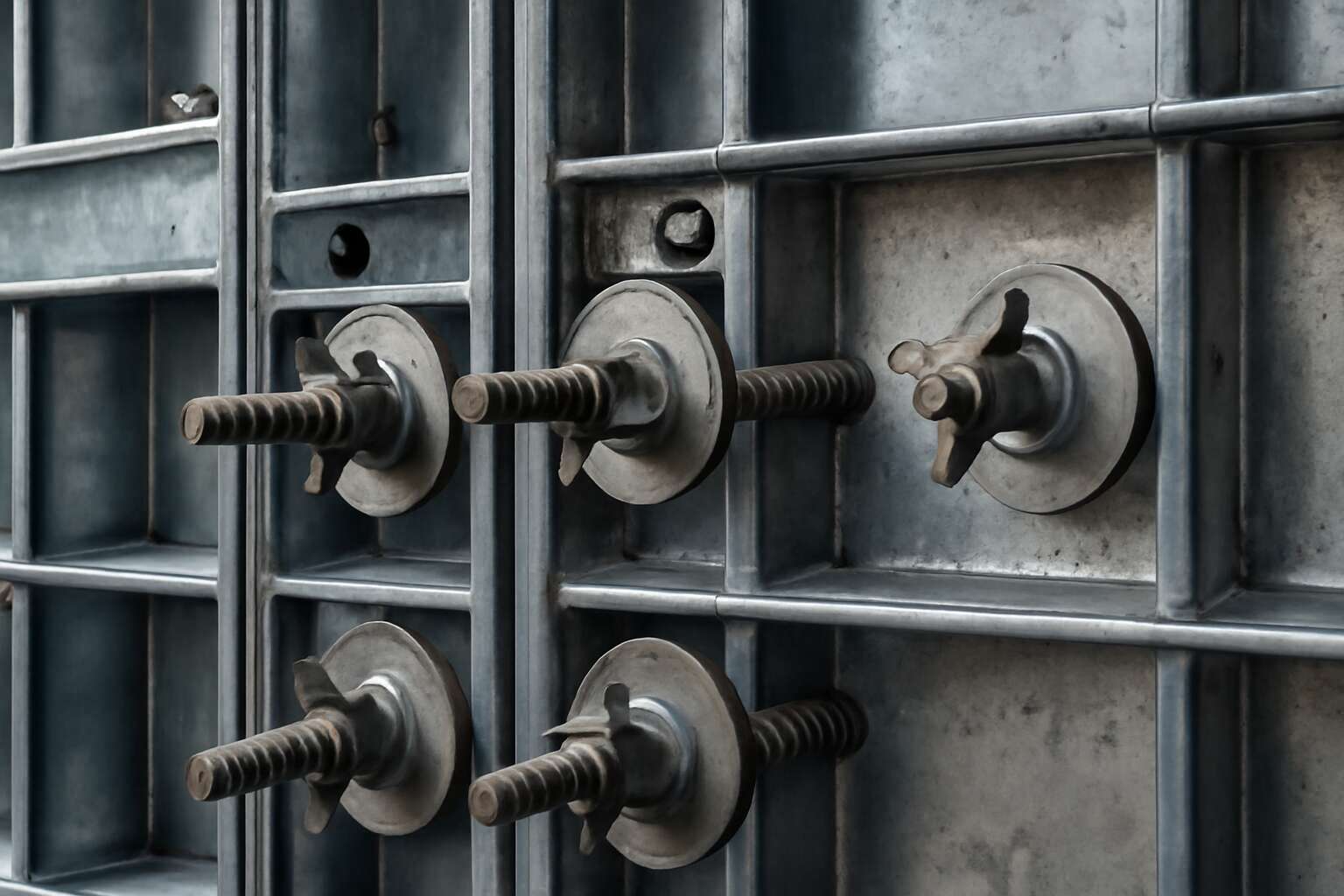
Understanding Formwork Wall Ties
Definition and Function – What are formwork wall ties and how do they work?
Formwork wall ties might not be the flashiest topic in construction, but they are the unsung heroes behind many sturdy concrete walls. These small but mighty components serve as the vital link holding formwork panels in perfect alignment during the pouring process. Without them, your concrete could turn into a lopsided disaster rather than a sleek, strong wall.
Essentially, formwork wall ties work by evenly distributing the pressure exerted by the wet concrete, preventing the formwork from bulging or collapsing. They act like the scaffolding of the formwork system—holding everything together until the concrete sets solid as a rock. To put it simply, these ties are the link that ensures your wall remains in shape and on point.
- Securely connect formwork panels
- Ensure uniform pressure distribution
- Maintain structural integrity during curing
In the grand scheme of construction, formwork wall ties might seem like a minor detail, but neglecting them is a recipe for disaster. Their design and placement are crucial to achieving a flawless finish—so never underestimate the power of these tiny titans of formwork engineering.
Types of Wall Ties – Different types of wall ties used in formwork systems
When it comes to formwork wall ties, variety is the spice of structural stability. Each type is engineered to meet specific demands, ensuring your concrete walls maintain their perfect form under pressure. From adjustable ties to fixed variants, the selection process can feel like navigating a labyrinth—each with its unique advantages. The right choice can mean the difference between a flawless finish and a costly collapse.
Among the most common types are the snap ties, which are quick to install and remove, providing efficiency on busy sites. Then there are pull ties, known for their high load-bearing capacity and durability. For specialised applications, split ties offer an innovative solution, allowing for easy adjustment and reuse. Sometimes, using barriers or spacer ties is essential to ensure the right concrete cover and prevent corrosion.
A quick glance at the options reveals a crucial truth: choosing the correct formwork wall ties isn’t just about compatibility—it’s about engineering precision. The right type ensures uniform pressure distribution, safeguarding the integrity of every pour and every wall. In the intricate dance of formwork construction, the specific design of your formwork wall ties can turn a potential disaster into a masterpiece of structural excellence. Never underestimate their importance—they’re the unseen force holding everything together!
Materials and Components – Common materials and key components of wall ties
When it comes to formwork wall ties, understanding the materials and components that make them tick is essential. These unassuming heroes are crafted from a variety of durable materials designed to withstand the rigours of concrete pouring and formwork removal. Steel remains the gold standard—renowned for its strength, corrosion resistance, and longevity. But don’t overlook alternatives like plastic or fibre-reinforced composites, which can offer lighter weight and easier handling without compromising performance.
Key components of formwork wall ties include the tie itself, which acts as the backbone, and the interface plates or heads that secure the ties in place. Some ties feature adjustable elements, allowing for precise positioning and reusability, while others are fixed, providing stability in high-pressure scenarios. The choice of materials and components often hinges on specific project demands, whether it’s load capacity, environmental exposure, or ease of installation.
- Corrosion-resistant coatings to extend lifespan
- Reinforced steel for maximum strength
- Plastic or composite materials for lightweight applications
In the world of formwork wall ties, materials aren’t just about durability; they also influence the overall efficiency of the construction process. Selecting the right combination of components ensures that your formwork remains stable, your concrete walls stay true to form, and your project sails smoothly from pour to perfection. After all, in the dance of construction, every element counts—especially the humble yet mighty formwork wall ties!
Importance of Wall Ties in Construction
Structural Stability – Role of wall ties in maintaining formwork stability
In the vast realm of construction, the significance of formwork wall ties transcends mere functionality—these unassuming components are the silent guardians of structural integrity. When a formidable structure rises from the ground, it is the unseen strength of wall ties that ensures the formwork remains steadfast, resisting the relentless pressure of poured concrete. Without them, the entire edifice risks collapse or deformation, much like a castle built on shifting sands.
Wall ties forge a crucial link between the formwork panels, balancing forces and maintaining alignment with precision. Their role is akin to a master weaver, interlacing the fabric of the wall and preventing costly mistakes. As modern construction pushes boundaries, the importance of sturdy, reliable formwork wall ties becomes ever more apparent—each tie a vital thread in the fabric of a safe, enduring structure.
Safety and Compliance – Ensuring safety standards with proper wall tie selection
In the intricate dance of construction safety, the silent guardians—formwork wall ties—play a role far beyond their modest appearance. These unassuming components are not merely structural connectors but are vital in ensuring that every pour of concrete is contained within the precise confines of the formwork, safeguarding both the integrity of the build and the lives involved. Proper selection and installation of wall ties serve as a bulwark against unforeseen failure, a testament to the profound importance of adherence to safety standards.
When it comes to compliance, the stakes are high. Regulatory frameworks demand rigorous standards for formwork wall ties, emphasising their role in preventing catastrophic collapses. An oversight in choosing the correct type or material can lead to dire consequences—costly delays, structural compromise, or worse. For this reason, understanding the importance of wall ties in construction safety is not just prudent but essential. It’s a delicate balance—each tie must possess the strength, resilience, and compatibility to withstand the relentless forces exerted during concrete casting.
In the realm of construction safety and compliance, the focus often falls on the tangible—materials, load capacities, and engineering specifications. Yet, it’s the unseen, the subtle interplay of formwork wall ties, that truly underpins the stability of a structure. Ensuring the correct type and placement of wall ties is a meticulous process, one that demands attention to detail and a deep understanding of the forces at play. When these elements align seamlessly, they forge a resilient barrier—protecting workers, safeguarding investments, and ultimately, realising the vision of a safe, enduring edifice.
Quality of Finished Walls – Impact of wall ties on wall finish and durability
In construction, the quality of finished walls hinges heavily on the effectiveness of formwork wall ties. These small but vital components influence not just the structural integrity but also the aesthetic finish. Properly selected wall ties ensure that the concrete forms are held firmly in place, resulting in smooth, even surfaces with minimal imperfections. When wall ties are compatible with the materials used, they help prevent cracking and surface defects that can compromise durability.
Furthermore, the impact of wall ties on durability cannot be overstated. High-quality formwork wall ties resist corrosion and wear over time, extending the lifespan of the structure. Poorly chosen or substandard ties can lead to formwork failure, which jeopardises the entire build. In essence, the right wall ties act as silent guardians—maintaining formwork stability during pour and curing, ultimately delivering walls that stand the test of time.
Types of Formwork Wall Ties
Bonded Wall Ties – Features and applications
When it comes to ensuring that your concrete walls stay put and don’t decide to take an unscheduled vacation, bonded wall ties are a game-changer. These formwork wall ties are specially designed to provide a robust bond between the formwork panels and the freshly poured concrete. Think of them as the reliable glue in your construction toolkit—firm, dependable, and ready to hold your structure in place.
Bonded wall ties feature a unique design that incorporates a corrosion-resistant bar or tube filled with a special resin or grout. This setup ensures that the tie remains firmly embedded, even under the most demanding conditions. They’re particularly popular in applications where a seamless finish is essential, like in architectural facades or load-bearing walls, because they help minimise surface blemishes caused by tie holes. To put it plainly, using the right type of formwork wall ties can drastically improve both the structural integrity and aesthetic appeal of your finished wall.
Unbonded Wall Ties – Advantages and typical use cases
Unbonded wall ties are an intriguing piece of the formwork puzzle—often overlooked, yet vital for certain construction scenarios. Unlike their bonded counterparts, unbonded wall ties are designed to allow movement between the formwork and the concrete, making them ideal for applications where future removal or adjustments are anticipated. This flexibility can be a game-changer in projects requiring non-permanent formwork systems or where movement is necessary to accommodate structural shifts.
One of the key advantages of using formwork wall ties of this type is their ease of installation and removal. They are typically manufactured from corrosion-resistant materials, ensuring longevity even under challenging environmental conditions. Unbonded wall ties are most commonly used in precast concrete panels, where they enable the panels to be detached without damaging the concrete surface, maintaining a pristine finish.
- Facilitate easy stripping of formwork, reducing labour time and costs
- Allow for future modifications or disassembly, adding versatility to your construction schedule
- Minimise surface blemishes and improve the overall aesthetic of the finished wall
In essence, the strategic selection of unbonded wall ties in your formwork system can significantly influence both the efficiency and quality of your project, making them an indispensable element in the architect’s toolkit. Their unique properties ensure that the integrity of the structure remains uncompromised, while offering the flexibility that modern construction demands—an unseen hero in the story of wall construction.
Adjustable Wall Ties – Flexibility and installation options
Adjustable wall ties are a testament to the ingenuity of modern formwork systems, offering versatility that many construction projects desperately need. Unlike fixed ties, these adaptable components can be fine-tuned on-site, ensuring precise alignment and stability even when plans shift unexpectedly. This flexibility not only streamlines the installation process but also reduces the risk of costly rework later on.
Incorporating adjustable wall ties into your formwork system allows for quick modifications, accommodating structural nuances or unforeseen site conditions. They are typically designed with an innovative threading mechanism or sliding component, which grants the user the ability to tighten or loosen as required. This feature proves invaluable in projects where accuracy and adaptability are paramount.
For added convenience, some systems feature
- multiple adjustment points
- easy-to-handle locking mechanisms
making installation smoother and more efficient. The ability to tailor the tension of formwork wall ties in real-time ensures that the formwork remains secure while maintaining the flexibility needed for complex architectural designs. Ultimately, the strategic use of adjustable wall ties can significantly elevate the quality and efficiency of your construction process, keeping pace with the demands of contemporary building projects.
Specialized Wall Ties – Custom and advanced solutions for complex projects
When the blueprint calls for architectural dreams that stretch beyond the ordinary, specialized wall ties emerge as the unsung heroes of modern formwork systems. These custom solutions are crafted for complex projects where standard ties may fall short, offering a bespoke approach to ensure structural integrity and aesthetic finesse. In such scenarios, formwork wall ties are not merely functional components but vital connectors that weave together intricate designs with unwavering stability.
Advanced formwork wall ties often incorporate innovative features such as high-strength alloys or corrosion-resistant coatings, tailored to withstand the rigours of challenging environments. Their specialised nature allows engineers and builders to push the boundaries of creativity without compromising safety or durability. For projects with elaborate geometries or unique material requirements, custom wall ties provide the flexibility necessary to achieve impeccable results.
In essence, the deployment of specialized wall ties transforms a standard formwork setup into a customised symphony of engineering precision. They serve as the backbone of complex construction endeavours, ensuring each element aligns perfectly. By selecting the appropriate formwork wall ties, professionals can elevate their craft—delivering structures that are not only resilient but also sculpted with finesse and exactitude.
Selection Criteria for Wall Ties
Load Requirements – Determining load capacity and design considerations
In the shadowed corridors of construction, where the weight of stone and steel must be held in delicate balance, selecting the proper formwork wall ties becomes an act of both science and artistry. The load requirements of these ties cannot be taken lightly; they are the unseen guardians of structural integrity amid chaos. Determining the load capacity involves a meticulous assessment of the forces exerted during the curing process and the final weight the wall must bear.
Design considerations must also account for the dynamic stresses that develop over time, ensuring that each formwork wall tie is capable of resisting tension, shear, and compression. An ordered approach often simplifies this complex calculus, such as:
- Evaluating the maximum load the wall will encounter;
- Choosing materials with sufficient tensile strength;
- Ensuring compatibility with the surrounding structural elements.
Without these vital considerations, the very fabric of the structure could unravel—a fraying testament to neglect. The selection of formwork wall ties, therefore, hinges on a delicate balance—one that must embrace both the practical and the poetic in the architect’s dark symphony of creation.
Wall Thickness and Height – Matching wall dimensions with tie specifications
In the intricate dance of construction, where every element must align perfectly, the selection of formwork wall ties is a decisive act. The dimensions of the wall—its thickness and height—serve as the silent blueprint guiding this choice. Ensuring that these ties match the precise specifications of the wall is paramount; an ill-fitted tie can compromise the entire structure’s integrity. The art lies in harmonising tie length and wall thickness, creating a seamless union that withstands the test of time.
To navigate this delicate balancing act, consider these pivotal criteria:
- The wall’s thickness—thinner walls demand shorter ties, while thicker walls require more robust options.
- The height of the wall—taller structures call for adjustable or specialised wall ties, capable of accommodating variable dimensions.
- The load-bearing capacity—matching wall ties to the anticipated load ensures durability and safety.
When selecting formwork wall ties, precision and foresight are your guides, sculpting stability from the chaos of construction. Every measurement, every match, echoes the silent promise of a resilient, enduring structure—crafted with care and calibrated with expertise.
Material Compatibility – Ensuring compatibility with concrete and formwork materials
In the grand theatre of construction, the materials chosen for formwork wall ties can often determine the success or failure of a project. Ensuring material compatibility isn’t merely a technical step—it’s the foundation of durability and safety. When selecting formwork wall ties, it’s vital to consider how well they harmonise with the concrete and formwork materials in play. A mismatch can lead to corrosion, compromised structural integrity, or even costly delays.
For instance, stainless steel wall ties are renowned for their resistance to corrosion, making them perfect for exposure to moisture-laden environments. Conversely, plastic or fibre-reinforced ties offer flexibility and ease of handling but must be compatible with the concrete’s chemistry to prevent degradation. It’s wise to evaluate the chemical composition of the concrete mix and the environmental conditions to select the most compatible materials.
When navigating the labyrinth of compatibility, consider these key points:
- Corrosion resistance for prolonged durability
- Compatibility with the concrete’s pH levels
- Material strength to withstand load demands
Matching these parameters ensures that the formwork wall ties will not only perform their role flawlessly but also contribute to the longevity of the structure, transforming a simple connection into a silent guardian of stability and safety.
Environmental Conditions – Choosing appropriate ties for harsh or corrosive environments
In environments where the elements seem to conspire against durability—think coastal sites or industrial zones—the selection of formwork wall ties becomes a pivotal decision. Harsh or corrosive conditions demand ties that can withstand the relentless assault of moisture, chlorides, and aggressive chemicals. Choosing the right ties isn’t just about strength; it’s about resilience against the unpredictable forces of nature and time.
For these challenging environments, specialised formwork wall ties often feature corrosion-resistant materials like stainless steel or specialised coatings. The key is to evaluate environmental factors thoroughly. For instance, in high-humidity zones, stainless steel ties provide a formidable barrier against rust, ensuring the integrity of the formwork remains intact throughout the construction process. In more aggressive scenarios, protective galvanisation or polymer coatings can extend the lifespan of the ties, transforming them into stalwart guardians of structural stability.
When navigating the labyrinth of environmental conditions, it’s crucial to consider:
- Resistance to chemical exposure
- Longevity under extreme weather
- Compatibility with the concrete’s pH levels
Matching these parameters ensures that the formwork wall ties can endure the rigours of their environment, safeguarding both the formwork and the final structure. After all, selecting the right ties in harsh conditions isn’t merely an option—it’s an investment in safety and longevity that can’t be compromised.
Installation and Maintenance of Wall Ties
Installation Guidelines – Best practices for proper fitting and placement
Proper installation of formwork wall ties is crucial to ensuring the stability of the entire structure. When fitting wall ties, precision and adherence to manufacturer guidelines cannot be overstated. Begin by checking that each tie is positioned at the correct intervals, which helps distribute loads evenly across the formwork. Misplaced ties can lead to uneven wall surfaces or, worse, structural failure.
During installation, it’s essential to verify the tightness of each tie. Over-tightening can cause deformation, while loose fittings may compromise the integrity of the formwork. To facilitate accurate placement, some projects benefit from using a simple checklist:
- Confirm tie spacing as per design specifications
- Ensure proper alignment with formwork panels
- Check for secure fixing without over-tightening
Regular inspection during construction helps maintain the integrity of the wall ties, preventing issues before they escalate. Proper installation and ongoing maintenance of formwork wall ties are vital steps towards achieving durable, high-quality concrete walls.
Inspection and Safety Checks – Routine inspection procedures for integrity
Ensuring the integrity of your formwork wall ties requires a vigilant eye and a systematic approach to routine inspection. Just as a watchful guardian preserves the strength of a fortress, regular safety checks can prevent unseen flaws from compromising the entire structure. Visual inspections should be conducted at every stage of construction, looking for signs of wear, corrosion, or loose fittings that might threaten stability.
In addition to visual assessments, implementing a comprehensive inspection schedule is vital. This can include:
- Checking for proper tie tension and alignment
- Verifying that all ties adhere to design specifications
- Assessing environmental impacts that could accelerate deterioration
Safety checks must never be overlooked—tighten loose fittings, replace corroded components, and ensure that all formwork wall ties are securely fixed. Maintaining the quality and safety of formwork wall ties is an ongoing process, safeguarding not only the durability of the concrete walls but also the well-being of everyone involved in the construction journey. After all, even the most resilient structures depend on meticulous maintenance and vigilant oversight of their wall ties.
Maintenance and Replacement – When and how to maintain or replace wall ties
In the realm of construction, the longevity and safety of your structure hinge on the meticulous care given to formwork wall ties. These vital components must be maintained with the precision of a master artisan, ensuring they perform flawlessly throughout the project’s lifecycle. Proper maintenance and timely replacement of wall ties are essential to uphold the structural integrity of concrete walls and prevent costly failures.
Regular visual inspections serve as the first line of defence. Look out for signs of corrosion, deformation, or loose fittings—each a potential harbinger of future trouble. When issues are identified, quick action is paramount. For instance, loose or damaged ties should be replaced immediately to avoid compromising the formwork’s stability. In environments prone to harsh weather or chemical exposure, selecting corrosion-resistant wall ties can dramatically extend their service life.
- Schedule routine checks aligned with project milestones.
- Assess environmental impacts that could accelerate deterioration.
- Replace worn or compromised ties without delay.
Maintaining formwork wall ties is not merely a task but a guardian’s vigil over the integrity of your construction masterpiece. When the time comes for replacement, utilise high-quality, compatible materials to ensure seamless integration with existing components. This attentive approach transforms routine maintenance into a safeguard, preserving the impermanence of formwork into the permanence of durable concrete walls.
Innovations and Trends in Wall Tie Technology
Corrosion-Resistant Materials – Advancements in rust-proof wall ties
In the relentless pursuit of durability, innovations in corrosion-resistant materials are transforming the landscape of formwork wall ties. Gone are the days when rust was the unwelcome guest crashing the party mid-construction. Today’s advancements focus on developing rust-proof wall ties that can withstand the harshest environmental conditions, from seaside salty air to industrial pollutants. These cutting-edge materials not only extend the lifespan of formwork wall ties but also guarantee the structural integrity of concrete walls over decades.
One of the most notable trends is the utilisation of high-grade stainless steel and composite materials, which offer superior corrosion resistance without compromising strength. Manufacturers are now experimenting with coatings and galvanised finishes that act as a barrier against moisture infiltration. To give a flavour of innovation, here’s a quick list of the latest developments:
- Enhanced galvanising techniques for longer-lasting rust resistance
- Use of fibre-reinforced polymers for lightweight yet durable ties
- Application of electroplated coatings to prevent corrosion in aggressive environments
These advancements are not just about longevity but also about reducing maintenance costs and boosting safety standards. As formwork wall ties evolve, so does the ability to push construction boundaries further — all while maintaining the structural stability and integrity that every project demands. In an industry where precision matters, corrosion-resistant wall ties are truly a game-changer, ensuring that walls stand tall and proud for generations to come.
Eco-Friendly Options – Sustainable materials and practices
As the construction industry seeks sustainable solutions, innovations in eco-friendly options for formwork wall ties are gaining momentum. The push towards greener practices is no longer optional but imperative—every project now has the potential to reduce its environmental footprint. Sustainable materials are at the forefront of this movement, transforming traditional formwork wall ties into environmentally conscious components that do not compromise strength or durability.
Manufacturers are exploring bio-based composites, recycled steel, and biodegradable coatings—each designed to minimise waste and energy consumption during production. These eco-friendly options not only align with global sustainability goals but also promise a future where formwork wall ties can be both robust and responsible. For instance, fibre-reinforced polymers are gaining traction as a lightweight, yet durable alternative that can be fully recycled, reducing landfill impact.
Furthermore, adopting practices such as using recycled aggregates in concrete and opting for low-impact manufacturing processes ensures that every element, including the formwork wall ties, contributes to a more sustainable construction landscape. As industry standards evolve, so too does the potential for eco-conscious innovation, making sustainable formwork wall ties a cornerstone of responsible building practices. This convergence of strength and sustainability is not just a trend but an essential evolution, challenging us to rethink what it means to build responsibly in a world that demands both resilience and reverence for the environment.
Pre-Assembled and Modular Systems – Ease of installation and reusability
Innovation in formwork wall ties is transforming the construction landscape, making projects faster, safer, and more sustainable. Pre-assembled and modular systems are at the forefront of this evolution, offering significant advantages in installation efficiency and reusability. These modern solutions reduce labour time and minimise waste—key factors that align with the industry’s push towards greener practices.
Reusability is a game-changer. Many of these innovative wall ties can be reused across multiple projects, cutting costs and decreasing environmental impact. Their design allows for quick assembly and disassembly, streamlining workflows and enabling contractors to adapt to changing project demands without sacrificing quality or safety. As trends shift, the focus on eco-friendly and sustainable materials continues to influence the development of new formwork wall ties.
Smart and Connected Wall Ties – Integration of technology for monitoring
In an industry driven by innovation, the emergence of smart and connected formwork wall ties is revolutionising construction sites worldwide. Imagine wall ties equipped with sensors that provide real-time data—transforming static components into active participants in ensuring structural integrity. These advancements allow for continuous monitoring of tension and load, alerting crews instantly to potential issues before they escalate. The integration of technology in formwork wall ties not only enhances safety but also streamlines project management, reducing delays caused by unforeseen complications.
Future trends point towards intelligent wall ties that communicate via wireless networks, creating a seamless flow of information from the formwork to central control systems. Such features support predictive maintenance and optimise reusability, meaning fewer replacements and less waste. As the industry gravitates towards sustainability, these smart ties exemplify how cutting-edge technology can marry durability with eco-conscious practices—making them a game-changer in the evolution of formwork wall ties.
Where to Buy Quality Formwork Wall Ties
Certified Suppliers and Manufacturers – Trusted sources for high-quality wall ties
In the shadowy realm of construction, where precision and reliability are paramount, sourcing the right formwork wall ties can be a haunting challenge. High-quality, certified suppliers stand as the guardians of structural integrity, offering products that withstand the relentless march of time and elements. When seeking trusted sources for formwork wall ties, discerning professionals often turn to renowned manufacturers whose reputation is forged in the crucible of rigorous standards and unwavering craftsmanship.
For those who crave assurance, an ordered approach can help illuminate the path. Consider the following top-tier options:
- Established global brands with ISO certification and a legacy of excellence.
- Specialist distributors specialising in formwork components, including wall ties tailored for diverse project needs.
- Local suppliers who provide customised solutions, ensuring compatibility with specific environmental conditions and structural demands.
Choosing from these trusted sources not only guarantees the safety and durability of the finished structure but also ensures compliance with stringent safety standards. In a landscape filled with fleeting imitations, these reputable manufacturers stand as the bastions of quality, offering an array of formwork wall ties designed to meet the most exacting specifications and environmental challenges. Whether seeking rust-resistant, eco-friendly, or modular solutions, these suppliers are the gateways to a fortress of stability and longevity in every wall they help construct.
Cost Considerations – Balancing quality and budget
In the realm of construction, striking a balance between cost and quality when sourcing formwork wall ties can feel like navigating a labyrinth. While budget constraints are real, compromising on the integrity of these essential components risks long-term stability and safety. The trick lies in recognising that investing in high-quality, certified formwork wall ties often delivers greater savings over time — fewer replacements, reduced maintenance, and peace of mind.
To truly optimise expenditure without sacrificing excellence, consider exploring diverse purchasing avenues. Reputable suppliers often offer a range of options, from cost-effective unbonded wall ties to advanced, corrosion-resistant solutions suited for severe environments. An intelligent approach might involve comparing prices across trusted channels such as specialist distributors or local suppliers, who can tailor solutions to specific project requirements.
- Global brands with ISO certification
- Specialist distributors with extensive product ranges
- Local suppliers offering customised solutions
This way, the investment aligns with the project’s unique structural demands and environmental challenges, ensuring that the chosen formwork wall ties deliver durability without exceeding budget expectations. Ultimately, the right choice hinges on understanding the intended load requirements, environmental conditions, and the longevity desired for your structure — all factors that influence the true cost of formwork wall ties over the lifespan of the build.
Custom Orders and Technical Support – Getting tailored solutions and assistance
In the intricate ballet of construction, the quest for superior formwork wall ties often feels like searching for a hidden gem amid a sprawling labyrinth. Yet, where to buy these vital components should never be left to chance. Trusted suppliers and specialised distributors stand as vigilant custodians of quality, offering a spectrum of options designed to meet the most demanding structural needs.
For those seeking tailored solutions, many providers extend bespoke orders and technical support, transforming a simple purchase into a partnership of precision. Reputable sources often feature certified manufacturers with ISO accreditation, ensuring that each formwork wall tie delivered embodies durability, safety, and compliance. Whether you require corrosion-resistant ties for harsh environments or customised solutions for complex projects, these specialists can craft the perfect match.
Here’s an insight into the best avenues for sourcing high-quality formwork wall ties:
- Global brands with ISO certification, renowned for their steadfast commitment to quality.
- Specialist distributors with extensive product ranges, offering expert advice and custom orders.
- Local suppliers who can provide personalised solutions and immediate technical support.
By aligning with trusted suppliers, your project gains not only resilient formwork wall ties but also the invaluable assurance of expert guidance—ensuring that each tie functions flawlessly within the structural symphony. The availability of custom orders coupled with dedicated technical assistance transforms the process from mere procurement into a strategic alliance, securing the integrity and longevity of your build.

0 Comments