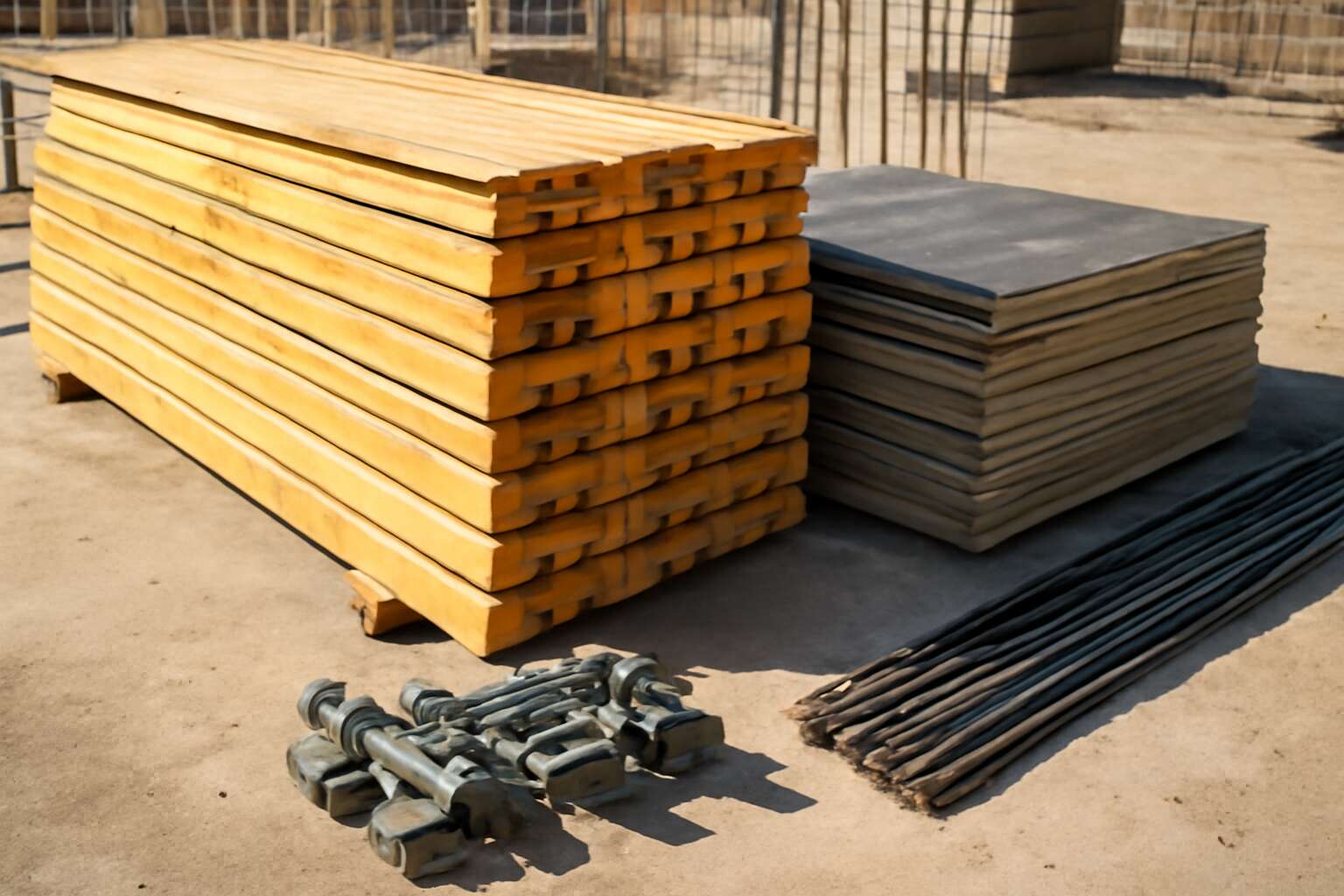
Timber Formwork Material Categories and Fundamentals
Timber-Based Formwork Materials
Across South Africa’s growing skylines, formwork timber lends gravity and grace to every pour. A well-chosen timber elevates a site beyond mere concrete, guiding strength where it matters most. In the face of seasonal rains and coastal winds, the right choice keeps forms true.
Timber-based formwork materials fall into natural and engineered camps, each with fundamentals that shape finish, safety, and reuse.
- Plywood panels and solid timber forms
- LVL and PSL engineered beams
- Treated softwood timbers for moisture resistance
From Cape Town to the Highveld, professionals weigh cost, weight, and durability when selecting formwork timber. The craft marries timber lore with engineering, turning ordinary pours into enduring structures.
Types of Formwork Timber and Their Uses
On South Africa’s busy building sites, a pour is only as good as the formwork timber that frames it. A veteran foreman once quipped, “timber speaks—concrete listens,” and the right timber trims weather-wobble and delays. In real terms, smart timber choices shorten set-up time and keep pours steady through rain and coastal gusts.
Timber formwork falls into two broad camps: natural timber and engineered timbers. Natural varieties bring warmth, ease, and cost-effectiveness; engineered options deliver higher strength, longer spans, and better reuse across multiple pours.
- Natural timber: sawn softwood or hardwood for light or non-load-bearing forms
- Engineered timbers: LVL, PSL, and glued-laminated beams for heavy loads and longer spans
In coastal and highveld environments, treated and moisture-resistant forms extend life and reusability, letting formwork timber weather a season and still shine for the next pour.
Installation and Handling
On South Africa’s busy sites, a pour’s fate rides on formwork timber. A gust can betray a seam, yet seasoned crews read the wood—its grain, resilience, patience. When wind howls, the right timber keeps momentum.
Natural timber and engineered options behave under sun and rain, but both share a simple truth: materials shape outcomes more than clever technique. Treated, moisture-resistant forms extend life; engineered grades resist deeper loads and longer spans—yet formwork timber remains the constant.
Fundamentals of installation and handling revolve around respect for the material. They favour timing, consistency, and moisture awareness—measured more by judgment than recipe.
I’ve learned on our coastlines and highveld mornings that timber feels like a language spoken between foreman and timber, between plan and pour. The better the timber, the more the day belongs to us.
Performance Testing and Standards
On South Africa’s bustling sites, a single grain can decide the pour’s fate. Formwork timber is the quiet, stubborn backbone of every edge and seam, demanding respect and patience; when the wind rises, it reads you as much as you read it.
Timber formwork material categories include:
- Natural timber
- Engineered timber products
- Treated and moisture-resistant variants
Fundamentals of performance testing and standards center on predictability and safety. For timber, tests gauge moisture content, strength grading, knot distribution, and dimensional stability, while standards harmonise local building codes with international benchmarks to keep pours true and safe.
Sustainability, Cost, and Sourcing
A single grain can decide the pour’s fate, and on SA sites that grain wears a crown. formwork timber slides into three categories: Natural timber, Engineered timber products, and Treated and moisture-resistant variants. Each has its own rhythm—natural timber is pliable and readily available, engineered products deliver predictable dimensions, and treated variants shrug off damp days and ambitious pours.
- Natural timber — pliable and readily available, but knots and moisture demand respect.
- Engineered timber products — tighter tolerances and better stability, with a higher upfront price.
- Treated and moisture-resistant variants — longevity in tough Durban or Cape Town climates, with particular chemical considerations for certain pours.
Fundamentals of sustainability, cost, and sourcing creep into every lift and ledger. Sustainability in this timber realm means certified forests, reclamation, and mindful waste management on site. Costs swing with grade, transport, and moisture content, while local SA mills can shorten lead times and trim the carbon footprint. Sourcing from trusted suppliers with transparent origins helps keep pours true and teams humming.

0 Comments