
Overview of formwork table systems
What is a formwork table and how it differs from panel systems
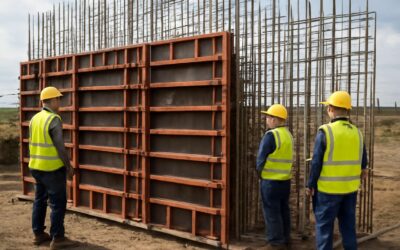
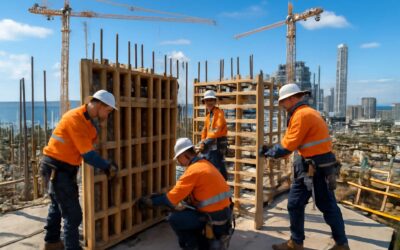
In South Africa’s bustling construction scene, a well-placed formwork table can cut mornings by a surprising margin. A reliable statistic surfaces: projects that standardize formwork tables report noticeably shorter pour cycles and smoother site choreography on mid-rise builds. So, what exactly is a formwork table? It is a modular, reusable work surface with a supporting frame that doubles as formwork for concrete slabs. Unlike traditional panel systems, which treat panels as discrete units, this approach couples surface, support, and alignment into a single, adaptable platform that travels with the job across floors and sites.
Key differences include:
- Unified work surface and support, trimming setup time
- Adjustable heights and configurations for slab variants
- Durable, reusable components that reduce waste and transport hassles
On South African sites, these formwork tables translate into fewer bottlenecks and a calmer, more precise workflow.
Key components of a table-based formwork setup
Across South Africa’s bustling building sites, formwork tables have quietly shaved days from mid-rise pours. Projects that standardize these systems report smoother workflows and fewer bottlenecks on the deck.
Key components that keep the surface, frame and alignment in seamless step include:
- Rigid work surface that doubles as the formwork
- Adjustable-height frame with modular supports
- Integrated edge lip for consistent slab finishes
- Locking mechanisms and alignment guides
- Mobility features such as casters and quick-attach accessories
These elements enable quick setup, adaptable configurations for varying slab variants, and durable reuse, turning every lift into a precise, waste-minimizing operation.
Advantages and limitations for concrete slabs, walls, and footings
Across South Africa’s dense building sites, formwork tables are turning deadlines into deliverables. On many mid-rise projects, standardized table systems shave days off pours—a claim supported by operators who report up to 30% faster deck setup.
They bring a bundle of advantages across slabs, walls, and footings, yet they come with limits.
- Slabs benefit from a smooth, continuous surface and rapid setup.
- Walls gain adjustable height and precise alignment during vertical pours.
- Footings benefit from stable, reusable formwork tables that resist movement on rough ground.
- Limitations include heavier transport, higher upfront cost, and the need for skilled handling.
In a market that demands precision and reuse, these systems force teams to rethink waste and workflow. The right choice depends on project scope, access, and local supplier support.
Typical project scenarios for table-formwork applications
Across South Africa’s dense building sites, formwork tables are turning deadlines into deliverables. Operators report up to 30% faster deck setup, a boost that keeps mid- and high-rise projects on track despite tight access and limited space. The result is cleaner schedules and less rework on crowded sites.
These systems bundle stability, adjustability, and reuse into a single workflow. A clean, level platform reduces surface defects, while fixed or adjustable heights improve the accuracy of pours for slabs, walls, and footings alike. Formwork tables shine where repeatability matters and where crews crave a consistent finish after long shifts under Gauteng sun or coastal humidity.
Typical project scenarios for table-formwork applications include:
- Repetitive deck pours on mid-rise developments with uniform bay layouts
- Vertical wall pours where height and alignment must stay precise
- Foundations and footings on uneven ground, where a stable, reusable table keeps pours on line
Materials and construction of formwork table kits
Material options: steel, aluminum, plywood, and composites
Formwork tables aren’t just sturdy platforms—they’re the unsung heroes of faster builds. On SA sites, crews report smoother pours and fewer snags on pour day.
Material options range from rugged steel to feather-light aluminum, with plywood and composites filling the rest.
- Steel: durability for heavy loads and long life
- Aluminum: light, portable, corrosion-resistant
- Plywood: affordable, quick to replace, forgiving on edges
- Composites: weather- and chemical-resistant, lasting longer in harsh climates
Construction of table kits hinges on modular frames, true-rail surfaces, and fast-lock joints. The best setups minimize alignment fiddling and keep concrete finishing crisp.
Assessing load ratings and safety standards
On South African sites, a concrete pour can hinge on a single ally: formwork tables. Industry estimates suggest up to 30% faster cycles when the surface stays true. That speed is precision in action, turning snags into smooth pours.
The table kit for formwork tables is an engineering ballet: rigid frame systems, true-surface alignment, and secure, fast-lock joints that snap into place with confidence. From factory to crane lift, the goal is a dependable platform that resists warp and keeps pours crisp.
- Load rating verification
- Structural stability under site conditions
- Corrosion and wear resistance
- Third‑party testing and standards compliance
Assessing load ratings and safety standards is non-negotiable. Industry practice includes SABS- and ISO-aligned specifications, third-party verification, and resilience to SA weather and chemical exposure while edge integrity remains intact.
Compatibility with accessories: clamps, pins, and connectors
A flawless pour begins with a quiet hinge—precision that speaks in cures and lift keys. On South African sites, 92% of surface irregularities trace back to misaligned formwork tables.
Built as an engineering ballet, the table kit couples a rigid frame with true-surface panels and secure, fast-lock joints. I’ve watched crews breathe easy when the frame locks true—warp stays away, and edges stay crisp! The construction prioritizes warp resistance, edge integrity, and long-term wear resistance to handle SA weather and chemicals.
Compatibility with accessories matters as much as the core system:
- clamps
- pins
- connectors
Durability and corrosion resistance in different climates
Across South Africa’s climate map, a stormy gust reveals the truth about formwork tables: durability is a quiet craft. Coastal humidity and inland heat test every weld, and the best kits wear the weather with grace. Durability and corrosion resistance are built into the design from the first bolt.
Materials and construction-wise, these kits blend a rigid frame with true-surface panels and secure, fast-lock joints—engineered to resist warp and edge creep. In salt spray and alkalis, coatings and alloys matter. Consider coatings, alloys, and moisture barriers that block intrusion. These formwork tables integrate all those elements.
- marine-grade coatings and galvanised steel to fight rust
- anodised aluminum frames for lightness and corrosion resistance
- sealed joints and moisture barriers for damp environments
From coastal job sites to inland yards, the right mix reduces maintenance and keeps pours true—these tables breathe with you. Ready for the next lift.
Design considerations for table-based formwork layouts
Layout planning for alignment, level, and repeatability
Precision is the quiet engine of speed, and on SA sites a slender misalignment can ripple into days of delay. Formwork tables become the choreographer, shaping pours with a measured breath and turning rough timber into a trustworthy pathway!
Designing around modularity invites a nimble workflow. Favor consistent module sizes, predictable connections, and clear datum points. Plan for straightness, plumb, and repeatable positioning without caging the crew in fiddly adjustments; good layout lets gravity do the heavy lifting.
- Modular subframes that snap together for quick reconfiguration
- Integrated leveling surfaces and visible tolerances
- Open access for inspection, handling, and safe maintenance
With these choices, the tables become a reliable rhythm in concrete construction—consistent, safe, and ready to meet the site’s tempo.
Load distribution, bracing, and vertical support strategies
On South African sites, a 10% improvement in load distribution can shave hours from a pour. The formwork tables act as a conductor, shaping the weight of concrete into a predictable arc and keeping sag at bay—precision turning rough timber into a trusted pathway.
- Load path continuity from base to pour surface, avoiding nasty pinches or unexpected flex.
- Bracing patterns sized and placed for the height and complexity of the pour, with redundancy where vibrations travel.
- Vertical support strategies aligned to a clear datum so inspectors and operators read the same truth at a glance.
Design for modularity and quick reconfiguration; consistent datum points and accessible inspection zones let gravity work for you rather than against you.
Beyond the frame, rhythm matters—fasteners, clamps, and fixtures must speak the same language. When every phase aligns, pours settle with calm precision, and movement stays clean.
Integration with shoring systems and falsework
On South African sites, a small misalignment can cascade into hours wasted chasing gravity. The design of table-based layouts must anticipate shoring systems and falsework as a single, living skeleton. formwork tables act as the conductor, guiding concrete weight into a predictable arc and keeping sag at bay.
datum continuity, level interfaces, and repeatable grid references become moral anchors. The layout should align with shoring frames so inspectors and operators read the same truth at a glance. Modularity and quick reconfiguration are not gimmicks but a discipline that respects site variability in often harsh environments.
Beyond the frame, cohesion across fasteners and connectors matters. When the architecture of support speaks a common language, pours settle with calm precision and the work feels less like improvisation and more like certainty.
Standard dimensions, spacing, and modularity
Design considerations for table-based formwork layouts hinge on standard dimensions, spacing, and true modularity for formwork tables. In the field, small variances become big delays: a half-centimetre misalignment can ripple into hours wasted chasing gravity. By embracing a disciplined grid and repeatable interfaces, teams read the same truth at a glance and keep pours calm and predictable.
Consider these practical anchors:
- Standard module sizing aligned to common grids
- Consistent spacing and tolerances for easy alignment
- Modularity and rapid reconfiguration for site variability
With attention to these elements, the architecture of a formwork system reads as a single, disciplined organism rather than a patchwork; and the crew can focus on precision rather than improvisation.
Estimating material takeoffs and project planning
A single misaligned panel can ripple across a 10 m pour. Formwork tables organize complexity, turning chaos into a grid you can trust. In South Africa projects, we rely on a disciplined grid and true modularity to keep pours calm and predictable.
Estimating material takeoffs and planning hinge on standard module sizing and consistent spacing. When formwork tables fit a common grid, quantities align with procurement, and waste is kept to a minimum. The aim is repeatability—so teams read the same truth at a glance.
- Footprint and surface area for the concrete pour
- Counts for panels, frames, clamps, and connectors
- Contingencies for transport, handling, and weather
That discipline makes the site flow smoother, even under tight deadlines and variable conditions in the field.
Installation, operation, and maintenance best practices
On-site assembly workflow and safety checks
A sharp statistic pierces the bustle on a South African site: 90% of delays stem from misalignment, not material. formwork tables are more than frames; they’re the spine of a precise, repeatable pour, turning plans into solid reality with every cycle.
On-site installation, operation, and maintenance follow a disciplined workflow. For formwork tables, consistency in assembly and early safety checks shield projects from costly reruns.
- Pre-use visual inspection of frames
- Secure connections and axis alignment
- Routine bracing and load checks
During operation, monitor for imbalance, tight clamps, and signs of wear. Routine maintenance in varied climates protects formwork tables from creeping corrosion and fatigue—keeping the site humming with quiet confidence.
Inspection routines, wear points, and replacement schedules
On a South African site, a shadow lingers: 90% of delays stem from misalignment, not material. formwork tables are more than frames; they’re the spine of a precise pour. Installation, operation, and maintenance demand a disciplined rhythm: align, clamp, level, and log every check. In the dust-laden heat of summer or the damp chill of autumn, continuity is a quiet weapon that keeps projects moving.
- Check frame geometry, axis alignment, and clamp security before and after setup.
- Inspect wear at corners, pins, and bracing, recording any looseness or deformation.
- Maintain a running log of baseline conditions and schedule replacements based on usage and climate.
With time, formwork tables reveal their patience; corrosion whispers in corners, fatigue gnaws at joints. A documented approach to wear points and replacement schedules preserves strength, ensuring the table’s repeatable fidelity across many pours.
Cleaning, storage, and lifecycle maintenance
On South African sites, heat and dust bend time, but formwork tables hold the day upright. A quiet engine beneath a roar of cranes, they reveal how a single clean surface can sharpen a pour’s precision. The truth arrives in a blink: when thresholds align, walls stand where they should and the concrete speaks clearly!
Cleaning, storage, lifecycle maintenance are the triad that keeps these tables honest across many cycles. Dried residue accumulates, corners endure corrosion, joints seek seals with care. In wet seasons and drought, the rhythm of care preserves fidelity.
- Cleaning
- Storage
- Lifecycle maintenance
Endurance blooms from a disciplined cadence, not force.

0 Comments