Rocla Polokwane is a Manufacturer establishment in Polokwane, Limpopo, South Africa
Rocla Polokwane: A Leading Manufacturer of Precast Concrete Pipes and Related Infrastructure Products
Rocla Polokwane operates within the Limpopo province as part of a broader Southern African network of factories, specialising in the design and production of concrete pipes and precast concrete products for infrastructure. With a long-standing presence in the precast concrete sector, Rocla positions itself as a manufacturer capable of delivering standard as well as bespoke solutions to meet project-specific requirements. The business highlights more than a century of collective expertise in precast concrete, underpinned by a formal quality management approach.
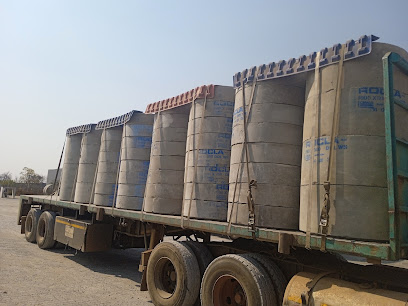
Core offerings encompass a wide range of precast concrete products commonly used in civil and municipal infrastructure. The primary focus is on concrete pipes and precast pipe systems, which are instrumental in drainage, sewerage, and water conveyance schemes. In addition to pipes, Rocla’s portfolio includes related precast items such as culverts and manholes, with the capacity to design and manufacture specialised products upon customer request. This latter capability is supported by technical expertise and a controlled, systematic production process designed to ensure consistency across projects.
Quality and compliance feature prominently in Rocla’s value proposition. The company is ISO 9001:2015 certified and maintains SANS marks on a substantial portion of its product range. A statement of commitment to Total Quality Management emphasises ongoing monitoring and refinement of the Quality Management System, ensuring products and processes meet defined performance standards. The emphasis on quality extends to procurement as well, with supplier relationships managed to sustain consistent material quality, and a preference for engaging with BEE (Black Economic Empowerment) suppliers where feasible.
Typical projects and on-site innovations
Rocla’s project portfolio demonstrates a capacity to support large-scale municipal and infrastructure developments. Notable propositions include the deployment of mobile plant concepts that enable certain products to be manufactured on-site to minimise transportation costs and seasoned project risk. While on-site production can occur outside the traditional factory setting, the organisation maintains strict quality controls where applicable, ensuring that product performance is not compromised by location.
In practice, Rocla’s on-site or factory-based solutions are applicable to a range of job types that are common in Southern Africa’s infrastructure landscape. These include pipelines for drainage and sewage networks, culvert systems to accommodate pedestrians and traffic flows, and precast components for larger civil engineering schemes. The ability to tailor products to client specifications is a recurring theme across Rocla’s communications, reinforcing the notion that each project benefits from a customised, engineered approach rather than a one-size-fits-all solution.
Customer experience and service delivery
Customer feedback highlights several consistent strengths. Visitors frequently note friendly service, reliable product quality, and on-time deliveries. The reviews speak positively of responsiveness and helpfulness in addressing project needs, alongside confidence in technical capabilities for custom requests. This aligns with Rocla’s stated commitment to quality and service excellence, which is reiterated in their site materials and project case studies.
Rocla Polokwane situates itself within a broad regional footprint, enabling the firm to offer nationwide and cross-border South African procurement capabilities. The emphasis on quality management, empowerment of personnel, and transparent sourcing practices contributes to a sense of reliability for clients such as municipal authorities, contractors, and developers seeking durable infrastructure components that can withstand long service lives in varying environmental conditions.
Practical tips for customers
- Clarify technical requirements early: supply dimensions, load ratings, and desired durability to enable precise design and rapid quotation for bespoke components.
- Discuss on-site versus factory production: if transportation costs are a concern, explore Rocla’s mobile plant concept and possible on-site manufacturing options, noting any implications for quality control and standards compliance.
- Confirm certifications and warranties: request copies of ISO 9001:2015 and SANS marks applicable to the products envisaged, and ask about after-sales support and project documentation.
- Plan for broader procurement: consider Rocla’s sustainability and empowerment policies when evaluating supplier diversity and long-term partnership potential.
- Engage early in the design phase: Rocla’s capability to design and manufacture special items can hedge against late-stage changes and ensure compatibility with brand-new or retrofit infrastructure projects.
Where and when Rocla operates
Rocla serves clients across Southern Africa, with a network of factories that includes facilities in South Africa, Namibia, and Botswana. While specific local business hours for Rocla Polokwane are not listed publicly, typical engagement patterns in the sector suggest mid-morning to early afternoon visits align well with site access and engineering coordination. The company’s core location in Polokwane places it at the heart of Limpopo’s infrastructure development activity, serving both public and private sector clients in the region and beyond.
For those seeking concrete pipe solutions and associated precast infrastructure products, Rocla’s combination of extensive manufacturing capacity, design capability, and a structured approach to quality and delivery offers a credible option in Polokwane and the wider Limpopo area.
Polokwane
Limpopo
South Africa
Sorry, no records were found. Please adjust your search criteria and try again.
Sorry, unable to load the Maps API.
Manufacturer Services in Polokwane, Limpopo
In Polokwane, Limpopo, manufacturing services encompass a broad range of activities designed to transform raw materials into finished goods or components. Local operations may span metalworks, plastics processing, fabrication, assembly, and specialised manufacturing suited to regional demand. The focus is typically on reliability, efficiency, and adherence to industry standards while catering to sectors such as consumer products, automotive components, construction materials, agricultural equipment, and industrial equipment.
Clients engaging with manufacturers in this area can expect a structured workflow that blends engineering expertise with practical production capabilities. Initial stages often involve design evaluation, feasibility checks, and cost estimation. This is followed by planning the production runs, sourcing appropriate materials, and establishing timelines. The emphasis is on aligning technical specifications with realistic manufacturing constraints to deliver consistent output.
Polokwane manufacturers frequently operate within a network of subcontractors and suppliers to provide comprehensive services. This may include precision machining, metal fabrication, plastic moulding, heat treatment, surface finishing, and assembly. Depending on the facility, services may extend to prototype development, product testing, quality assurance, and small to medium batch production. The scale of operations varies, but a common objective remains producing robust parts and assemblies that meet customer requirements while minimising waste and downtime.
Quality control is a central consideration for manufacturers in Limpopo. Many establishments implement systematic inspection processes to verify dimensions, tolerances, material properties, and functional performance. Documentation such as material certificates, inspection records, and process controls often accompanies finished goods. Businesses frequently adapt to evolving regulatory expectations and market standards by adopting lean practices, safety protocols, and environmental considerations relevant to their operations.
The experience of working with a manufacturer in Polokwane typically involves several practical considerations. Proximity to regional markets can reduce lead times and transport costs, while access to nearby logistical hubs supports distribution activities. Local manufacturers may specialise in industry-specific requirements such as rugged components, heat resistance, or corrosion protection, reflecting the climate and industrial landscape of Limpopo. Depending on the sector, customers might need customised tooling, jigs, or dies to support efficient production, which can be developed in collaboration with the manufacturer.
Customers are often advised to provide clear technical documentation, including drawings, material specifications, and required tolerances. Where possible, providing sample parts or functional descriptions can help in assessing manufacturability and enabling accurate quotations. It is common for a manufacturing partner to propose iterative development approaches, such as pilot runs or small-scale trials, to validate processes before committing to larger orders. Transparent communication regarding timelines, capacity, and quality assurances aids in building confidence for ongoing collaboration.
Typical services available from manufacturers in Polokwane may include:
- Metal fabrication and welding of structural components
- Machining, milling, turning, and drilling services
- Plastic injection moulding and product formation
- Assembly and sub-assembly production
- Surface finishing, coating, and heat treatment
- Prototype development and small-batch production
- Quality assurance, inspection, and documentation support
In summary, manufacturer services in Polokwane offer practical production capabilities aligned with local demand and regional logistics. The emphasis is on dependable delivery, clear communication, and a collaborative approach to solving production challenges while maintaining appropriate quality and safety standards. Prospective clients can expect a focus on customisation within achievable manufacturing processes and a commitment to turning technical concepts into tangible products.